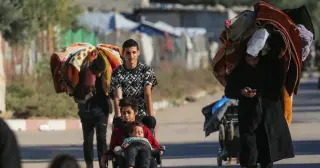
Israeli forces conducted their first ground operation west of the 'Yellow Line' since the October 2025 ceasefire, targeting a tunnel in central Gaza. The incursion displaced approximately 6,000 Palestinians and killed at least three, prompting Hamas to accuse Israel of violating the truce. While Israel claims the action neutralized an immediate threat, analysts warn the move undermines the fragile agreement and risks further escalation.
Foundation Future Robotics, backed by Eric Trump, deployed its Phantom MK 1 humanoid robots to Ukraine in February and is now in talks to supply up to 1,000 units to Israel for tunnel operations. Co-founder Mike LeBlanc predicts robots will handle most major combat within a decade, though he acknowledges human oversight remains essential. The company faces political scrutiny over its ties to the Trump family and a $24 million Pentagon contract.
An American robotics startup is in preliminary discussions with the Israel Defense Forces (IDF) to supply up to 1,000 humanoid robots for operations in Gaza. The robots, designed to detect explosives and neutralize booby traps, aim to reduce casualties among Israeli soldiers in underground tunnel networks. The company, Foundation Future Industries, has strategic ties to U.S. President Donald Trump’s son, Eric Trump, and has received significant U.S. military funding. Critics and supporters debate the ethical implications of using autonomous systems in combat zones, with some emphasizing the potential to save lives and others raising concerns about accountability and the political context of the technology.
Leaked internal documents reveal that Cisco aggressively expanded its military contracts with Israel during the Gaza war, despite severe technical failures that disrupted Israeli intelligence operations. The company framed these crises as opportunities to strengthen client relationships, while facing internal backlash and legal scrutiny over its role in the conflict.
Israeli defense assessments indicate Iran is stalling nuclear negotiations to avoid concessions before US midterm elections, while Washington and Jerusalem plan renewed strikes afterward. Simultaneously, Israel is preparing for a ground operation in Gaza City to dismantle Hamas infrastructure, rejecting disarmament proposals.
On October 21, 2026, the Israel Defense Forces (IDF) detained approximately 80 international volunteers, including New York congressional candidate Brad Lander and several rabbis, while they were harvesting olives near the West Bank village of Nahalin. Lander, a former NYC comptroller and Democratic nominee for New York’s 10th District, posted on X that he was detained with a group of volunteers and rabbis, stating that 'harvesting olives isn’t a crime under any law I know.' The volunteers, part of the 'Protect the Harvest' coalition, were assisting Palestinian farmers. The IDF declared the area a closed military zone and separated detainees by nationality, transporting them to police stations. Lander was released with a warning, while others, including 11 American rabbis and former Israeli deputy attorney general Joshua Schoffman, remained detained. Schoffman described the detention as a 'complete hallucination,' noting that the group complied with orders to stop without friction. The incident occurred amid rising settler violence in the West Bank, with over 900 Palestinians injured by settlers since the start of 2026, according to a UN report.
The investigative documentary NAZA, which features anonymous Israeli military sources alleging deliberate civilian targeting in Gaza, is set for a U.S. theatrical release this month. The film has sparked intense political backlash in Israel, including threats to revoke the filmmakers' citizenship, while simultaneously drawing record-breaking attention at international film festivals.
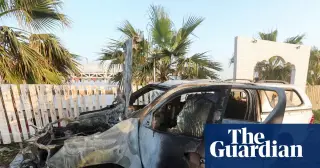
Reserve Colonel Nochi Mendel, who ordered the April 2024 drone strikes that killed seven World Central Kitchen (WCK) aid workers in Gaza, has dismissed the deaths as an 'idiotic side event' and stated he would act identically again. This stance follows the Israeli military prosecutor’s recent decision not to pursue criminal charges, despite acknowledged procedural failures. The strikes, which occurred after a coordinated food delivery, were based on the 'incrimination' policy, which targeted the unarmed aid workers due to their proximity to armed local guards whom the IDF assumed were Hamas operatives. While WCK and several governments demand an independent investigation, Israel maintains the attack was a result of mistaken identification rather than criminal intent.
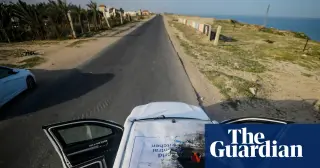
A Guardian investigation reveals that the April 2024 Israeli airstrike killing seven World Central Kitchen (WCK) aid workers was driven by the IDF's 'haflala' or incrimination policy, which designates targets based on proximity to armed individuals rather than direct evidence. Despite the deaths of nationals from the UK, Australia, Poland, Palestine, and the US-Canada, Israeli military prosecutors declined to pursue criminal charges, blaming individual officer errors. The strike occurred after WCK vehicles were escorted by armed guards, which the IDF interpreted as a Hamas takeover of aid, a claim WCK and international allies dispute. The incident highlights systemic issues in IDF targeting that prioritize destroying Hamas governance over civilian safety, contributing to high civilian casualty rates in Gaza.
The Israeli military has officially admitted for the first time that it fired on the vehicle carrying five-year-old Hind Rajab and six family members in Gaza City in January 2024. Following years of denial, the Israel Defense Forces (IDF) announced a criminal investigation into the incident, citing alleged failures in coordinating the movement of a rescue ambulance. While the admission marks a significant shift, the victim’s family and human rights organizations remain skeptical, demanding an independent international inquiry rather than relying on internal Israeli justice.
The Israel Defense Forces (IDF) has admitted for the first time that its troops fired on the vehicle carrying five-year-old Hind Rajab in January 2024, reversing previous denials. The military announced a criminal investigation into the killing, citing alleged failures in coordinating the movement of a Palestine Red Crescent Society (PRCS) ambulance. While the IDF claims it fired at a vehicle approaching them, the family and international observers remain skeptical, demanding an independent probe. This admission follows a review of 150 incidents, though the IDF declined to open probes into other high-profile attacks on aid workers.
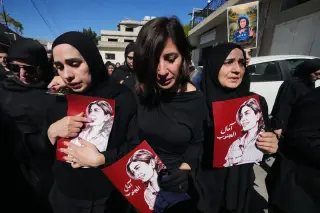
Human Rights Watch, Amnesty International, and Legal Agenda concluded that Israel committed a war crime by killing journalist Amal Khalil and injuring Zeinab Faraj in an April 2026 strike in southern Lebanon. The groups found that Israeli forces knew or should have known the victims were civilians, yet continued to attack them and obstructed medical rescue for hours. The Israeli military maintains the strikes targeted Hezbollah operatives and regrets harm to journalists, but rights groups call for an independent investigation and an arms embargo.
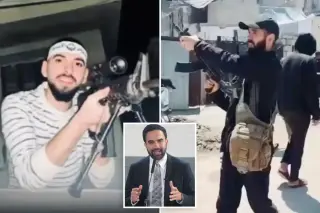
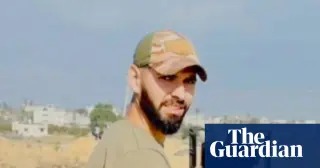
IDF claims Ahmed Wishah, the Al Jazeera cameraman mourned by NYC Mayor Zohran Mamdani after a Gaza strike, was a Hamas sniper, releasing footage and a purported Hamas military ID to back the claim. Al Jazeera denied the allegation, calling it a smear campaign, while noting Wishah was killed in the ongoing Gaza-Israel conflict. The piece highlights the War coverage dynamic and the broader tensions around journalists in the region.
Al Jazeera says its cameraman Ahmed Wishah was killed in an Israeli strike targeting a house in Gaza’s Bureij refugee camp, adding to the war's toll on journalists, with at least 260 Palestinian journalists killed since October 2023 according to CPJ. The Israeli military says Wishah was a Hamas terrorist, a claim it has not publicly substantiated yet; Al Jazeera condemns the attack as a flagrant violation of international law. Wishah’s brother Mohammed was killed in April in a separate incident.
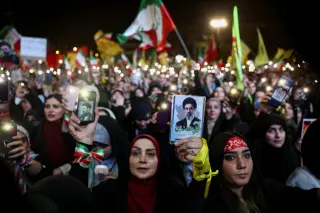
Israel said it struck Iranian military targets after Tehran fired a barrage of missiles toward Israel—the first such exchange since a ceasefire took effect—threatening to derail peace talks aimed at ending the broader conflict and risking a return to open hostilities in the region.