
Ukraine Suspected of Hitting Sanctioned Russian Cargo Ship in Baltic Sea
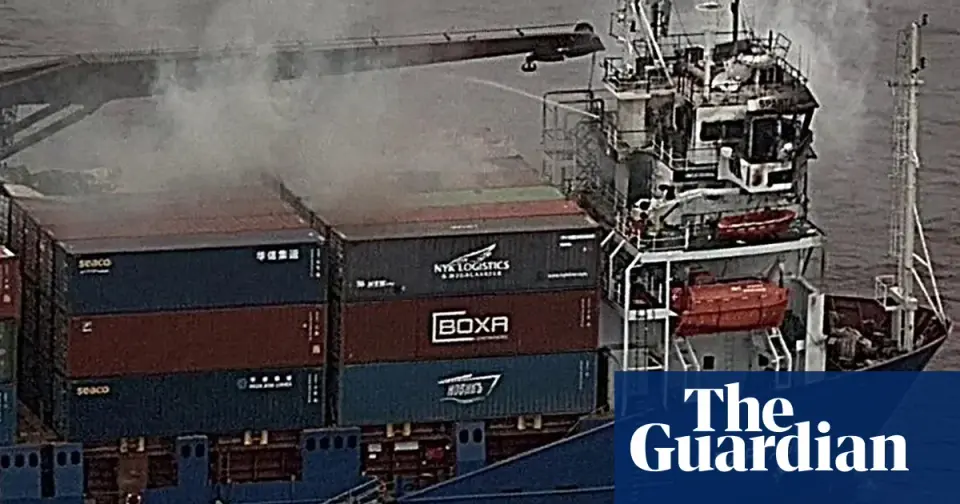
A Russian cargo ship, the Sparta II, was struck by drones and caught fire in the Gulf of Finland on November 21, 2026. Finnish authorities suspect Ukraine is responsible, describing the incident as the war 'spilling over' into the region. The vessel, linked to Russian military logistics and under US and Ukrainian sanctions, was traveling from St. Petersburg to the Kaliningrad exclave. The crew was evacuated, and the ship drifted into Finnish waters, prompting temporary maritime restrictions and a NATO alert. No environmental damage was reported, and the incident occurred in international waters near the Russian border.
Key points
- The Sparta II, a 121-meter Russian-flagged cargo ship owned by Oboronlogistika, was hit by two drones in the Gulf of Finland on November 21, 2026.
- The ship is under US and Ukrainian sanctions and is linked to Russian military logistics, having previously transported S-300 air-defense systems from Syria to Russia in 2024-2025.
- Finnish Prime Minister Petteri Orpo stated that 'war is spilling over into our immediate vicinity' and that Ukraine has the right to fight back against Russia.
- The 16-member crew was evacuated to a nearby Russian vessel, and the ship drifted into Finnish territorial waters after being struck in international waters near Russia's Gogland Island.
- Finland imposed temporary aviation and maritime restrictions in the eastern Gulf of Finland and notified NATO, with Swedish and Estonian forces assisting in the response.
- Russian officials confirmed the attack but stated there was no threat to Kaliningrad's supplies, while Ukraine and Russia's embassies did not immediately comment on the incident.
Background
The Baltic Sea has become a flashpoint in the Russia-Ukraine war, with Ukraine increasing long-range drone attacks on Russian targets beyond the front lines. Finland joined NATO in 2023, and Sweden in 2024, in response to Russia's 2022 invasion of Ukraine. The Sparta II is part of a broader pattern of Ukrainian strikes on Russian logistics and military infrastructure, including a recent drone strike on a Russian warship in the Gulf of Finland. The incident follows a series of Russian missile strikes on Poland and Ukraine, heightening tensions in the region.
How outlets are covering it
The Guardian and CNN emphasize the geopolitical implications, with Finnish PM Petteri Orpo explicitly linking the attack to the Ukraine war and asserting Ukraine's right to fight back. The Institute for the Study of War (ISW) provides detailed analysis of the ship's military logistics role and the broader context of Russian military operations, noting the Sparta II's involvement in evacuating S-300 systems from Syria. BBC focuses on the immediate response, including the evacuation of the crew and the lack of environmental damage, while highlighting the ship's sanctions status. All sources agree on the facts of the attack and the involvement of Finnish and NATO authorities, but differ in emphasis: The Guardian and CNN focus on the political rhetoric, ISW on the military logistics, and BBC on the operational response. No source reports a conviction or guilty plea, and all attribute the attack to Ukraine as a suspicion or likelihood, not a confirmed fact.
Why it matters
The incident underscores the escalating risks of the Ukraine-Russia war spilling into NATO territory, potentially triggering a broader conflict. It highlights the effectiveness of Ukrainian long-range drone strikes against Russian logistics and the vulnerability of Russian maritime routes. The response by Finland, Sweden, and Estonia demonstrates the cohesion of NATO's eastern flank and the potential for further escalation in the Baltic Sea. The sanctions status of the Sparta II also underscores the impact of international sanctions on Russian military logistics.
What to watch
NATO is expected to discuss the incident at a meeting in Brussels on November 23, 2026. Finland and other Baltic states may increase military presence and surveillance in the Gulf of Finland. Ukraine and Russia may issue further statements on the incident, and there could be increased diplomatic pressure on Russia to de-escalate. The incident may also lead to further sanctions or restrictions on Russian maritime activities in the Baltic Sea.
- Ukraine war briefing: Russian cargo ship hit by drone in Baltic Sea as Finland PM says conflict ‘spilling over’ The Guardian
- Russian Offensive Campaign Assessment, November 21, 2026 Institute for the Study of War
- Russian cargo ship still on fire off Finland after attack Reuters
- Russia-bound ship attacked in Gulf of Finland BBC
- Finland warns Ukraine war ‘spilling over’ after Baltic Sea drone strike on Russian cargo ship CNN
Want the full story? Read the original reporting
Read on The Guardian