
Canada Weighs EU Associate Status to Counter US Trade War
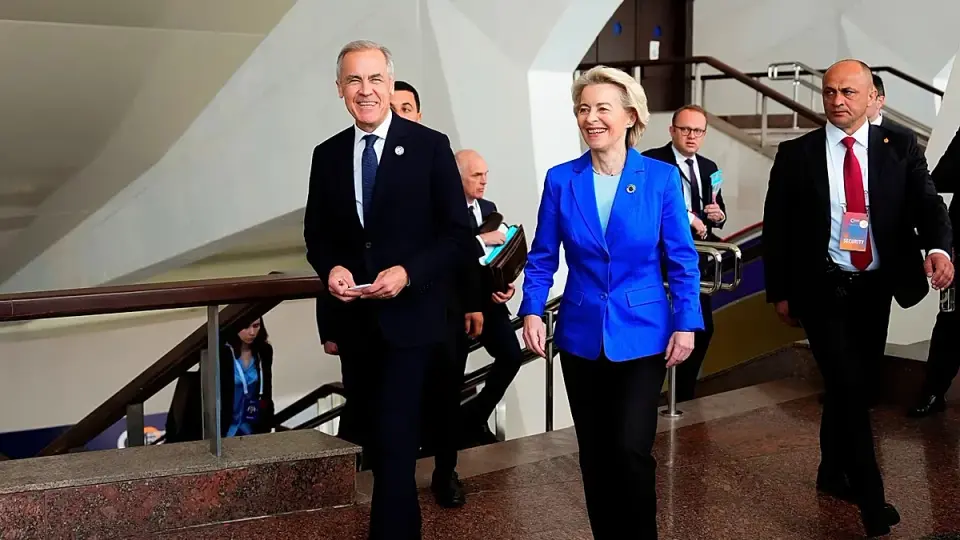
Canadian Prime Minister Mark Carney is exploring 'associate member' status with the European Union to deepen economic and political ties amid a severe trade conflict with the United States. While the status does not currently exist, EU officials have shown openness to creating such an arrangement. Carney is set to address the European Parliament next week to outline this vision, focusing on cooperation in energy, defense, and technology. This move follows Canada’s imposition of retaliatory tariffs on US goods and a broader diplomatic pivot toward Europe, including a joint visit by Carney and French President Emmanuel Macron to Saint-Pierre-and-Miquelon.
Key points
- Carney is seeking 'associate member' status, a concept proposed earlier by German Chancellor Friedrich Merz for Ukraine, to integrate Canada with the EU without full membership.
- The WSJ reports that Carney has spent months discussing closer integration for Canada’s 41 million residents with European leaders, instructing envoies to explore ambitious options short of joining the single market.
- Key areas for potential cooperation include energy exports, artificial intelligence, defense, critical minerals, and joint infrastructure projects like undersea cables and data centers.
- Carney will address the European Parliament in Strasbourg on Thursday to present his vision for Canada-EU relations in a challenging geopolitical environment.
- The European Commission has not yet responded to requests for comment, and the EU’s strict membership rules may make formalizing this status difficult despite current political pressures.
Background
This development follows a series of escalating tensions between Ottawa and Washington. In early September, the US Justice Department reportedly paused antitrust cooperation with Canada, and in late August, Canada imposed retaliatory tariffs of up to 50% on $27.6 billion worth of US goods. These actions reflect a historic trade war with no signs of de-escalation, prompting Canada to seek alternative strategic partnerships.
How outlets are covering it
The Wall Street Journal and Tasnim both report that Carney is actively seeking associate membership, but they emphasize different aspects. The WSJ highlights the specific economic sectors, such as AI and defense, and the potential for joint infrastructure projects, while noting the EU’s traditional rigidity regarding membership rules. Tasnim focuses on the political dimension, noting that Carney has spent months discussing integration with European leaders and that the EU has shown unexpected openness to this initiative. Both sources agree that the move is a direct response to the escalating trade war with the US, but the WSJ provides more detail on the technical and economic implications, while Tasnim emphasizes the diplomatic maneuvering.
Why it matters
This potential shift in Canada’s foreign policy could reshape transatlantic relations and create a new model for non-EU states to engage with the bloc. It may also signal a broader realignment of global alliances as traditional partners like the US and Canada experience deepening conflicts. The success of this initiative could set a precedent for other countries seeking closer ties with the EU without full membership, potentially influencing future geopolitical dynamics in Europe and North America.
What to watch
Carney’s speech to the European Parliament next week will be a critical moment, as he is expected to formally outline his vision for Canada-EU ties. The EU’s response to his proposal, particularly regarding the feasibility of 'associate member' status, will determine the next steps in these negotiations. Additionally, the joint visit by Carney and Macron to Saint-Pierre-and-Miquelon may serve as a symbolic gesture of solidarity against US pressure, potentially influencing public opinion and diplomatic relations in the region.
- Canada eyes ‘associate member’ status with EU amid US tensions, WSJ reports Euronews.com
- Exclusive | Mark Carney’s Audacious Bid to Make Canada an ‘Associate Member’ of the EU WSJ
- Carney pushes idea of making Canada 'associate member' of EU, WSJ reports Reuters
- Canada Seeks EU Associate Membership after Escalation of Trade War with US: WSJ تسنیم
- The EU Has Far Too Many Hangers-On Already Bloomberg.com
Want the full story? Read the original reporting
Read on Euronews.com