
China’s Apec hosts offer Japan’s PM a starkly cooler reception than other world leaders
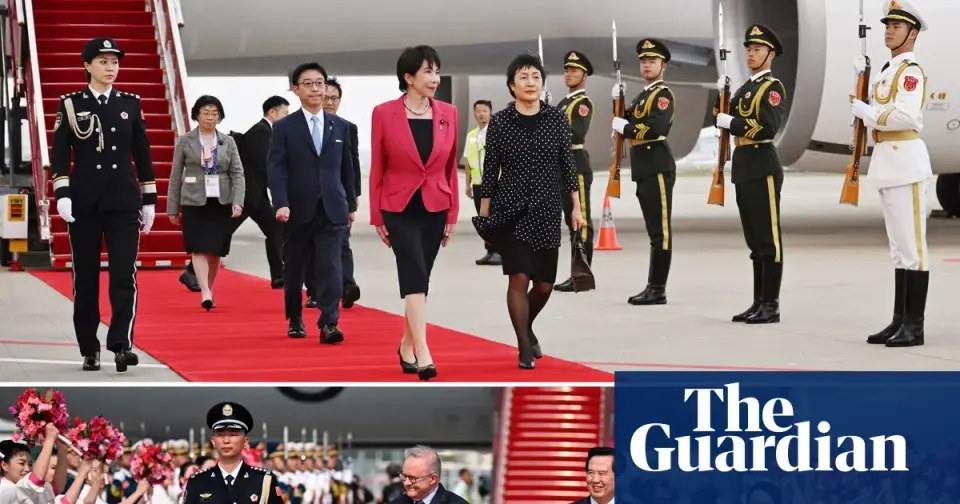
At the Apec summit in Shenzhen, Chinese hosts provided a significantly less welcoming reception for Japanese Prime Minister Sanae Takaichi compared to other world leaders. While figures like Donald Trump and Vladimir Putin received high-level greetings, Takaichi was met by a junior official. This diplomatic chill reflects ongoing tensions over Taiwan and recent friction regarding Yasukuni Shrine offerings.
Key points
- Takaichi’s arrival at Shenzhen Bao’an International Airport featured a modest guard of honour and a welcome from Zhang Qiyue, a relatively junior official and former ambassador to Greece, contrasting sharply with the VIP treatment given to leaders like Trump, Putin, and South Korea’s Lee Jae Myung.
- The diplomatic friction stems from Takaichi’s 2025 remarks suggesting Japan could deploy self-defence forces in a Taiwan conflict, which Beijing condemned as 'wrongful and dangerous' and linked to prewar militarism.
- Recent tensions escalated further in October 2026 when Takaichi sent a ritual offering to Yasukuni Shrine, drawing sharp condemnation from China despite her avoiding a physical visit to mitigate fallout.
- Economic and cultural ties have deteriorated, with Beijing warning citizens against travel to Japan, cancelling grassroots exchanges, and postponing Japanese film releases. The departure of giant pandas from Tokyo in January 2026 marked the first time Japan lacked the animals since 1972.
- During the summit, Takaichi managed only a brief, cordial handshake with Xi Jinping, highlighting that Japan-China relations remain strained despite earlier vows for 'constructive and stable' ties.
Background
Japan-China relations have faced multiple layers of tension in recent months. Beyond the 2025 Taiwan dispute, friction intensified in October 2026 when Takaichi sent offerings to Yasukuni Shrine, a site controversial for enshrining war criminals. Additionally, domestic debates in Japan over fiscal policy and gender roles have occupied Takaichi’s attention, but the international diplomatic chill remains a primary focus, evidenced by the stark difference in reception at the Apec summit compared to other heads of state.
Why it matters
The differential treatment at a major multilateral summit signals a deepening diplomatic rift between Japan and China, potentially impacting regional stability and economic cooperation. It underscores how historical and territorial disputes, particularly regarding Taiwan and Yasukuni, continue to dictate high-level diplomatic protocols and bilateral relations in East Asia.
What to watch
Observers will watch for any signs of thaw in Japan-China relations following the Apec summit, particularly regarding economic ties and cultural exchanges. The outcome of the three-way talks between Xi, Trump, and Putin may also influence the broader geopolitical landscape in which Japan operates.
- China gives Japan PM frosty welcome at Apec amid fanfare for other leaders The Guardian
- ‘I look up when I walk’: 1961 hit Sukiyaki welcomes Japanese PM at Apec gala South China Morning Post
- Takaichi and Xi exchange warm greetings amid questions over diplomatic protocol The Japan Times
- Leaders of China and Japan Meet Amid Political Feud The New York Times
- Takaichi's diplomatic chops to be tested at China's APEC Nikkei Asia
Want the full story? Read the original reporting
Read on The Guardian