
Shenzhen Summit: Trump Pushes Nuclear Talks as Xi, Putin Resist Limits
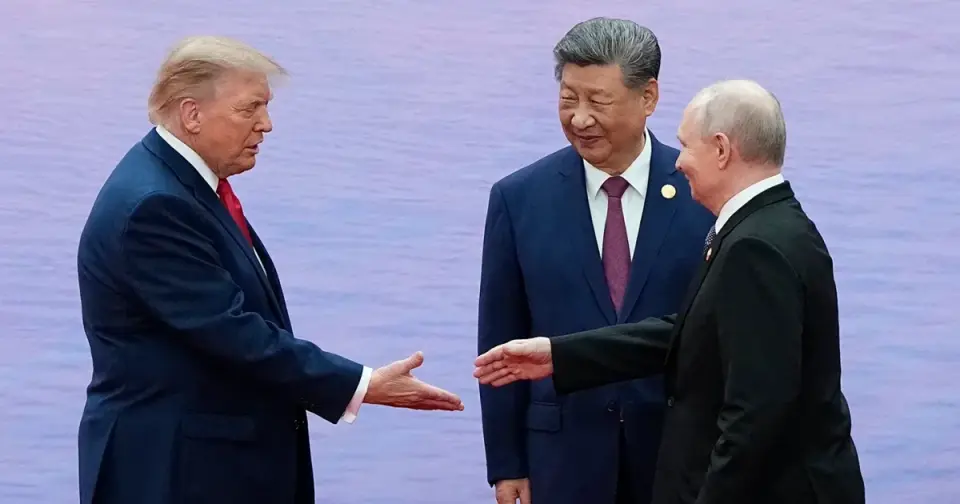
President Donald Trump is seeking a new three-way nuclear arms control agreement with China and Russia during a historic trilateral meeting in Shenzhen, China, on November 19, 2026. While the US leader has prioritized nonproliferation, Chinese and Russian officials have shown limited interest in imposing new limits on their arsenals. The meeting, held on the sidelines of the Asia-Pacific Economic Cooperation (APEC) summit, follows the expiration of the New START treaty in February 2026. Analysts note that while major breakthroughs are unlikely, the talks could initiate a process for future negotiations. The summit also addresses the Russia-Ukraine war, trade tensions, and artificial intelligence, with Trump emphasizing personal rapport with both Xi Jinping and Vladimir Putin.
Key points
- Trump has pushed for a three-way nuclear deal since his first term, but China and Russia have expressed little interest in new limitations on their arsenals.
- The New START treaty expired in February 2026; Russia suspended inspections in 2022 but agreed to maintain limits for one year, while Trump insisted any new deal must include China.
- China holds approximately 600 warheads, with estimates suggesting it could reach 1,000 by 2030, compared to over 5,000 each for the US and Russia.
- The trilateral meeting is the first of its kind, taking place in Shenzhen during the APEC summit, with separate bilateral talks preceding the group session.
- Trump acknowledged the difficulty of achieving denuclearization but stated that the topic would be discussed, while Chinese officials declined to confirm if nuclear arms control would be on the agenda.
- The summit also addresses the Russia-Ukraine war, trade truces, and AI regulation, with Trump seeking to extend a trade agreement and secure rare earth shipments from China.
Background
The current summit follows a period of heightened tensions and diplomatic maneuvering. In October 2026, Moscow proposed the Shenzhen summit to dictate Ukraine peace terms, excluding Kyiv and the EU. Prior to this, in November 2026, Trump signed a trade deal with Thailand and faced domestic challenges after Republican losses in the US midterm elections. The expiration of New START in February 2026 left the US and Russia without caps on strategic warheads for the first time in over 50 years. Trump had previously rejected Russia's proposal to extend New START, demanding a modernized deal that includes Beijing. The broader context includes ongoing conflicts in Ukraine and Iran, as well as intense competition in artificial intelligence and trade between the US and China.
How outlets are covering it
NBC News emphasizes Trump's persistent push for a three-way nuclear deal, noting that his counterparts have shown little interest in new limitations. The outlet highlights the disparity in arsenals, with the US and Russia holding over 5,000 warheads each, while China has about 600. The New York Times focuses on the symbolic nature of the meeting, describing it as a power projection by the three leaders, and notes that officials do not expect major breakthroughs. Al Jazeera highlights the 'clock is ticking' for Trump due to the change in US Congress, and notes that Putin and Xi have been in power for decades, while Trump has limited time. The Guardian raises concerns about the potential for a 'Yalta-style' carve-up, where smaller nations' interests might be disregarded, and notes the warm welcomes and pageantry surrounding Trump's arrival. All sources agree that the meeting is historic but unlikely to produce immediate, dramatic results, with some analysts suggesting it could kickstart a process for future negotiations.
Why it matters
The outcome of this summit could significantly impact global security and the balance of power. A failure to reach a nuclear arms control agreement could lead to an escalatory arms race, with China potentially expanding its arsenal to 1,000 warheads by 2030. The discussions on the Russia-Ukraine war and trade tensions could influence global economic stability and geopolitical alliances. The personal rapport between Trump, Xi, and Putin may embolden the latter two to push for concessions, potentially at the expense of smaller nations and democratic values. The summit also sets the stage for future negotiations on artificial intelligence and trade, which are critical to global economic growth and security.
What to watch
The immediate next step is the trilateral meeting between Trump, Xi, and Putin, which is expected to take place at a lakeside resort in Shenzhen. Following this, the leaders may issue joint statements or announcements on the topics discussed. In the medium term, the outcome of these talks could influence the trajectory of the Russia-Ukraine war, the status of nuclear arms control, and the direction of US-China trade relations. Trump is also expected to host the G20 in Miami in December, where he may seek to engage Putin further. The change in US Congress in January 2026 will also impact Trump's ability to negotiate and implement any agreements reached at the summit.
- Trump pushes for three-way nuclear deal as Russia and China show little interest NBC News
- Live Updates: Trump, Xi and Putin to Hold First-Ever Joint Meeting at China Summit The New York Times
- APEC Live: Trump, Xi and Putin to meet at historic trilateral China summit Al Jazeera
- Putin and Trump expected to hold bilateral talks at APEC summit Reuters
- Apec summit live: Trump praises ‘great relationship’ with Putin ahead of historic trilateral talks with Xi The Guardian
Want the full story? Read the original reporting
Read on NBC News