
China’s APEC Protocol Signals Deep Chill in Japan-China Ties
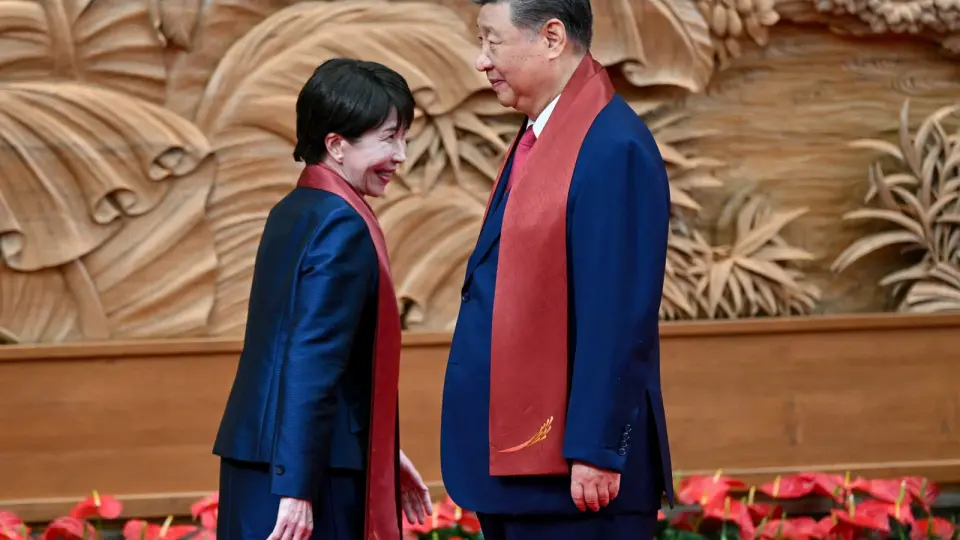
Japanese Prime Minister Sanae Takaichi received a notably subdued welcome at the APEC summit in Shenzhen, signaling Beijing’s continued diplomatic friction over Taiwan. While other leaders like Donald Trump and Vladimir Putin received high-level greetings, Takaichi was met by a junior official and placed in the back row of group photos. Analysts attribute this to Takaichi’s 2025 remarks linking a Taiwan crisis to Japan’s self-defense forces, which Beijing condemned. No formal bilateral meeting was scheduled, and China continues to restrict rare earth exports to Japan.
Key points
- Takaichi was greeted by a retired diplomat, not a serving official, contrasting with the warm welcomes given to Trump, Putin, and South Korean President Lee Jae Myung.
- In the leaders’ group photo, Takaichi was positioned in the back row, several places away from Xi Jinping, who stood alongside Trump and Putin.
- The diplomatic chill stems from Takaichi’s November 2025 statement that a Taiwan Strait crisis could warrant a self-defense response, which Beijing called 'wrongful and dangerous.'
- China has maintained restrictions on rare earth and dual-use exports to Japan, impacting Japanese industries, and has discouraged citizens from traveling to Japan.
- No formal meeting between Takaichi and Xi was scheduled, though Takaichi attempted informal conversation during the greeting line.
Background
Japan-China relations have deteriorated sharply since Takaichi’s 2025 remarks on Taiwan, which Beijing viewed as a break from previous diplomatic norms. Additional friction arose in October 2026 when Takaichi sent a ritual offering to Yasukuni Shrine, drawing further condemnation from Beijing. The current diplomatic chill follows a year of minimal high-level contact and escalating economic and cultural restrictions, including halted seafood imports and postponed film releases.
How outlets are covering it
CNBC and The Guardian emphasize the stark contrast in protocol, noting that Takaichi’s reception was markedly cooler than that of other leaders, including Trump and Putin. The New York Times highlights a symbolic gesture: Chinese musicians played 'Sukiyaki,' a 1961 Japanese hit inspired by anti-U.S. military protests, as Takaichi arrived, suggesting a pointed message. Analysts cited by CNBC, such as Jeremy Chan, argue that Beijing is not ready to forgive Takaichi’s Taiwan remarks, while The Guardian notes that the frosty welcome reflects broader tensions over security and historical issues. All sources agree that the lack of a formal meeting and continued export restrictions indicate a prolonged period of strained relations.
Why it matters
The diplomatic chill at APEC underscores the fragility of Japan-China relations and the potential for prolonged economic friction, particularly regarding rare earth exports critical to Japanese industries. It also highlights the broader geopolitical dynamics in the Asia-Pacific, where U.S.-China tensions and Taiwan issues continue to shape regional alliances and diplomatic protocols. For Japan, the lack of progress in high-level dialogue may limit its ability to address economic and security concerns with Beijing, while for China, it signals a firm stance against perceived Japanese militarism.
What to watch
Analysts expect the bilateral relationship to remain strained until Takaichi leaves office, potentially prolonging China’s curbs on critical mineral exports. Japan may continue to seek dialogue, but Beijing’s demand for a 'reflection' of Takaichi’s 2025 remarks suggests limited prospects for immediate improvement. The ongoing restrictions on rare earths and dual-use items could impact Japanese industries, while cultural and grassroots exchanges remain suspended. Future diplomatic engagements will likely be shaped by whether Takaichi’s administration adjusts its stance on Taiwan or maintains its current position.
- Takaichi gets chilly reception in China on first Japan leader visit since 2019 CNBC
- From tarmac to APEC summit table, Japan's PM cuts a lonely figure Reuters
- Was China Sending a Musical Message to Japan’s Takaichi During APEC Welcome? The New York Times
- Japanese PM Takaichi tries to break ice with Xi by thanking him for hosting Apec summit South China Morning Post
- China gives Japan PM frosty welcome at Apec amid fanfare for other leaders The Guardian
Want the full story? Read the original reporting
Read on CNBC