
EU and Canada Draft Sweeping 'Associate Member' Pact to Counter US Trade Leverage
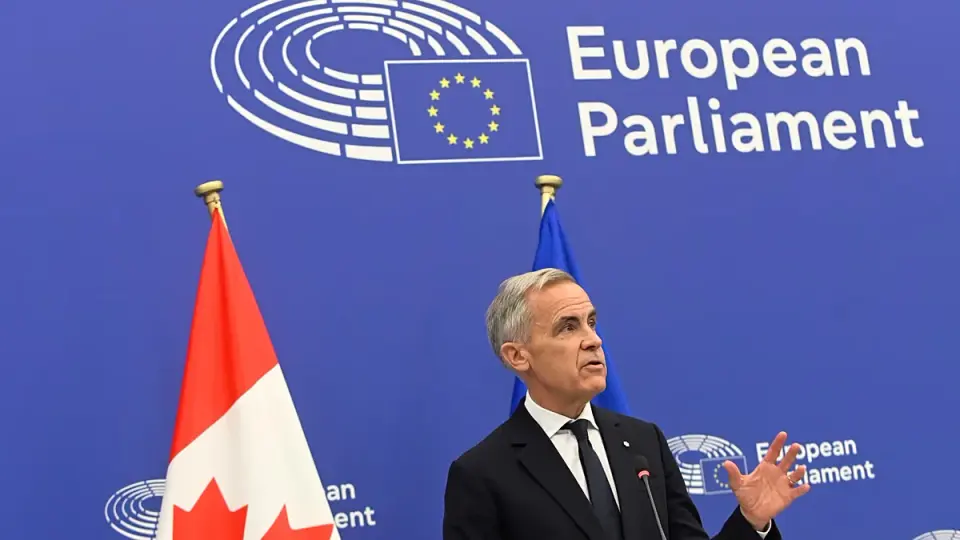
The EU and Canada are preparing to announce a historic 'associate member' partnership at a late-October summit in Montreal, moving beyond the existing CETA trade deal. The draft agreement, leaked to Politico, covers critical minerals, defense, AI, and wildfire response, aiming to reduce mutual dependence on the US and China. However, the move has triggered threats from Washington to impose EU-style tariffs on Canada, while legal experts debate whether such a shift violates existing US-Canada trade agreements.
Key points
- A draft joint statement for the October 29 summit outlines a 'tech alliance' and integrated defense industrial base, including joint purchases of 50 De Havilland water bombers for wildfire fighting by 2030.
- EU Commission President Ursula von der Leyen proposed Canada as the first 'associate member,' a term lacking legal definition but implying deeper integration than CETA, which currently covers 99% of tariff lines.
- Canada seeks access to European financial services and markets to diversify away from the US, which accounts for roughly 70% of its exports, while the EU seeks supply security for critical minerals and energy.
- US President Donald Trump has warned that the partnership could be viewed as a 'hostile act,' potentially leading to tariffs or trade curbs, while US Ambassador Pete Hoekstra suggested Canada might be folded into US-EU tariff frameworks.
- Legal analysts note that while CUSMA contains no provision to penalize Canada for EU ties, US President Trump could bypass agreements via executive orders, creating significant uncertainty for Canadian businesses.
Background
This development follows months of escalating tensions, including US tariffs and Canada’s push to ratify CETA, which remains unratified by ten EU member states. The EU is simultaneously exploring similar 'associate' status for other candidates and facing trade disputes with China, highlighting a broader shift toward strategic autonomy in global trade.
How outlets are covering it
Euronews and Politico emphasize the strategic and geopolitical necessity of the partnership, highlighting concrete steps like digital trade negotiations and defense integration. The National Post focuses on the US reaction, detailing threats of tariffs and legal debates over CUSMA provisions. While Euronews notes concerns about regulatory alignment and the unfinished EU single market, the National Post highlights the risk of US retaliation, with experts like Richard Stern dismissing the legal basis for US tariffs but warning of executive overreach. All sources agree that the partnership is a response to US unpredictability and Chinese dominance in supply chains, but they differ on the feasibility and risks of the 'associate member' concept.
Why it matters
This partnership could reshape global trade dynamics by creating a new bloc of like-minded economies, reducing reliance on the US and China. It may set a precedent for other countries seeking closer ties with the EU, while testing the limits of US trade policy and the flexibility of existing trade agreements like CUSMA and CETA.
What to watch
The EU-Canada summit is scheduled for October 29 in Montreal, where the draft joint statement is expected to be finalized. The outcome will depend on resolving regulatory alignment issues, particularly in financial services, and navigating potential US retaliation. The EU may also face internal debates about extending similar privileges to other candidate countries, while Canada must balance its new EU ties with its existing US relationship.
- Can Canada be the EU's answer to 'unreliable' trade partners? Euronews.com
- EU and Canada to Explore New Technology Links and LNG Sales Bloomberg.com
- EU and Canada to announce sweeping new partnership pact politico.eu
- Trump administration muses about hitting Canada with EU-style tariffs over Carney’s EU pivot National Post
- What a leaked Canada-EU summit document reveals about Mark Carney’s turn to Europe Toronto Star
Want the full story? Read the original reporting
Read on Euronews.com