
EU capitals fracture over Canada 'associate' label ahead of Montreal summit
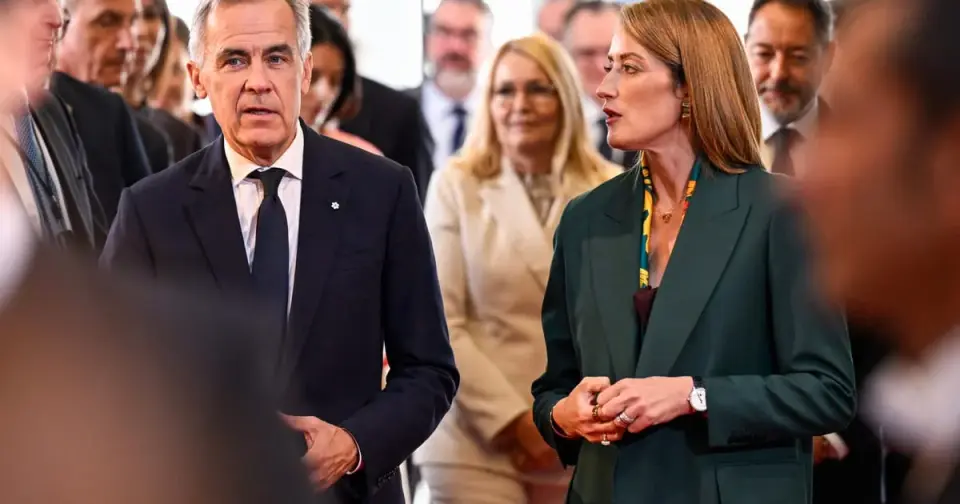
EU member states failed to agree on using the term 'associate member' for Canada in a joint statement just 48 hours before a summit in Montreal. Germany led the opposition, forcing a new diplomatic meeting. The summit aims to deepen ties in trade, defense, and technology to reduce reliance on the United States.
Key points
- EU ambassadors could not agree on the phrase 'associate member' for Canada, leading to a failed silence procedure on Tuesday.
- Germany, along with at least three other nations, objected to the terminology, forcing a new meeting on Wednesday before the summit.
- The Montreal summit, scheduled for October 29-30, involves leaders from the EU and Canada, including Mark Carney and Ursula von der Leyen.
- The proposed partnership aims to expand cooperation in digital trade, nuclear energy, supercomputing, and satellite communications.
- Carney emphasized that the specific label is less important than the practical benefits for Canadian businesses and citizens.
Background
The EU proposed 'associate membership' for Canada in September to counter US trade pressures. Previous drafts suggested a partnership covering critical minerals and defense. Carney accepted the concept but rejected full EU membership, framing the move as a strategy for economic resilience rather than a rival bloc.
How outlets are covering it
Politico highlights the internal EU division, noting that Germany is leading the push to remove the 'associate member' label, which von der Leyen proposed without prior consultation with capitals. The Globe and Mail reports that EU officials view the status as a unique, tailor-made arrangement closer to full membership than previous deals like the EEA, though the exact scope remains undefined. Yahoo frames the summit as part of Carney’s broader strategy to diversify alliances away from the US, citing his recent visits to China, India, and the Middle East. Politico’s Playbook notes that while Canada seeks a 'middle power' alliance, Europe views the partnership as a way to extend its own global influence, creating a potential mismatch in strategic visions.
Why it matters
The disagreement over terminology reflects deeper uncertainties about the legal and political scope of the new transatlantic partnership. Resolving this issue is critical for finalizing agreements on trade, defense, and technology that aim to reduce mutual dependence on the United States and China.
What to watch
EU ambassadors will meet on Wednesday to resolve the language dispute before the summit begins on Thursday. The summit is expected to produce a joint statement on an 'alliance for the future' and progress on digital trade and critical raw materials agreements.
- EU divisions persist on ‘associate member’ label for Canada POLITICO.eu
- It’s hard breaking up with Washington: Why Canada’s European defense turn has limits POLITICO.eu
- Canada’s ‘associate’ status with EU will be closer to membership than anything done before, officials say The Globe and Mail
- Carney moves to remake Canada alliances as US ties strained Yahoo
- Cart, meet horse Politico
Want the full story? Read the original reporting
Read on POLITICO.eu