
EU drops 'associate member' label for Canada, opting for 'ever closer association' ahead of Montreal summit
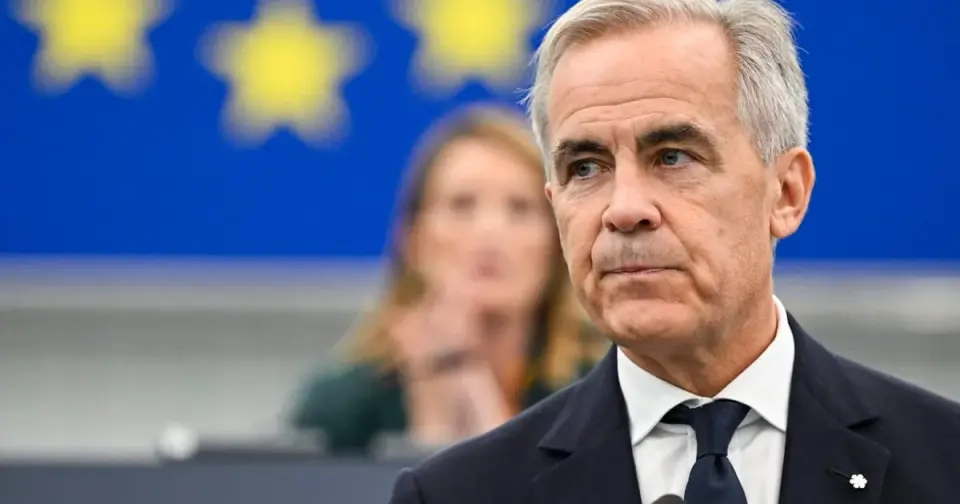
EU member states have removed the term 'associate member' from the draft joint statement for the upcoming EU-Canada summit in Montreal, replacing it with 'ever closer association.' Germany, Italy, Greece, and France objected to the original proposal, which was introduced by European Commission President Ursula von der Leyen in September without prior consultation. The change reflects internal disagreements over the legal implications of a new status, though all parties agree on deepening ties. The summit, scheduled for October 29-30, will focus on concrete cooperation in trade, security, and technology, with formal negotiations to continue through 2027.
Key points
- The final draft of the EU-Canada joint statement replaces 'associate member' with 'ever closer association,' a change driven by objections from Germany, Italy, Greece, and France.
- European Commission President Ursula von der Leyen proposed 'associate membership' in her September State of the Union speech without consulting member states, causing diplomatic friction.
- The EU-Canada summit in Montreal is scheduled for October 29-30, with a follow-up summit planned for 2027 to define the new relationship.
- Cooperation areas include critical minerals, energy, technology, and security, with a specific framework deal between Canada and the European Investment Bank on critical raw materials.
- Canadian Prime Minister Mark Carney has emphasized that the substance of the partnership matters more than the label, framing it as a strategic alliance rather than full membership.
Background
In September 2026, Ursula von der Leyen proposed 'associate member' status for Canada, a move that sparked immediate debate. Earlier drafts suggested a formal 'associate member' concept by 2027, but internal EU disagreements led to the current softer language. The proposal was seen as a response to US trade pressures and a desire to strengthen ties among 'middle powers.'
How outlets are covering it
Politico highlights the diplomatic clash over terminology, noting that Germany, Italy, Greece, and France objected to the 'associate member' label. Le Monde emphasizes that Paris and Berlin were displeased by von der Leyen's lack of consultation, with one Elysée source questioning why the status wasn't offered to South Korea. CBC reports that EU officials describe the new relationship as 'closer to membership than anything we've ever done before,' while acknowledging the 'uncharted territory' of the process. Yahoo focuses on Carney's broader strategy to reduce dependence on the US, noting that the EU is Canada's second-largest trading partner, with $178 billion in trade last year.
Why it matters
The shift in language signals a cautious approach by the EU to avoid legal and political complications while still deepening ties with Canada. The summit will set the stage for a new era of cooperation, potentially reducing mutual dependence on the US and China. The outcome will influence how other countries view the EU's openness to new partnerships and could have implications for global trade and security dynamics.
What to watch
The EU-Canada summit in Montreal will finalize the joint statement and announce new agreements on trade, security, and technology. Formal negotiations will continue through 2027, with the next EU-Canada summit expected to define the 'ever closer association' concept. The European Investment Bank is set to sign a framework deal with Canada on critical raw materials, marking a concrete step toward closer ties.
- EU set to scrap ‘associate member’ offer for Canada POLITICO.eu
- Ahead of EU-Canada summit, European leaders clash over terminology Le Monde.fr
- Canada's new relationship with EU will be 'closer to membership' than ever, senior officials say CBC
- Carney moves to remake Canada alliances as US ties strained Yahoo
- Von der Leyen’s Canada ‘associate membership’ spurs battle of words with EU capitals Euronews.com
Want the full story? Read the original reporting
Read on POLITICO.eu