
Von der Leyen Proposes EU-Led Security Council and Canada Associate Membership
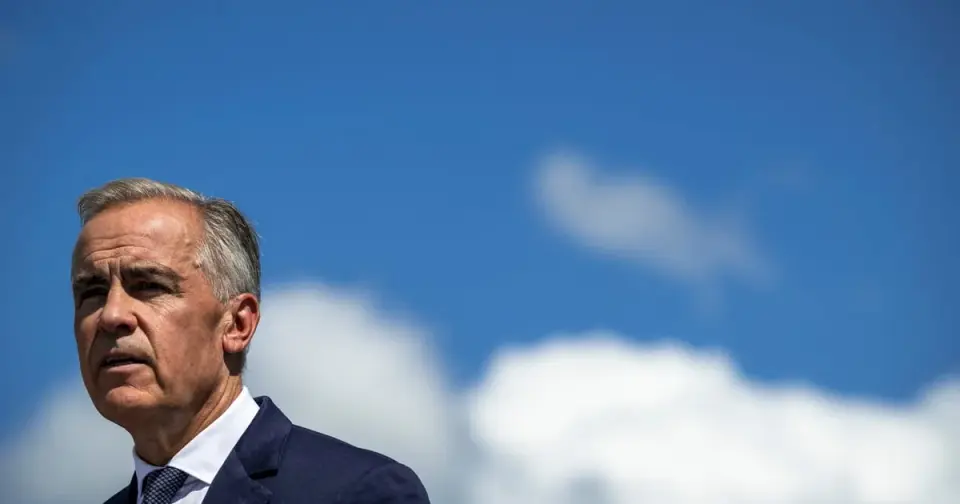
EU Commission President Ursula von der Leyen outlined a strategy for Europe to lead a coalition of 'middle powers' independent of the United States. She proposed a new 'European Security Council' including the UK, Norway, Canada, and Ukraine, and suggested 'associate membership' for Canada. While framing this as a response to Russian and Chinese threats, critics argue the plan risks undermining NATO and lacks concrete solutions for immediate economic and financial crises.
Key points
- Von der Leyen proposed a 'European Security Council' outside NATO to coordinate responses to hybrid threats, including drone incursions and cable cuts, with an 'Emergency Security Protocol' for member states.
- The EU Commission President suggested exploring 'associate EU membership' for Canada, a move that faced diplomatic friction and skepticism regarding its practical implementation.
- The speech emphasized Europe's role as a leader for democracies, explicitly excluding the United States from this new coalition due to perceived withdrawal from European security.
- Critics noted the speech lacked new proposals for Ukraine’s immediate €23 billion funding needs or concrete measures to address Chinese industrial overcapacity and trade imbalances.
- Estonian lawmaker Riho Terras and EPP vice-chair Željana Zovko criticized the Security Council idea, arguing it signals NATO is irrelevant and could be exploited by Russia.
Background
This speech follows recent diplomatic tensions between Brussels and Ottawa, where von der Leyen reversed plans to skip Mark Carney’s address in Strasbourg to strengthen EU-Canada ties. It also builds on her previous declaration of Europe’s 'independence moment' and recent EU efforts to address climate risks through a new Heatwave Plan. The current proposal contrasts with earlier EU struggles to agree on Russia sanctions and Ukraine financing, highlighting a shift toward geopolitical autonomy despite ongoing economic challenges.
How outlets are covering it
Politico frames the speech as a 'geopolitical legacy' declaration that is heavy on lofty ideas but light on practical solutions, noting that many diplomats fear alienating the US. Euronews focuses on the operational aspects, highlighting Defense Commissioner Andrius Kubilius’s call for a 'painful response' to Russian hybrid threats and Economy Commissioner Valdis Dombrovskis’s assurance that the new council would complement, not compete with, NATO. While Politico emphasizes the criticism that the plan ignores immediate economic needs like inflation and Ukraine’s funding gap, Euronews highlights the specific mechanisms for addressing grey-zone warfare, such as the Emergency Security Protocol. Both sources agree that the proposal aims to address the perceived retreat of the US from European security, but they differ in emphasis: Politico views it as a risky diplomatic signal, while Euronews presents it as a necessary evolution of European defense capabilities.
Why it matters
The proposal signals a potential shift in European security architecture, moving away from exclusive reliance on NATO and the US. If implemented, the European Security Council and associate membership for Canada could redefine transatlantic relations and create a new bloc of 'middle powers' to counter Russian and Chinese influence. However, the lack of concrete economic policies and the risk of fracturing NATO alliances could undermine Europe’s strategic autonomy and leave it vulnerable to both external threats and internal divisions.
What to watch
The EU will likely face intense debate within member states regarding the feasibility of the 'associate membership' for Canada and the structure of the European Security Council. The Commission may proceed with developing the 'anti-hybrid warfare playbook' and the Emergency Security Protocol, but progress will depend on resolving disagreements with the US and addressing the immediate financial needs of Ukraine. Critics expect continued skepticism from Eastern European members who view the move as a threat to NATO cohesion.
- Von der Leyen fleshes out Carney’s vision to paint Europe as leader of world’s middle powers politico.eu
- Von der Leyen offers diagnosis but no cure on EU’s ecological malaise politico.eu
- Kubilius: Europe will respond to Russian hybrid threats with ‘pain’ Euronews.com
- EU's von der Leyen backs European Security Council and 'playbook' against sabotage Reuters
- AS IT HAPPENED: Von der Leyen's SOTEU 2026 euractiv.com
Want the full story? Read the original reporting
Read on politico.eu