
Israel and US deny agreement on foreign troops for Lebanon disarmament verification
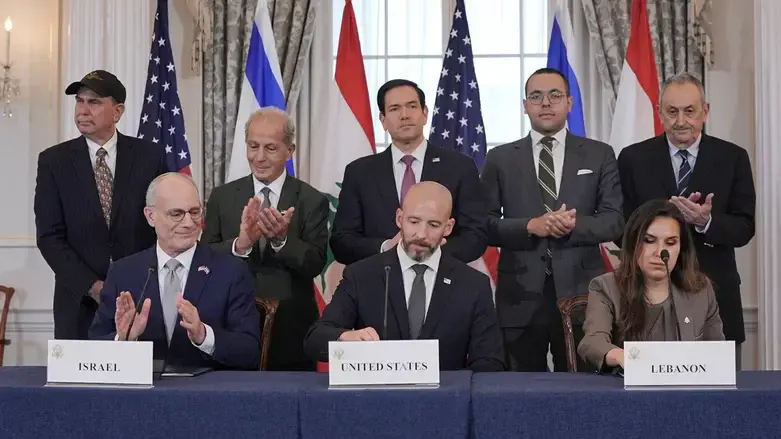
Israel and the United States have denied reports that they and Lebanon agreed on a specific list of nations to oversee Hezbollah’s disarmament. While diplomatic sources in Rome suggested Britain, Italy, Switzerland, and Indonesia were shortlisted, official representatives in Washington and Jerusalem stated that no formal accord exists on the composition of the monitoring body. The dispute centers on the identity of the third-party mechanism that will verify Lebanese military clearance operations in southern Lebanon, a key component of the June Trilateral Framework Agreement.
Key points
- Reuters reported that Israel and Lebanon selected Britain, Italy, Switzerland, and Indonesia to participate in an international monitoring mechanism for Hezbollah disarmament.
- Senior US and Israeli officials denied the report, stating that negotiations on the monitoring body’s composition are ongoing and no agreement has been reached.
- The monitoring mechanism is intended to verify Lebanese military activities in 'pilot zones' such as Srifa, Froun, and Zawtar al-Gharbiya, where Lebanese troops began deploying on July 20.
- US-mediated talks in Rome concluded with agreements on operational parameters, shared maps, and definitions for 'verification' and 'clearance,' but left the identity of the verifying body unresolved.
- The US has opposed renewing the UNIFIL mandate and is pushing for a new framework to support the trilateral agreement, with diplomatic talks expected to resume in early September.
Background
The current negotiations are part of the seventh round of talks aimed at implementing a June 26 diplomatic accord, known as the Trilateral Framework Agreement. This agreement links a phased withdrawal of Israeli forces from southern Lebanon to the complete disarmament of Hezbollah. Previous rounds of talks, including those held in Rome in August, focused on expanding designated 'pilot zones' where Lebanese forces assume sole security responsibilities. The process has been complicated by Hezbollah’s refusal to lay down its weapons and domestic political pressures in both Israel and Lebanon.
How outlets are covering it
Reuters and Israel National News reported that a preliminary list of four nations—Britain, Italy, Switzerland, and Indonesia—had been selected by negotiators to assist in the monitoring framework, with some sources describing the progress as 'cautiously optimistic.' In contrast, The Jerusalem Post reported that senior US and Israeli officials denied any agreement on the composition of the monitoring body, emphasizing that discussions remain active and no formal accord has been finalized. While Reuters highlighted the potential for these nations to deploy troops or administrative personnel, The Jerusalem Post noted that the US and Israel view the identity of the verifying body as a central unresolved issue. Additionally, a Hezbollah-linked network, Al Mayadeen, claimed that direct negotiations between Israel and Lebanon are unlikely to resume until after the summer, contrasting with the US State Department’s characterization of the Rome talks as 'constructive and detailed.'
Why it matters
The resolution of the monitoring mechanism is critical for the implementation of the Trilateral Framework Agreement, which aims to ensure a phased Israeli withdrawal and the disarmament of Hezbollah. Without a clear and agreed-upon third-party verifier, the transition of security responsibilities to Lebanese forces in pilot zones may stall, potentially prolonging the conflict and undermining regional stability. The involvement of international actors could provide the necessary oversight to build confidence among the parties and facilitate the gradual expansion of the pilot zone model to other areas in southern Lebanon.
What to watch
Diplomatic talks are expected to resume in Rome in early September, with continued contacts in Beirut, Jerusalem, and Washington. Lebanon is anticipated to present detailed plans for securing new areas while continuing to implement the current pilot zone strategy. The US will likely continue to push for a new framework to replace UNIFIL, while Israel and Lebanon will need to resolve the dispute over the composition of the monitoring body to advance the disarmament process.
- Report: Four nations shortlisted to oversee Hezbollah disarmament Israel National News
- Lebanon has not agreed to shortlist of countries that could verify Hezbollah's disarmament, official says Reuters
- Britain, Italy, Switzerland, and Indonesia considered for Hezbollah disarmament verification mission - report i24NEWS
- Israel and Lebanon agree Britain, Italy, Switzerland, Indonesia could send peacekeeping troops - sources timesofisrael.com
- US, Israel deny deal on foreign troops for Lebanon verification The Jerusalem Post
Want the full story? Read the original reporting
Read on Israel National News