
Nordic Putin Call Fractures Europe as Trump’s Ukraine Push Stalls
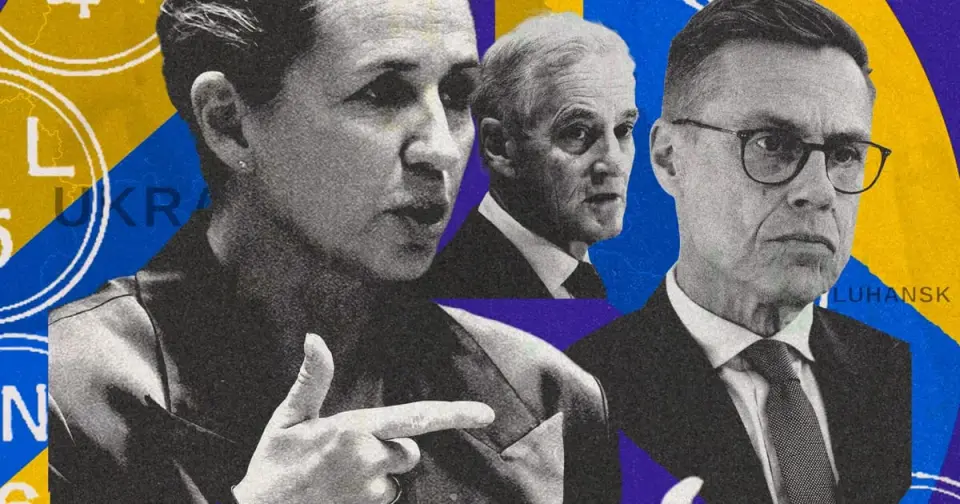
A direct phone call between Finnish President Alexander Stubb and Norwegian Prime Minister Jonas Gahr Støre with Vladimir Putin has exposed deep divisions within Europe regarding how to engage Moscow. While the Nordic leaders aimed to bypass Washington’s stalled peace process, the move triggered sharp criticism from Denmark and Sweden, who view it as appeasement. As Europe prepares for an informal summit in Dublin, leaders remain split on whether to negotiate with Russia or maintain a unified front, amid fears that the U.S. is prioritizing its own interests over European security.
Key points
- Stubb and Støre held a 90-minute call with Putin on Oct. 27, aiming to revive peace talks ahead of upcoming negotiations in Abu Dhabi.
- The initiative sparked immediate backlash from Denmark and Sweden, with leaders accusing the Nordic pair of acting unilaterally and undermining European unity.
- European officials express distrust toward the U.S. role in peace talks, citing concerns that Washington may broker a deal favorable to Russia at Europe’s expense.
- Putin praised the call as 'constructive,' while critics argue it normalizes dialogue with Moscow without halting its aggression in Ukraine.
- An informal EU summit in Dublin this week will address the rift, with Italy’s PM calling for a single European voice in negotiations.
Background
This development follows a series of earlier European attempts to engage Russia directly, including discussions about territorial concessions for NATO guarantees. Previous coverage highlighted that the Nordic call was the first direct contact between Putin and Western European leaders since May, and that it coincided with a limited ceasefire in the Russian-occupied city of Oleshky. The broader context includes a shift in U.S. policy under Trump, who ended financial aid to Ukraine and pursued an energy truce with Moscow, prompting Europe to seek independent diplomatic channels.
How outlets are covering it
POLITICO frames the call as a necessary but risky move to assert European agency, noting that Stubb and Støre believed Washington was not adequately representing European interests. The National highlights Stubb’s potential role as a lead European negotiator, citing his relationships with France, Germany, and the U.S. as assets. ERR argues that solo diplomacy risks a 'false start,' emphasizing that Europe must speak with one voice to both Russia and the U.S. to avoid undermining its leverage. The Telegraph was inaccessible due to a security block, so no perspective could be extracted.
Why it matters
The rift over the Putin call reveals Europe’s struggle to define its role in the Ukraine peace process amid U.S. unpredictability. If Europe fails to present a unified front, it risks being sidelined in negotiations or forced into concessions that do not serve its security interests. The outcome of the Dublin summit and the Abu Dhabi talks will determine whether Europe can influence the peace process or remains a secondary player in a U.S.-Russia-dominated dialogue.
What to watch
European leaders will meet in Dublin this week to discuss a unified approach to Russia and the U.S. The Abu Dhabi talks between Russia, Ukraine, and the U.S. are expected to focus on technical ceasefire arrangements, but no major breakthrough is anticipated. Europe may push for a broader security architecture, but divisions over engaging Putin directly could persist.
- The Kremlin call: How talking to Putin exposed Europe’s deepest rift over Ukraine POLITICO.eu
- Putin may not want peace, warns Norwegian leader who spoke to him POLITICO.eu
- Interview: Putin’s frame of mind, according to the last European leader to speak to him The Telegraph
- Can Finland's President put Europe on a path to negotiations with Russia? The National
- Peeter Kaldre: Solo diplomacy risks a false start ERR
Want the full story? Read the original reporting
Read on POLITICO.eu