
Poland and UK Sign Three-Year Defence Pact Focusing on AI and Air Defence
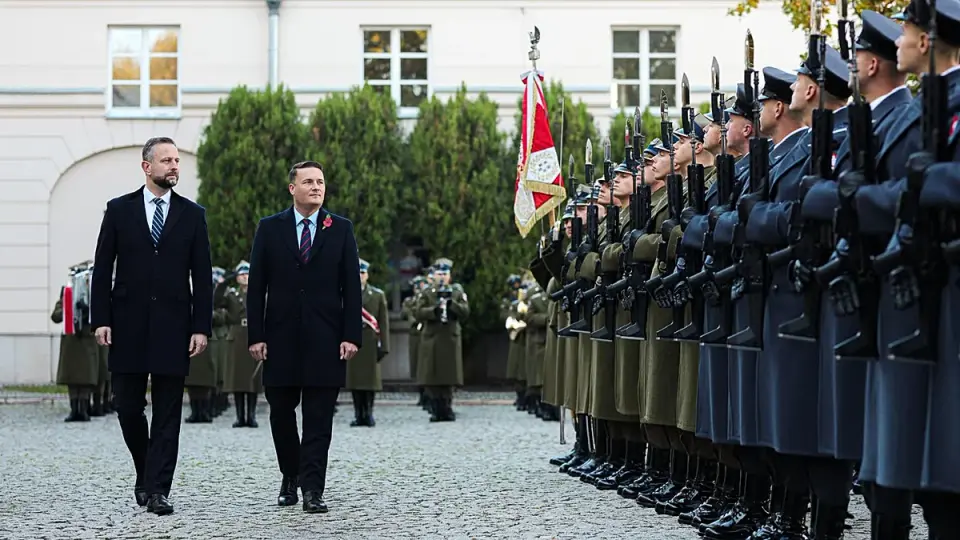
Poland and the United Kingdom signed a three-year defence cooperation plan in Warsaw on October 27, 2026. The agreement, stemming from a recent bilateral treaty, prioritizes joint development in artificial intelligence, drone technologies, and integrated air defence systems. Both nations emphasized unified support for Ukraine and described recent Russian actions against Poland as state-sponsored terrorism. They also reaffirmed their commitment to strengthening the transatlantic alliance while building independent European capabilities.
Key points
- The three-year plan was signed by Polish Deputy PM and Defence Minister Władysław Kosiniak-Kamysz and UK Defence Secretary Wes Streeting.
- Key cooperation areas include new technologies, AI, drones, anti-drone systems, and traditional military exercises.
- The agreement builds upon a Polish-British treaty adopted earlier in 2026.
- UK officials characterized recent Russian hybrid attacks on Poland as terrorism, citing daily drone incursions.
- Both ministers stated that while Europe must build independent capabilities, they do not support full independence from the United States.
Background
This pact follows a period of heightened tension regarding Russian hybrid warfare in Europe. In September 2026, Poland investigated a deliberate fire at a Starlink station as sabotage, with officials attributing it to Russian hybrid warfare. Additionally, Polish Foreign Minister Radosław Sikorski warned in September that Russia might use false-flag attacks to justify domestic mobilization, highlighting concerns about potential escalations. The current agreement reinforces Poland's strategy of diversifying defence partnerships and enhancing autonomous capabilities, a trend also seen in Ukraine's recent infrastructure deals with Finland to reduce reliance on US-controlled satellite networks.
Why it matters
The formalization of a long-term defence framework between two NATO members signals a deepening of strategic alignment in Eastern Europe. By focusing on advanced technologies like AI and air defence, the pact aims to bolster resilience against hybrid threats. Furthermore, the explicit rejection of full independence from the US while advocating for stronger European capabilities offers a diplomatic middle ground, potentially influencing broader transatlantic policy discussions amidst ongoing efforts to resolve the conflict in Ukraine.
What to watch
The next round of peace negotiations for Ukraine, organized by the Trump administration, is expected to take place in Abu Dhabi around mid-November 2026. Meanwhile, the European Commission and Council are working on a joint team to represent the EU's position in these talks. The implementation of the specific joint initiatives mentioned, such as the Miecznik programme and the 155 mm ammunition production line, will likely proceed according to the outlined schedule.
Want the full story? Read the original reporting
Read on Euronews.com