
African Leaders Demand Permanent UN Security Council Seats at General Assembly
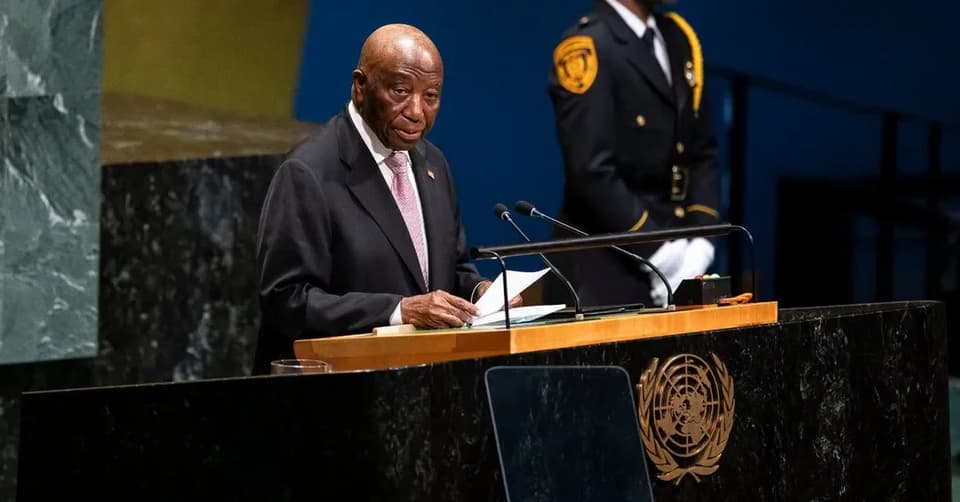
African heads of state intensified demands for permanent UN Security Council representation during the 2026 General Assembly. Leaders from Ghana, Kenya, Liberia, and Namibia argued that the current structure is illegitimate, noting that Africa accounts for a quarter of UN members yet holds no permanent seat. UN Secretary-General António Guterres called the exclusion 'indefensible.' The African bloc seeks two permanent seats with veto power and five reserved non-permanent seats, a push that contrasts with Russia’s stance to preserve the existing veto system.
Key points
- Presidents John Mahama of Ghana, Joseph Boakai of Liberia, William Ruto of Kenya, and Netumbo Nandi-Ndaitwah of Namibia spoke at the UN General Assembly, demanding structural reform for Africa.
- Liberia’s President Boakai highlighted that 80 percent of the Security Council’s mandates concern African peace and security, yet the continent lacks a permanent seat.
- African leaders are requesting two permanent seats with full veto power, plus five reserved non-permanent seats, arguing that Africa’s 1.5 billion people deserve representation.
- UN Secretary-General António Guterres described the lack of permanent African representation as 'unjust and indefensible' during his address on September 22.
- Ghana’s President Mahama framed the reform as an 'imperative' for the UN’s credibility, noting Africa will hold 25 percent of the global population by 2050.
- The African Union had agreed to push for greater representation two decades ago, but this year’s campaign is described as more concerted and coordinated.
Background
This push for reform coincides with broader debates on UN Security Council expansion. In late September 2026, Russia signaled support for expanding the Council but opposed scrapping the veto, while Turkey’s President Erdoğan called for abolishing the veto entirely. These divergent positions highlight the complexity of achieving consensus on structural changes, as African leaders seek to balance the preservation of veto power for new members with the long-term goal of eliminating it.
How outlets are covering it
The New York Times emphasizes the moral and demographic arguments, citing President Boakai’s description of the exclusion as a 'historical injustice' and Mahama’s focus on the UN’s legitimacy. Africanews highlights the political framing, quoting President Ruto’s assertion that Africa is 'permanently excluded' despite being a major subject of Council decisions. Both outlets agree on the core demands but differ in emphasis: The New York Times focuses on the humanitarian and historical context, while Africanews focuses on the political exclusion and the contrast between Africa’s membership share and its lack of voice. Neither outlet reports on the specific reactions of permanent members like the US or China to these demands, though The New York Times notes the Biden administration’s 2024 support for two new seats.
Why it matters
The outcome of this campaign could reshape global governance by altering the balance of power in the world’s primary peacekeeping body. If successful, it would grant Africa a direct role in decisions affecting its security, given that the majority of Council mandates currently concern the continent. Failure to reform could deepen perceptions of institutional illegitimacy and hinder cooperation on global issues, from climate change to conflict resolution, as Africa’s demographic and economic weight grows.
What to watch
The African Union is expected to continue its concerted campaign, potentially leading to formal negotiations or resolutions in the coming months. The response from current permanent members, particularly the US, China, and Russia, will be critical in determining whether the proposed two permanent seats and five non-permanent seats gain traction. The outcome of these discussions may also influence broader debates on the abolition of the veto, as seen in Turkey’s proposal.
- African Presidents Call for Permanent African Seats on U.N. Security Council The New York Times
- Kenya Welcome to the United Nations
- A (permanent) seat at the table of power: African leaders press UN for Security Council reform AP News
- More than 80 years on, Africa still has no permanent UN Security Council seat; Guterres calls it ‘unjust and indefensible’ Business Insider Africa
- Kenya's Ruto calls for permanent African representation on UN Security Council africanews.com
Want the full story? Read the original reporting
Read on The New York Times