
Zelenskyy’s Belgrade Visit Signals Serbia’s EU Pivot Amidst Russian Strikes
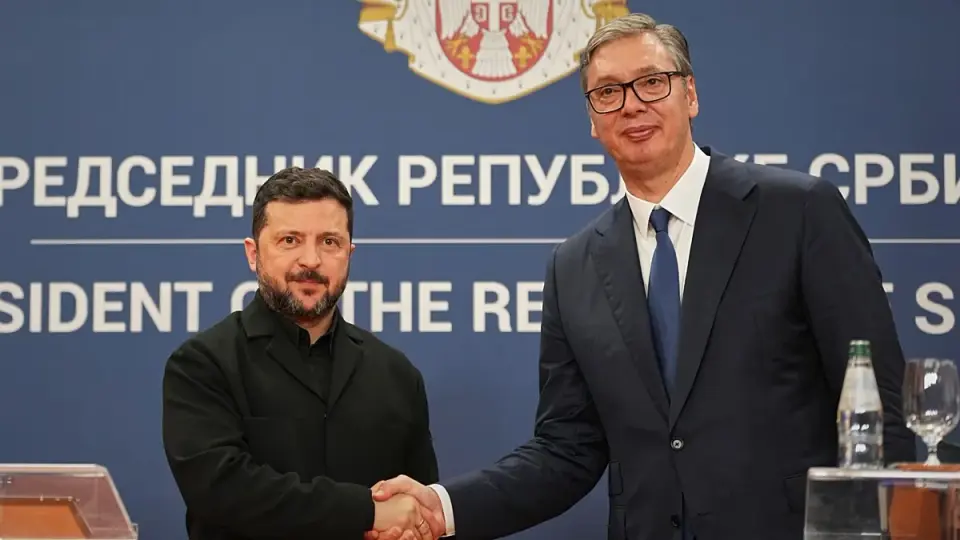
Serbian President Aleksandar Vučić hosted Ukrainian President Volodymyr Zelenskyy in Belgrade for the latter’s first official visit since 2019. The two leaders pledged to finalize a long-stalled free trade agreement by year’s end and signed a memorandum on agricultural cooperation. While Vučić reaffirmed support for Ukraine’s territorial integrity, he maintained Serbia’s refusal to join Western sanctions against Russia, citing energy dependencies. The visit highlighted Serbia’s attempt to balance its EU accession bid with its historical ties to Moscow, even as Russian strikes intensified on Ukrainian infrastructure.
Key points
- Zelenskyy arrived in Belgrade on Friday for a two-day visit, receiving an honor guard welcome and meeting Vučić at the Presidential Palace on Saturday.
- The leaders agreed to complete a free trade deal by the end of 2026, a prerequisite for Serbia’s EU membership and WTO bid, which had been delayed since 2005 due to agricultural quotas.
- Serbia pledged 2 million euros in aid for Ukraine’s energy sector and signed a memorandum on animal health and food safety with Ukraine’s ambassador.
- Vučić stated he would not impose tougher sanctions on Russia, noting Serbia’s reliance on Russian gas, but confirmed support for Ukraine’s EU bid and territorial integrity.
- Zelenskyy reported that Russian ballistic missile and drone strikes on Kyiv killed at least three people, including a child, and damaged critical energy and railway infrastructure.
- Vučić expressed skepticism about the war ending soon, warning of a difficult winter for both nations, while Zelenskyy noted insufficient air defense supplies from Western partners.
Background
This diplomatic move occurs as Vučić prepares to step down as president within weeks, facing pressure from student-led protests and calls for early elections. His potential transition to the role of prime minister suggests a strategy to maintain political control while navigating external pressures. The visit also follows recent tensions regarding Serbia’s military dependence on Russia, including reports of ammunition sales, which Belgrade denies are directed toward Ukraine.
How outlets are covering it
Euronews emphasizes the geopolitical signaling of the visit, framing Vučić’s hosting of Zelenskyy as a message to both Brussels and Moscow to demonstrate Serbia’s EU alignment. Al Jazeera focuses on the economic dimensions, highlighting the urgency of the free trade deal and the specific humanitarian and energy aid commitments. AP News provides a factual overview of the visit and the concurrent Russian attacks on Kyiv, noting the lack of military cooperation discussions. All sources agree on the core facts of the meeting and the trade agreement timeline, but differ in emphasis: Euronews on foreign policy balance, Al Jazeera on economic integration, and AP on the immediate security context.
Why it matters
The visit marks a potential shift in Serbia’s foreign policy, prioritizing EU integration over traditional Russian ties, which could influence regional stability and energy security in the Western Balkans. The progress on the free trade deal is critical for Serbia’s EU accession, while the aid commitments address Ukraine’s immediate energy crisis. The event also highlights the complex dynamics of balancing sovereignty with external pressures in a conflict-affected region.
What to watch
Serbia and Ukraine are expected to finalize the free trade agreement by the end of 2026. Vučić’s resignation and subsequent political transition will determine whether Serbia’s pro-EU stance is sustained. Ukraine will continue to seek increased air defense supplies from Western partners, while Serbia may face further pressure from the EU to align its foreign policy with the bloc’s sanctions regime.
- Vučić hosts Zelenskyy as Serbia seeks closer ties with Ukraine Euronews.com
- Zelenskyy visits Moscow-friendly Serbia as Russian attacks on Kyiv region kill 4 AP News
- Leaders of Serbia and Ukraine pledge closer economic ties Reuters
- Zelenskyy Makes Debut Trip to Serbia as Russian Influence Wanes Bloomberg.com
- Serbia and Ukraine pledge closer economic ties, eye free trade deal Al Jazeera
Want the full story? Read the original reporting
Read on Euronews.com