
Russian drone strikes Ukrainian train near Polish border shortly after Johnson and European officials depart
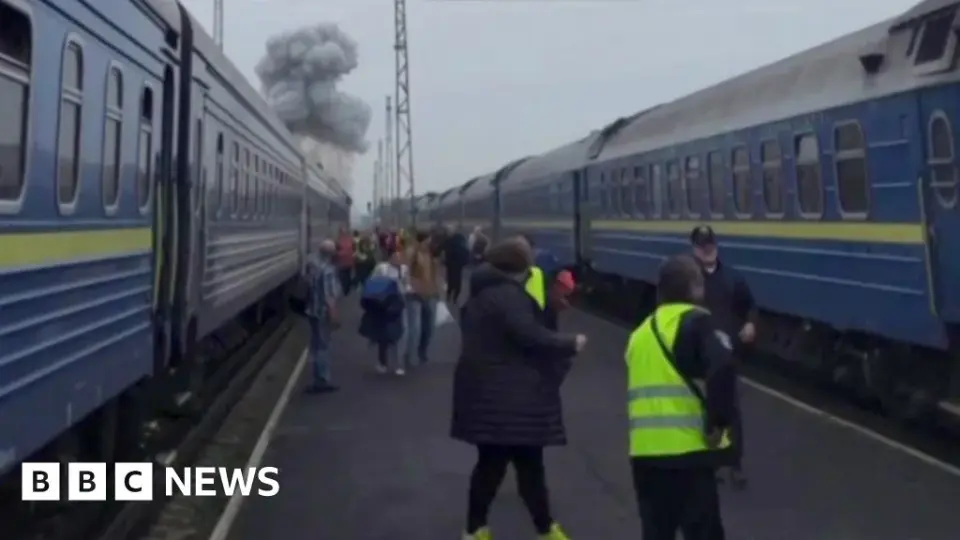
A Russian drone struck a stationary train near the Ukraine-Poland border at Yahodyn shortly after former UK Prime Minister Boris Johnson and other European security officials passed through the station. No casualties were reported, but the strike hit the train's engine after an evacuation order was issued just 15 minutes prior. Ukrainian authorities suggested the target may have been the diplomatic train, while Russia claimed it struck railway infrastructure. The incident occurred as Johnson and others returned from the Yalta European Strategy conference in Kyiv.
Key points
- A Russian jet-propelled drone hit a train at Yahodyn, 2km from the Polish border, shortly after Boris Johnson and European security advisers passed through on a different train.
- No casualties were reported; all passengers were evacuated, and the strike damaged the train's engine.
- Ukrainian state railway company Ukrzaliznytsia stated the target could have been the diplomatic train, noting the struck train left the station early due to constant threats.
- Former CIA chief David Petraeus was on another train at Yahodyn station during the strike, according to Ukrainian authorities.
- Former Swedish PM Carl Bildt confirmed his train received an evacuation order but was later allowed to proceed to the Polish border station at Dorohusk.
- Ukrainian Foreign Minister Andrii Sybiha called the strike 'barbaric' and urged increased sanctions against Moscow.
Background
This incident follows a pattern of Russian strikes on Ukrainian railway infrastructure, including a depot attack in Kyiv earlier this month that killed six employees and a recent drone attack on a passenger train in southern Ukraine that killed a female conductor. In January, a Russian strike on a crowded train in Kharkiv region killed five people. Russia has also expanded its targeting to civilian infrastructure, including over 200 gas stations in June-July, causing significant disruption and casualties. The broader context includes rising tensions in Europe, such as a recent explosion at Augsburg’s train station in Germany that wounded two Ukrainians, amid ongoing concerns about Russian escalation near NATO borders.
Why it matters
The strike highlights the escalating risk to civilian infrastructure and diplomatic movements near the Ukrainian-Polish border, potentially signaling a shift in Russian targeting toward high-profile figures and international corridors. It underscores the vulnerability of Ukraine’s railway network, its primary mode of transport since air travel was suspended in 2022, and may intensify calls for enhanced air defense and sanctions against Moscow. The incident also raises concerns about potential escalation into NATO territory, given its proximity to the Polish border and the presence of European security officials.
What to watch
Ukrainian and Polish authorities are likely to investigate the strike further, while European leaders may accelerate discussions on additional sanctions and military support for Ukraine. Johnson and other officials may face scrutiny over the security protocols for diplomatic travel in conflict zones. Russia may face increased diplomatic pressure, but its response to the incident and subsequent strikes remains uncertain. The incident could also prompt further evacuations or security measures for trains near the border.
Want the full story? Read the original reporting
Read on BBC