
EU Commission sets cautious 2027 roadmap for Ukraine, diverging from Moldova’s faster track
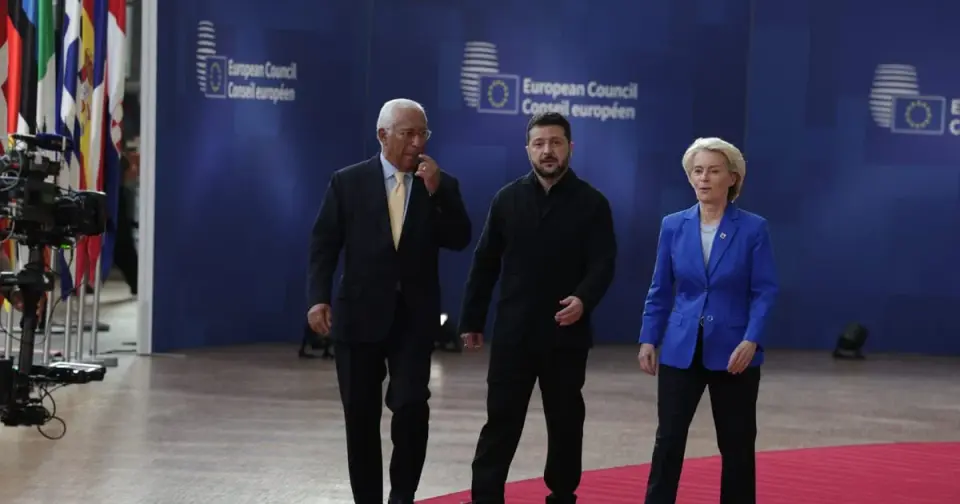
The European Commission has released a cautious roadmap for Ukraine’s EU accession, setting limited targets for 2027 and avoiding a specific membership date. While Brussels urges Kyiv to accelerate rule-of-law reforms, it projects progress in only seven policy areas next year, significantly lagging behind Moldova, which is expected to complete over 20. The document highlights the difficulty of implementing reforms during an ongoing war, though it notes that Ukraine has met conditions to open two stalled negotiating clusters by year-end.
Key points
- The European Commission’s enlargement package, presented on November 4, 2026, outlines a cautious path for Ukraine, targeting provisional completion of negotiations in only seven policy areas by 2027.
- Brussels explicitly avoids committing to a final membership date for Ukraine, describing the roadmap as a 'living document' that can be updated if reforms advance faster than expected.
- The Commission urges Kyiv to 'urgently and significantly step up' rule-of-law reforms, stating that meeting key requirements in the first half of 2027 is necessary before provisional conclusions in individual policy areas can be reached.
- A significant divergence exists between Ukraine and Moldova; while Ukraine targets seven areas, Moldova is projected to complete negotiations in more than 20, effectively decoupling their parallel membership bids.
- The Commission states that Ukraine has met the necessary conditions to open two stalled negotiating clusters (covering green agenda and resources/agriculture) by the end of 2026, urging the accession conference to make every effort to do so.
- The roadmap acknowledges that the ongoing war places extraordinary demands on Ukraine’s government and parliament, complicating the passage and implementation of required legislation, though a dedicated task force has been established to provide support.
Background
Ukraine and Moldova launched membership negotiations simultaneously in June 2024 after securing candidate status in 2022. Recent diplomatic breakthroughs, including Ukraine’s passage of a minority rights law in October 2026, allowed Hungary to lift its veto, enabling the opening of two additional clusters. However, the new Commission roadmap signals a shift in pace, with Moldova now expected to advance much faster than Ukraine due to the latter's ongoing conflict and slower reform implementation.
How outlets are covering it
Politico emphasizes the structural divergence between Ukraine and Moldova, noting that Brussels has set a far more ambitious roadmap for Moldova than for Ukraine. The outlet highlights the Commission’s cautious approach to setting dates, reflecting the complexities of admitting a country still at war. Mezha.net focuses on the domestic political reaction, citing Petro Poroshenko’s urging for Ukraine to speed up rule-of-law reforms rather than postponing them until the end of the war. Poroshenko identified judicial independence and prosecutor reforms as priority tasks, aligning with the Commission’s demands but framing the issue as a domestic urgency rather than a diplomatic slowdown. While both sources agree on the need for accelerated reforms, Politico frames the 2027 targets as a realistic but slow pace, whereas Mezha frames the current pace as insufficient given the political will to integrate.
Why it matters
The roadmap signals that EU membership for Ukraine is not a guaranteed outcome by a specific date but a conditional process dependent on reform speed. The decoupling from Moldova’s faster track may alter political dynamics within the EU, as member states may prioritize Moldova’s accession while Ukraine’s progress remains tied to the war's outcome and domestic judicial reforms. This cautious approach could impact Ukraine's leverage in negotiations and its ability to secure further financial and political support from Brussels.
What to watch
The accession conference is expected to make efforts to open the two stalled clusters (green agenda and resources/agriculture) by the end of 2026. Ukraine must meet rule-of-law requirements in the first half of 2027 to allow provisional conclusions in the seven targeted policy areas. The Commission will monitor progress and may update the 'living document' roadmap if reforms advance faster than expected, though no final membership date is currently set.
- EU tells Ukraine to speed up reforms, sets out more cautious path for accession POLITICO.eu
- Ukraine falls behind Moldova on path to EU membership Financial Times
- Ukraine needs to accelerate reforms to meet its EU accession goal, bloc’s executive says Reuters
- Moldova outpaces Ukraine on new EU membership roadmap The Kyiv Independent
- Poroshenko urged that rule-of-law reforms not be postponed until the end of the war Mezha.net
Want the full story? Read the original reporting
Read on POLITICO.eu