
IAEA confirms Assad-era Syrian reactor was nearly complete and capable of producing weapon-grade material
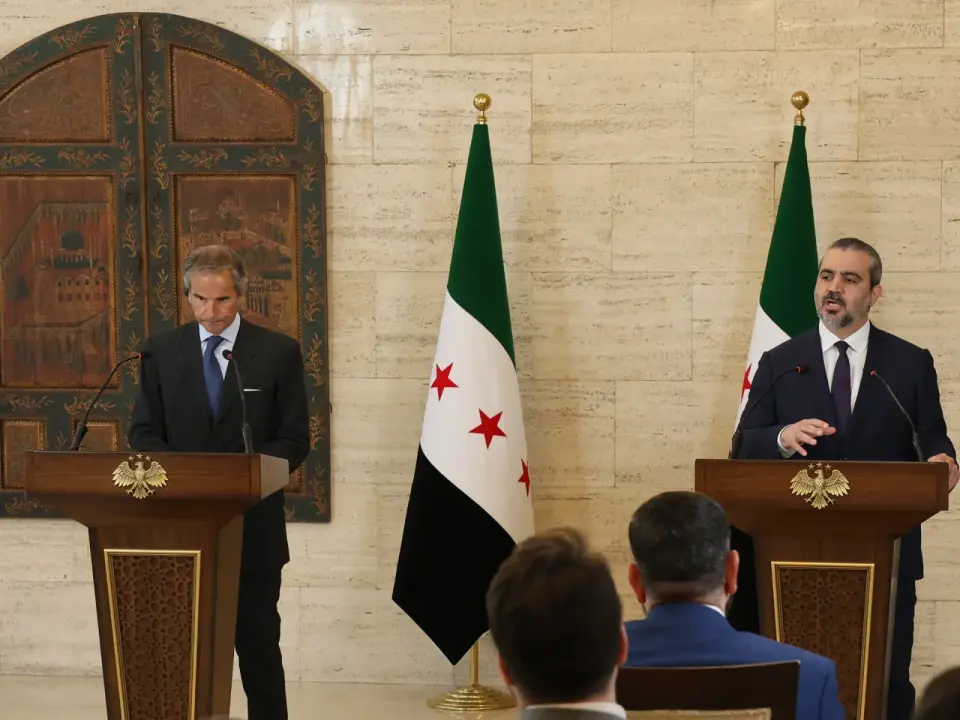
The International Atomic Energy Agency (IAEA) confirmed that a nuclear reactor built by Syria under Bashar al-Assad was nearly complete and designed to produce fissile material for nuclear weapons. Inspectors found approximately 73 tonnes of natural uranium metal at a previously undeclared site and confirmed the reactor’s cooling infrastructure at the Deir Az Zor facility, which was destroyed by Israeli airstrikes in 2007. The material is now under IAEA safeguards, with Syria deciding whether to keep or remove it.
Key points
- IAEA Director General Rafael Grossi stated the reactor was 'very efficient' in producing fissile material for weapons and was 'almost completed' before its 2007 destruction.
- Inspectors discovered approximately 73 tonnes of natural uranium metal in the form of fuel rods at a previously undeclared site notified by Syria in July 2026.
- The IAEA confirmed the cooling infrastructure at the Deir Az Zor site is consistent with a nuclear reactor, resolving long-standing questions about the facility.
- Grossi emphasized that the material is now under safeguards, with cameras installed, and stated that the decision to move or remove the uranium is up to the Syrian government.
- The IAEA described the investigation as a 'historic breakthrough' following the ouster of Assad in December 2024, which allowed access to previously hidden sites.
Background
Syria’s undeclared nuclear program, including a North Korea-built reactor at Deir Az Zor, became public after Israeli airstrikes destroyed the facility in 2007. The Assad regime had leveled the site and failed to fully cooperate with the IAEA. Following the fall of Assad in late 2024, the new Syrian authorities agreed to cooperate with the IAEA, leading to the August 2026 inspections that revealed the extent of the hidden program.
How outlets are covering it
All three outlets (Al Jazeera, The Guardian, and The Jerusalem Post) agree on the core findings: the reactor was nearly complete, capable of producing weapon-grade material, and the material is now under safeguards. The Guardian highlights the technical detail that natural uranium metal could be diverted to a covert weapons program to produce plutonium, citing the Nuclear Threat Initiative. The Jerusalem Post emphasizes the IAEA’s description of the investigation as a 'historic breakthrough' and notes that the reactor was 'almost completed.' Al Jazeera focuses on the physical challenges inspectors faced, such as tearing down walls to access hidden materials. All outlets agree that the decision to move or remove the uranium is up to Syria.
Why it matters
This confirmation resolves a decades-long mystery about Syria’s nuclear ambitions and demonstrates the effectiveness of IAEA safeguards following a regime change. It also highlights the risks of undeclared nuclear programs in the Middle East, where Israel maintains its own undeclared nuclear arsenal. The discovery of 73 tonnes of natural uranium metal underscores the scale of Syria’s hidden program and the importance of international monitoring.
What to watch
The IAEA will continue to monitor the Deir Az Zor site as excavation work progresses. The Syrian government must decide whether to keep the uranium in place or move it to a third country for safe disposal. The IAEA will maintain safeguards and cameras to ensure the material is accounted for until the last gram is verified.
- Syria’s Assad-era reactor configured for nuclear weapons: IAEA Al Jazeera
- Syrian reactor could have been used for nuclear weapons if completed, UN says The Guardian
- Secret Syrian nuclear reactor bombed by Israel in 2007 was almost complete, IAEA says The Times of Israel
- Syrian nuclear site destroyed by IDF in 2007 was useful for weapon production, IAEA chief says The Jerusalem Post
- Syrian nuclear reactor could have been useful for weapons, IAEA chief says Reuters
Want the full story? Read the original reporting
Read on Al Jazeera