
Iran Militarizes Women as Hijab Enforcement Collapses
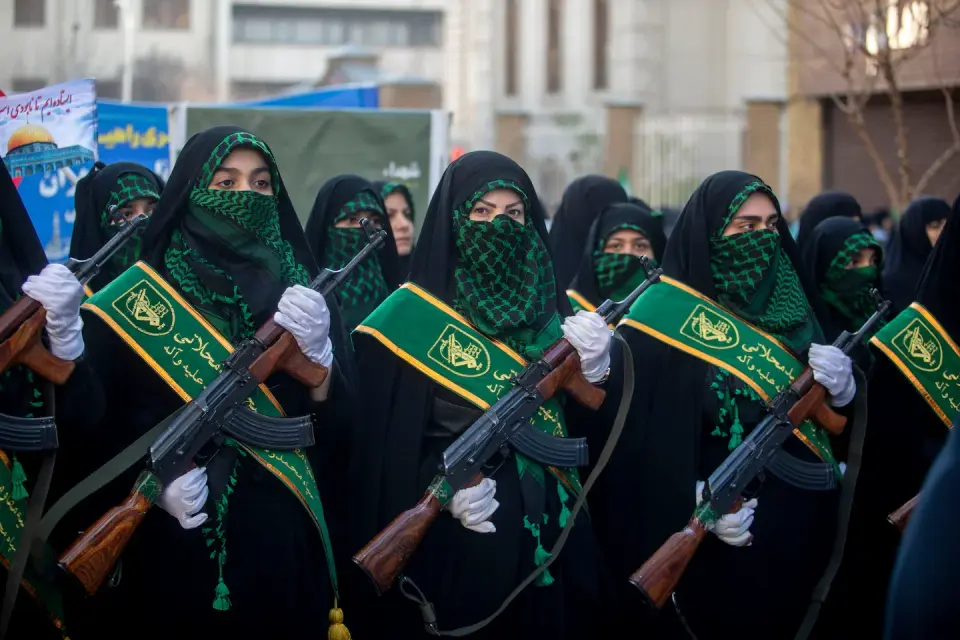
Iran is mobilizing women for military training to suppress domestic unrest, even as the state’s ability to enforce hijab laws has effectively collapsed following the 2022-2023 protests.
Key points
- In September 2026, women in Iran participated in public military exercises, operating air-defense systems and carrying rifles, according to the Foundation for Defense of Democracies.
- Analysts suggest these trainees may be deployed to combat internal dissent rather than external threats, as the regime seeks to prevent economic crises from sparking nationwide unrest.
- Sociologist Abbas Jong notes that while hijab laws remain on the books, the morality police no longer enforce them, a shift resulting from the 'Women, Life, Freedom' movement.
- The 2022 protests, triggered by the death of Mahsa Amini, led to a societal shift where women stopped wearing headscarves, a change that persisted despite subsequent crackdowns.
- The regime’s reliance on military autocracy and economic control by the Revolutionary Guard has failed to reverse the cultural changes initiated by the 2022-2023 movement.
Background
This development follows the 2022 'Women, Life, Freedom' protests, which began after the death of Mahsa Amini in police custody. The movement, which spread across over 130 towns, challenged the Islamic Republic’s control over daily life. Although the regime responded with severe repression, including a crackdown in January 2026 that reportedly killed up to 30,000 protesters, the cultural shift regarding dress codes has endured. Recent US-Iran tensions, including missile strikes in February 2026 that killed Supreme Leader Ali Khamenei, have further destabilized the political landscape, leaving the regime in a state of 'neither-war-nor-peace limbo.'
How outlets are covering it
The Washington Post and the Foundation for Defense of Democracies emphasize the regime’s strategic pivot toward militarizing women to maintain internal order, viewing the September exercises as a tool to counter potential unrest. In contrast, Bloomberg and Freie Universität Berlin focus on the irreversible social changes that have occurred, highlighting how the 'Women, Life, Freedom' movement successfully eroded the state’s power to enforce dress codes, regardless of official laws. While the FDD views the military training as a sign of regime desperation to control the population, the sociological analysis suggests the regime has already lost control over the cultural sphere, as evidenced by the widespread rejection of the hijab in public spaces.
Why it matters
The divergence between the regime’s military mobilization and the societal rejection of its core ideological symbols indicates a deepening legitimacy crisis. The inability to enforce hijab laws, despite the presence of morality police, suggests that the state’s coercive power is insufficient to reverse the social transformations of the past four years. This dynamic may influence the trajectory of future unrest, as the regime attempts to use military force to compensate for its loss of cultural authority.
What to watch
Observers will watch whether the newly trained women are deployed to suppress protests or if the continued non-enforcement of hijab laws leads to further erosion of the regime’s authority. The economic crisis and the aftermath of the February 2026 strikes will likely determine if the current 'neither-war-nor-peace' status quo can be maintained or if it will devolve into more significant instability.
- Opinion | To survive, Iran is rewriting its rules for women The Washington Post
- The Iranian Revolution Hiding in Plain Sight Bloomberg.com
- Iran’s ‘lion-hearted daughters’ sign up to defend propaganda regime The Times
- “At the Time, Women in Iran No Longer Had to Wear Headscarves” • Featured Stories Freie Universität Berlin
- To survive, Iran is rewriting its rules for women Foundation for Defense of Democracies
Want the full story? Read the original reporting
Read on The Washington Post