
Reggio Emilia mayor clarifies stance after Jewish educators cancel Italy trip over political pledge
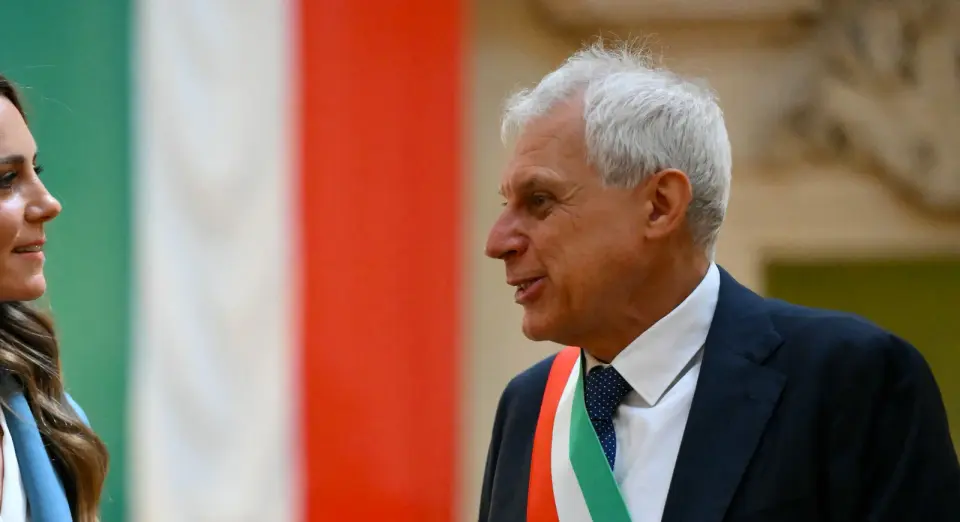
The mayor of Reggio Emilia, Italy, clarified that a political statement regarding Israel was not a mandatory requirement for visiting educators, following the cancellation of a professional development trip by Jewish preschool teachers. The incident, which involved demands to sign a pledge distancing oneself from Israel’s actions in Gaza, has sparked accusations of antisemitism and prompted diplomatic intervention from the U.S. State Department.
Key points
- Mayor Marco Massari stated that the city’s education charter is an 'open document' for discussion, not a binding litmus test for visitors, denying that the pledge was a condition for attendance.
- Over 70 U.S. Jewish educators from the Paradigm Project canceled their planned visit to Reggio Emilia after being asked to sign a statement condemning Israel’s actions in Gaza and the occupied territories.
- U.S. Special Envoy Yehuda Kaploun welcomed Massari’s clarification, emphasizing that American Jewish educators are welcome regardless of their identity or beliefs, and praised local cooperation to ensure safe participation.
- Massari maintained the city’s criticism of Israel’s government and its characterization of the war in Gaza as a genocide, while asserting that Reggio Emilia does not demand political or religious examinations of its visitors.
- The controversy arose after local parents protested the educators' participation, leading to scrutiny of their social media profiles and the circulation of the controversial pledge.
Background
This incident follows a series of earlier reports in October 2026 regarding the cancellation of the educational exchange. Previous coverage noted that the Paradigm Project announced the cancellation on October 7, 2026, citing the demand for the political pledge. While some outlets reported that the host organization, Reggio Children, later claimed the pledge was not an official requirement, the mayor’s recent remarks aim to resolve the ambiguity by framing the document as a non-binding discussion point. The archive also highlights that a separate delegation of Israeli educators continued their program in the city during the same period, indicating that the exclusion was specific to the U.S. Jewish educators who refused the pledge.
How outlets are covering it
Jewish Insider and the New York Post emphasize the perception of antisemitism, noting that educators felt their identities were profiled and that the demand to condemn Israel was a form of political pressure. The New York Post cites Italian politician Ivan Scalfarotto, who labeled the requirement as antisemitic. In contrast, the eJewishPhilanthropy perspective, voiced by educator Yehudis Smith, focuses on the pedagogical and emotional impact, describing the incident as a betrayal of the Reggio Emilia philosophy’s core values of inclusion and dignity. Smith argues that while the political demand was harmful, the educational principles of Reggio Emilia remain valid and can be articulated through Jewish tradition, suggesting a separation between the political controversy and the educational method. Massari’s perspective, as reported by Jewish Insider, attempts to bridge these views by denying the requirement was mandatory while maintaining the city’s political stance on Israel.
Why it matters
The incident highlights the increasing intersection of geopolitical conflicts with educational and cultural exchanges, particularly in the context of rising antisemitism in Europe. It underscores the challenges faced by Jewish communities in balancing professional development with political pressures and the potential for diplomatic interventions to mitigate such conflicts. The mayor’s clarification may influence future international educational partnerships and the perception of Italy’s stance on Israel and Jewish communities.
What to watch
The U.S. State Department is expected to monitor the situation to ensure that visiting educators can participate safely and without political pressure. The Paradigm Project may consider rescheduling the trip or seeking alternative educational opportunities. The incident may also lead to broader discussions within the Jewish educational community about the relationship between political affiliations and professional development, as well as potential policy changes in how educational institutions handle political statements in international exchanges.
- Reggio Emilia mayor walks back anti-Israel litmus test for preschool educators Jewish Insider
- We didn’t need Reggio Emilia to teach us how to see children eJewishPhilanthropy
- When Jewish Educators and Artists Must Pass a Political Test to Belong The Times of Israel
- Jewish educators told to condemn Israel before attending conference: report New York Post
- Dozens of Jewish educators say they had to cancel conference in Italy ABC7 New York
Want the full story? Read the original reporting
Read on Jewish Insider