
Rubio’s South American Tour Cements US Ties with Right-Wing Allies Amid Controversial Venezuela Oil Deal
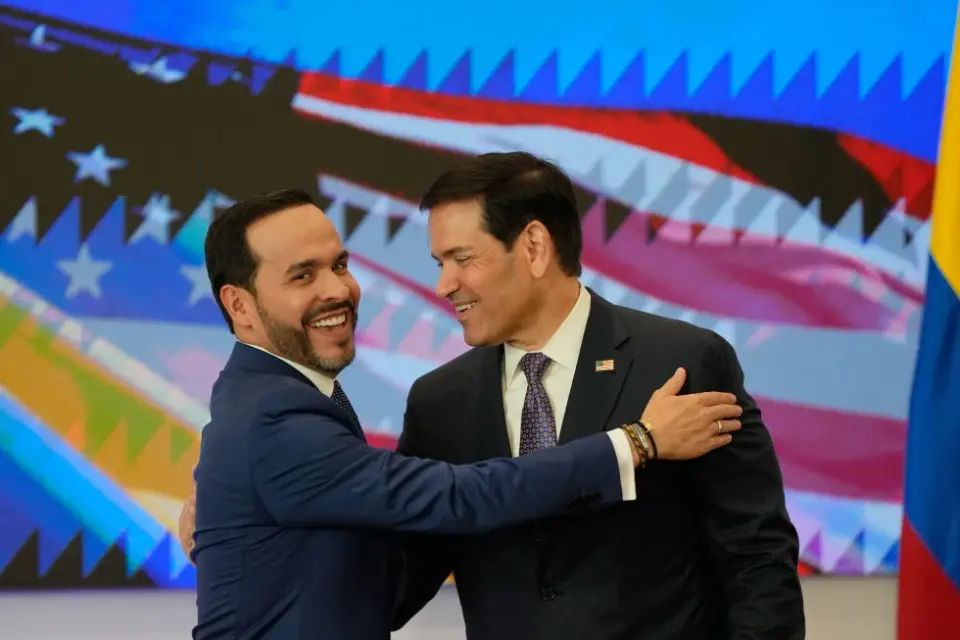
US Secretary of State Marco Rubio visited Colombia, Ecuador, and Peru to strengthen security and economic ties with right-wing governments, defending a recent oil deal with Venezuela while facing criticism over sovereignty and military operations.
Key points
- Rubio met with Colombian President Abelardo de la Espriella in Barranquilla to sign agreements on critical minerals and civilian nuclear power.
- The US and Colombia are expanding cooperation to combat drug trafficking, with the US intercepting a vessel linked to Los Choneros during the visit.
- Rubio defended a deal giving the US control of one-fifth of Venezuela’s oil reserves, arguing it will benefit the Venezuelan people rather than corrupt officials.
- Critics, including former candidate Ivan Cepeda, labeled the agreements a surrender of Colombian sovereignty and criticized de la Espriella’s loosening of gun restrictions.
- The tour aligns with the Trump administration’s 'Donroe Doctrine' to counter Chinese influence and expand US military presence in the Western Hemisphere.
Background
This visit follows a wave of right-wing electoral victories in Latin America, including de la Espriella’s August 2026 inauguration in Colombia, which marked a shift from the progressive administration of Gustavo Petro. The US has actively supported these conservative candidates through financial and political backing, integrating them into the Americas Counter Cartel Coalition. Previous tensions between the Trump administration and Petro’s government have given way to a renewed strategic alliance focused on security and trade.
How outlets are covering it
AP News emphasizes the economic and security dimensions of Rubio’s tour, highlighting the signing of agreements on critical minerals and nuclear cooperation, as well as the defense of the Venezuela oil deal. Al Jazeera frames the visit as part of a broader US effort to counter Chinese influence in Latin America, noting that China is Peru’s top trading partner. Both outlets report on the criticism from leftist figures like Ivan Cepeda, who view the agreements as a surrender of sovereignty. AP News focuses on the humanitarian concerns regarding US military strikes, while Al Jazeera highlights the political alignment with right-wing governments and the 'Donroe Doctrine.'
Why it matters
The tour signals a significant shift in US-Latin American relations, prioritizing security and economic control over traditional diplomatic norms. The Venezuela oil deal and expanded military operations could reshape regional power dynamics, potentially exacerbating tensions with China and raising concerns about sovereignty and human rights in the region.
What to watch
Rubio is expected to continue his tour in Ecuador and Peru, where he will meet with Presidents Daniel Noboa and Keiko Fujimori to discuss trade and security. The US and Colombia may see further military cooperation, including the deployment of radar and drone technology, while debates over sovereignty and gun restrictions are likely to intensify in Colombia.
- Rubio offers solid support to Trump-friendly leader in Colombia at start of South America tour AP News
- Rubio promises security cooperation to Colombia's new president Reuters
- Rubio visits Ecuador as Trump-friendly leader helps the US counterdrug push in the region The Seattle Times
- Marco Rubio says US seeks more economic and security ties in Latin America Al Jazeera
- Marco Rubio arrives in Colombia with China ties, trade deals on agenda South China Morning Post
Want the full story? Read the original reporting
Read on AP News