
NATO Chief Warns Russia’s Escalation Strengthens European Resolve for Defence Autonomy
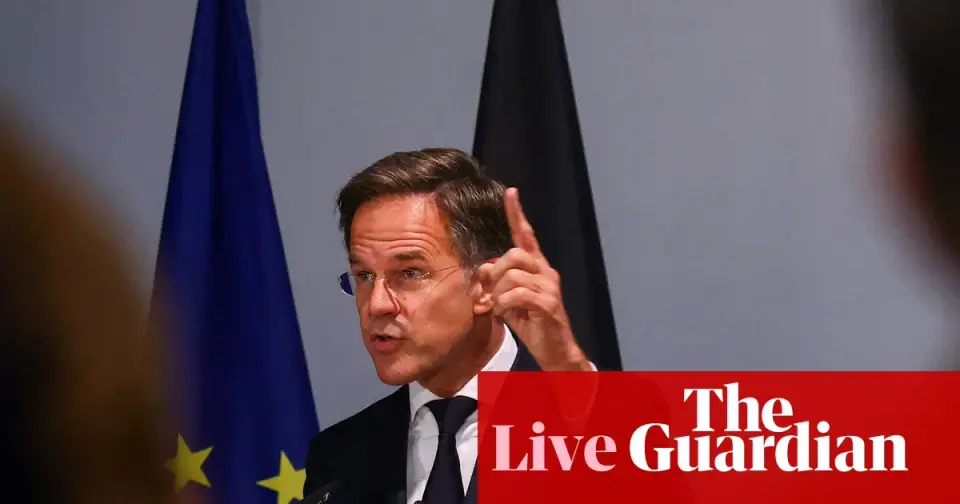
NATO Secretary General Mark Rutte stated that Russia’s recent hybrid attacks and unrelenting war in Ukraine have strengthened the European case for increased defence spending. Speaking in Berlin, Rutte described Moscow’s actions as 'reckless' and a sign of weakness, arguing they only solidify Western support for Kyiv. German Foreign Minister Johann Wadephul emphasized the need for 'credible deterrence' through accelerated weapons production, citing a recent drone incident at Leipzig airport. Rutte highlighted Germany’s leadership in 'NATO 3.0,' a shift where European allies take greater responsibility for security rather than relying solely on the US. While Rutte expressed confidence in US support, he stressed that Europe must assume political and military leadership to counter long-term Russian threats.
Key points
- Rutte stated Russia’s actions are 'reckless' and 'dangerous' but have the opposite effect of strengthening European resolve to support Ukraine.
- German Foreign Minister Wadephul called for accelerated defence manufacturing and increased spending to ensure 'credible deterrence' against Moscow.
- Rutte described the current situation as 'NATO 3.0,' a profound transformation where European allies and Canada take greater responsibility for their own security.
- Rutte noted that Russia suffers over 40,000 casualties monthly yet shows no willingness to end the war, continuing to target civilian infrastructure in Ukraine.
- Wadephul linked recent hybrid attacks, including a drone incident at Leipzig airport, to a broader pattern of Russian aggression intended to destabilize European elections and public opinion.
Background
This development follows a series of security incidents in Europe, including a suspected Russian missile strike in Poland in July and a wave of sabotage attacks on defence facilities across Germany, Italy, and the Baltics in early September. These events have heightened concerns about Russian hybrid warfare and tested NATO’s readiness, leading to increased calls for European defence autonomy.
How outlets are covering it
The Guardian and NATO’s official statement emphasize that Russia’s escalatory tactics have backfired, strengthening European unity and commitment to Ukraine. Rutte framed the situation as a sign of Russian weakness. In contrast, Anadolu Agency focused on the practical imperative for Germany and allies to ramp up defence output to maintain 'credible deterrence,' highlighting the tangible threat posed by hybrid attacks. UA.NEWS highlighted Rutte’s rejection of the idea that negotiations alone can resolve the conflict, stressing the long-term nature of the Russian threat. All sources agree that European security responsibility is shifting away from sole reliance on the US, though Rutte insisted the US remains supportive.
Why it matters
The shift toward 'NATO 3.0' signals a fundamental change in European security architecture, with member states committing to higher defence spending and greater military autonomy. This reduces reliance on US protection and aims to deter further Russian aggression through enhanced collective capabilities and industrial output.
What to watch
European allies are expected to continue increasing defence budgets and accelerating weapons production. Germany plans to provide additional air defence support to Ukraine before winter. Further hybrid attacks or airspace violations may occur as Russia attempts to destabilize European societies and elections.
- Russia’s actions have strengthened European case for boosting defence spending, says Nato chief – as it happened The Guardian
- NATO Secretary General in Berlin: Germany and NATO 3.0, strengthening Europe, delivering for the Alliance North Atlantic Treaty Organization | NATO
- Germany says NATO must ramp up defense output for ‘credible deterrence’ against Russia Anadolu Ajansı
- Rutte reaffirms NATO solidarity with Germany after Russian drone attack euractiv.com
- Rutte warned that Russia remains a long-term threat to Europe UA.NEWS
Want the full story? Read the original reporting
Read on The Guardian