
Supreme Court hears arguments that Palestine Action ban has triggered mass civil disobedience
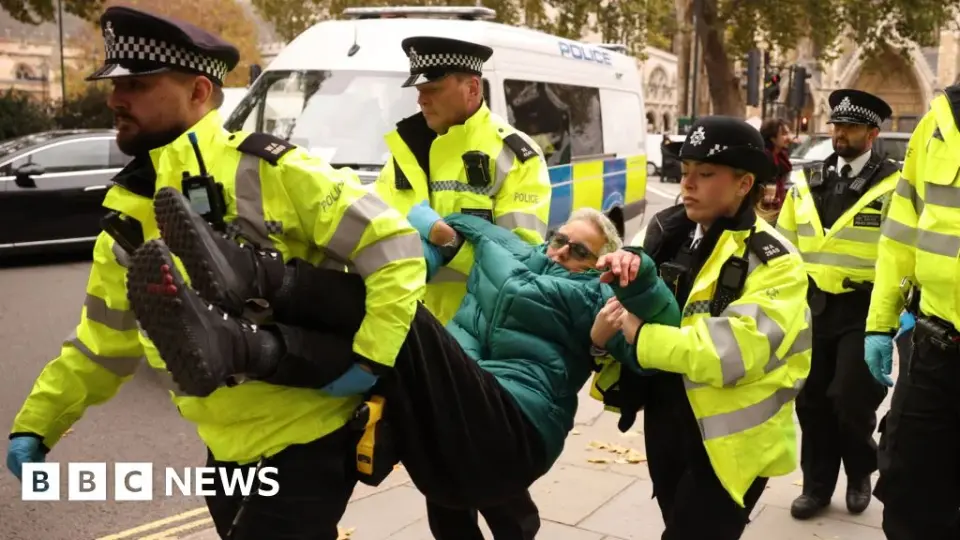
The UK Supreme Court began hearing a challenge to the proscription of Palestine Action, with lawyers arguing the ban has caused a 'crisis of confidence' in anti-terror laws and led to over 4,000 arrests. While the government defends the ban as proportionate, critics claim it disproportionately targets peaceful protest tactics similar to those used by historical groups like the suffragettes.
Key points
- Huda Ammori, co-founder of Palestine Action, is challenging the group's designation as a terrorist organization, arguing the ban violates freedom of speech and protest.
- Lawyers for Ammori stated that the proscription has led to unprecedented civil disobedience, with over 4,000 arrests and 1,200 charges authorized for people holding supportive signs.
- The Home Office argues the ban is lawful and proportionate, citing convictions for serious damage to property and a 'terrorist connection' in the raid on Elbit Systems.
- Critics argue that Palestine Action's tactics, such as graffiti and lock-ons, are similar to or less extreme than those used by the suffragettes, who were not proscribed.
- Jewish groups submitted arguments stating that Palestine Action's targets have expanded to include mainstream Jewish institutions, posing a threat to the community.
Background
The ban on Palestine Action took effect in July 2025, leading to a series of protests and arrests. In October 2026, cultural figures signed an open letter condemning the use of anti-terror laws to ban books by authors who donated to the group, describing the situation as a 'repressive absurdity'. The current Supreme Court hearing follows a Court of Appeal decision that upheld the ban, with judgment expected later in the month.
How outlets are covering it
BBC and The Guardian both report on the Supreme Court hearing but emphasize different aspects. BBC focuses on the 'crisis of confidence' in anti-terror laws and the scale of arrests, while The Guardian highlights the comparison to suffragettes and the argument that the ban chills broader Palestinian solidarity. Both sources note the government's defense of the ban as proportionate, but The Guardian provides more detail on the specific tactics used by Palestine Action and the arguments from Jewish groups.
Why it matters
The outcome of this case could set a precedent for the use of terrorism legislation against protest groups in the UK, with implications for freedom of speech and the definition of terrorism. The mass arrests and civil disobedience highlight the deep divisions over the proscription and its impact on public discourse.
What to watch
The Supreme Court hearing is expected to conclude on Thursday, with a judgment anticipated at a later date. The outcome will determine whether the ban on Palestine Action is upheld or overturned, potentially leading to further legal challenges or changes in anti-terror legislation.
- Palestine Action ban undermined confidence in anti-terror laws, Supreme Court told BBC
- U.K. Supreme Court Hears Challenge to Ban on Palestine Action: What to Know The New York Times
- Palestine Action activists used similar tactics to the suffragettes, court told The Guardian
- UK ban on Palestine Action is challenged at top court, some protesters arrested Reuters
- UK’s Supreme Court set to hear appeal against ban on Palestine Action group The Times of Israel
Want the full story? Read the original reporting
Read on BBC