
Social Media Users Mock Early Sunset Times After Daylight Saving Time Change
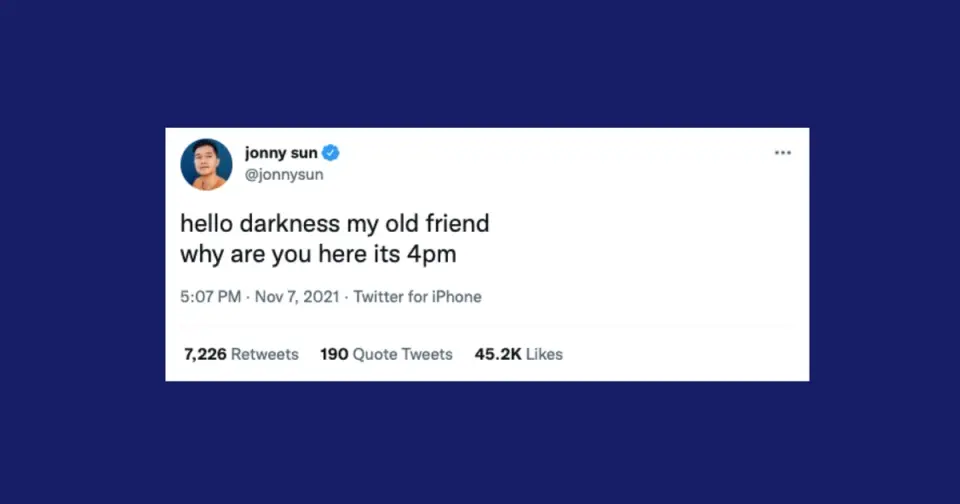
HuffPost Life compiled a list of viral tweets expressing humorous frustration over the earlier onset of darkness following the recent daylight saving time change. Users on X (formerly Twitter) joked that 4 p.m. feels like midnight, citing the loss of evening outdoor activities and the psychological impact of shorter days. The collection highlights a widespread cultural reaction to the seasonal shift, blending humor with a sense of collective melancholy about the end of summer evenings.
Key points
- HuffPost Life published a roundup of 20 tweets on November 14, 2026, focusing on public reactions to earlier sunset times.
- Many users expressed that 4 p.m. or 5 p.m. feels like nighttime, leading to jokes about being forced indoors or going to bed early.
- The tweets highlight a contrast between summer evenings, where 6 p.m. felt like the start of the night, and fall evenings, where darkness arrives much earlier.
- Some users joked about the psychological impact, noting that the extra hour of sleep gained from the time change is offset by the misery of early darkness.
- The content reflects a broader cultural trend of using humor to cope with seasonal changes and the perceived loss of daylight.
Background
This reaction follows the annual transition to standard time, which typically occurs in November in the United States. While previous archive articles discussed cosmological models involving 'dark energy' and 'dark matter,' those are unrelated scientific concepts. The current story focuses on the literal darkness of the sky and its impact on daily life and mood, a common seasonal phenomenon distinct from astronomical theories.
Why it matters
The widespread social media response to early darkness highlights the significant psychological and social impact of seasonal light changes. It underscores how daylight saving time affects not just schedules, but also mood, activity levels, and public sentiment, often triggering discussions about seasonal affective disorder and the value of daylight in daily life.
What to watch
As the weeks progress, the darkness will continue to set in earlier, likely leading to more similar social media reactions. Public discourse may continue to focus on coping strategies for shorter days, including lighting adjustments, indoor activities, and mental health awareness related to seasonal changes.
Want the full story? Read the original reporting
Read on HuffPost