
Houthis Strike Yemeni Presidential Palace in Aden, Killing Two Guards
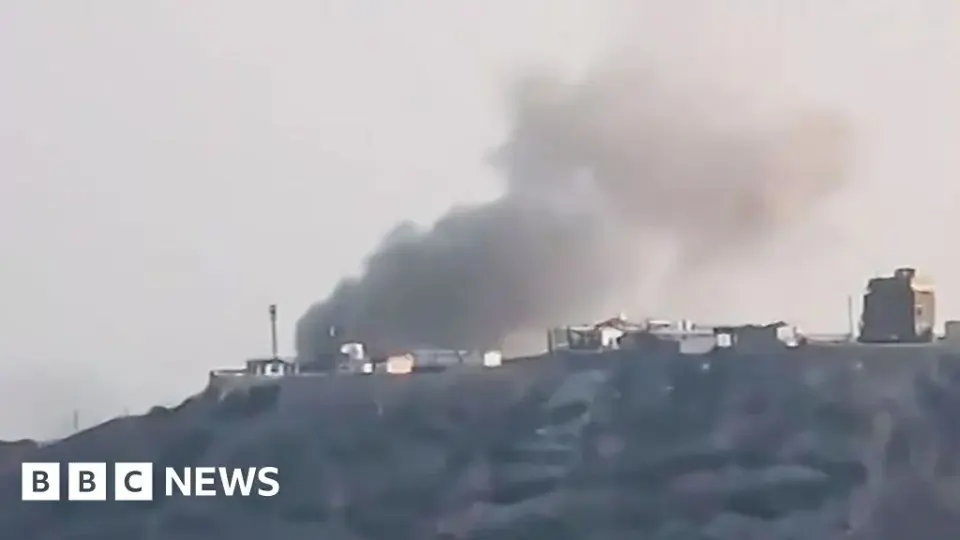
Houthi rebels fired five ballistic missiles at the al-Maashiq presidential palace in Aden, Yemen, killing two security personnel and injuring others. The internationally recognized government confirmed Prime Minister Shaya Zindani and cabinet members were unharmed. The attack marks a significant escalation, occurring alongside continued Houthi strikes on Saudi infrastructure and a UN Security Council condemnation of the violence.
Key points
- Five ballistic missiles hit the al-Maashiq Palace in Aden, the seat of Yemen’s internationally recognized government, killing two security guards and injuring multiple others, according to Information Minister Moammar al-Eryani.
- Prime Minister Shaya Zindani and other ministers were confirmed unharmed by the government, which vowed to continue military operations against the Houthis despite the attack.
- Houthi military spokesman Yahya Sarea claimed the strike targeted a 'Saudi enemy's military operations headquarters,' while the Saudi-led coalition reported intercepting a drone in Khamis Mushait and condemned the attacks as terrorism.
- The UN Security Council condemned the escalating Houthi attacks on Saudi Arabia in the strongest terms, urging member states to abide by the arms embargo on Yemen.
- The attack coincides with a cholera outbreak in southern Yemen, where cases have tripled in three weeks, and a recent IEA decision to release 330 million barrels of emergency oil reserves amid supply disruptions.
Background
This attack follows a rapid escalation in the Yemen conflict since a four-year informal ceasefire collapsed in July 2026. The Houthis, backed by Iran, have launched missile and drone attacks on Saudi airports, oil facilities, and military bases in retaliation for Saudi-led air strikes in western Yemen. A deadly strike on Riyadh’s King Khalid International Airport in early October killed 13 people, the deadliest attack on Saudi soil in over a decade. Pro-government forces have recently regained control of territory near the Bab al-Mandeb strait with Saudi air support, prompting further Houthi retaliation.
How outlets are covering it
BBC and Al Jazeera report that the Houthis targeted the presidential palace in Aden, with the Yemeni government confirming two deaths. The Houthis, however, framed the strike as an attack on a 'Saudi military headquarters,' reflecting their narrative of proxy conflict. Al Jazeera notes that both the Saudi-led coalition and the Houthis face an 'image problem,' with the coalition criticized for past war crimes and the Houthis for targeting civilian infrastructure. AP News and The Jerusalem Post confirm the missile strikes and the resulting casualties, while the UN Security Council and Saudi officials emphasize the need for de-escalation and adherence to arms embargoes. Saudi Arabia’s deputy foreign minister accused Iran of encouraging the escalation, a claim Iran has previously denied, stating it only provides political support to the Houthis.
Why it matters
The strike on Aden’s presidential palace signals a dangerous escalation in the Yemen conflict, directly targeting the seat of the internationally recognized government. It underscores the broader regional instability driven by the Iran-Saudi proxy war and the collapse of the ceasefire. The attack also highlights the humanitarian crisis in Yemen, with rising cholera cases and displacement, and raises concerns about global energy security as the IEA releases emergency oil reserves and shipping disruptions in the Strait of Hormuz affect global supply chains.
What to watch
Pro-government forces are expected to continue their 'Dawn of Yemen' campaign to recapture Houthi-held territory, with 1,250 attacks reported in the past 24 hours. The Saudi-led coalition may intensify air strikes in response to the Aden attack, while the UN Security Council is likely to monitor the situation for further violations of the arms embargo. The cholera outbreak in southern Yemen may worsen as displaced populations remain in overcrowded camps with limited access to clean water and sanitation.
- Houthi missile attack on Yemeni presidential palace kills two, minister says BBC
- Iran war live: Yemen’s government says PM, cabinet survived Aden attack Al Jazeera
- Iran-aligned Houthis target Yemeni presidential palace, prime minister remains unharmed CNN
- At least 6 explosions strike near Yemen government buildings in Aden, witnesses say AP News
- Live Updates: Latest from Israel, Iran, and the Middle East The Jerusalem Post
Want the full story? Read the original reporting
Read on BBC