
Iran Unveils Advanced Missile Launchers as Tankers Attacked in Strait of Hormuz
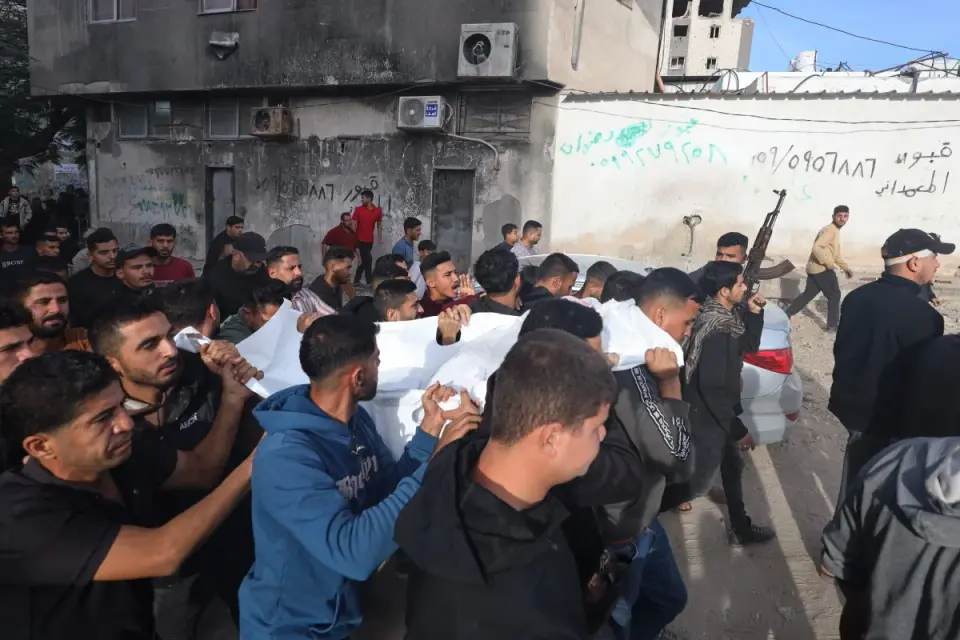
Iranian state media showcased a new dual-launcher for liquid-fueled missiles, claiming expanded capabilities despite US claims of destruction. Simultaneously, three oil tankers were struck near the Strait of Hormuz, and an Israeli airstrike in Gaza killed three men in a food transport vehicle. Lebanese President Joseph Aoun called for Israeli withdrawal and Hezbollah disarmament, while Iran’s deputy foreign minister indicated ongoing diplomatic contacts with Qatar.
Key points
- Iran’s Revolutionary Guard unveiled a new underground missile facility featuring launchers capable of firing two liquid-fueled missiles, which offer greater efficiency and trajectory adjustment compared to previous solid-fuel models.
- At least three oil tankers were attacked in or near the Strait of Hormuz on Saturday; the UK Maritime Trade Operations Center reported two strikes by projectiles, while Iranian state media claimed a tanker hit a naval mine and that the navy conducted intense operations to stop vessels.
- An Israeli airstrike in Gaza City’s Tel al-Hawa district killed three men in a pickup truck carrying food; the Israeli military stated the vehicle was transporting supplies to Islamic Jihad militants, while Shifa Hospital director Mohamed Abu Selmiya confirmed the deaths.
- Lebanese President Joseph Aoun marked independence day by demanding Israel withdraw from Lebanon and calling for the disarmament of Hezbollah, describing the era of weapons outside state control as over.
- Iranian Deputy Foreign Minister Kazem Gharibabadi stated that Tehran remains in contact with Qatari mediators to explore diplomatic opportunities, despite ongoing tensions with the United States.
Background
This development follows a period of escalating instability in the Middle East, including Israeli strikes on medical facilities in Gaza in November 2026 that killed multiple people despite a ceasefire agreement reached in October 2025. Previous incidents, such as the strike on Nasser Hospital, highlighted the fragility of the truce and the ongoing destruction of humanitarian infrastructure. The current events reflect continued friction between Iran and the US, as well as persistent violence in Gaza and Lebanon despite diplomatic efforts.
Why it matters
The unveiling of advanced missile technology signals Iran’s intent to maintain strategic leverage against the US and Israel, potentially escalating regional tensions. Attacks on shipping in the Strait of Hormuz threaten global energy supplies and could spike oil prices, impacting the world economy. The death of three men in Gaza, even during a nominal ceasefire, underscores the ongoing humanitarian crisis and the difficulty of enforcing peace agreements. Lebanon’s push for disarmament and withdrawal indicates a shift in regional diplomatic dynamics, potentially altering the balance of power in the Levant.
What to watch
Analysts will monitor for further Iranian missile tests or strikes, as well as any US response to the new launchers. The situation in the Strait of Hormuz may lead to increased naval presence or diplomatic pressure on Iran to cease attacks on shipping. In Gaza, the Israeli military may continue operations against alleged militant networks, while humanitarian organizations will likely demand access to assess the impact on food distribution. In Lebanon, the outcome of direct talks between Israel and Lebanon will be crucial in determining whether Hezbollah disarms or if conflict resumes.
Want the full story? Read the original reporting
Read on AP News