
Iran's Economic Squeeze: Retirees Protest as Sanctions and Blockade Deepen Crisis
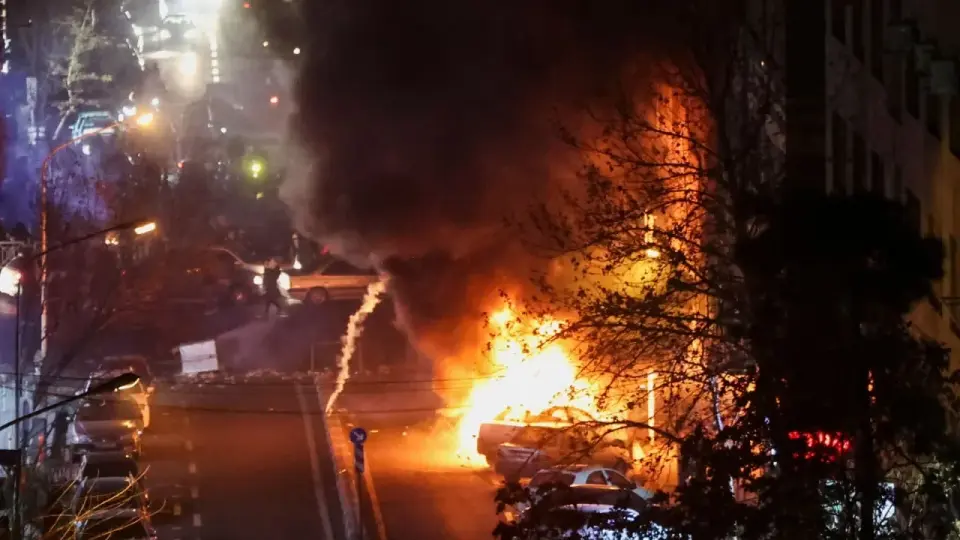
Small-scale protests by retirees and job seekers erupted across multiple Iranian cities on September 6-7, driven by soaring costs and pension shortfalls. While these demonstrations faced no immediate violent suppression, they follow a week of deadly crackdowns on unemployed youth in Ahvaz. The unrest coincides with a severe economic contraction caused by US naval blockades and sanctions, which have slashed oil exports and forced Iranians to delay critical medical treatments.
Key points
- Retired teachers and telecommunications workers demonstrated in Tehran, Isfahan, and other cities, citing the Social Security Law to demand pensions matching the minimum wage of 16.6 million tomans.
- Medication prices have surged by up to 543%, forcing many patients, including those with cancer, to forgo or delay essential treatments due to unaffordable healthcare costs.
- US Treasury Secretary Scott Bessent claimed the blockade is 'asphyxiating' Iran, noting only 30 million barrels of oil remain for China, while satellite data shows a sharp decline in shipping activity at key ports.
- In Ahvaz, security forces opened fire on and beat unemployed young men protesting at a sugarcane company, with police labeling them 'anti-regime' for protesting during wartime conditions.
- Iran's Economy Ministry established an 'economic war' command center to coordinate responses to the crisis, acknowledging that blocked routes are preventing goods and gasoline from entering the country.
Background
These events follow the violent suppression of mass protests in January 2026, which human rights groups say resulted in over 30,000 deaths. The current unrest occurs against a backdrop of a recent war with the US and Israel, a blockade of the Strait of Hormuz, and ongoing US-Israeli airstrikes that killed former Supreme Leader Ali Khamenei. The regime has faced significant economic pressure, including a 35% drop in trade and a sharp decline in oil loadings from 2 million barrels per day to roughly 220,000-255,000 bpd.
How outlets are covering it
The Jerusalem Post and HRANA emphasize the breadth of the current protests, noting they are small-scale but widespread across cities like Tehran and Ahvaz, with no reports of violent suppression for the retirees. In contrast, IranWire highlights the violent crackdown on unemployed youth in Ahvaz and Gachsaran, where police used live fire against peaceful demonstrators, labeling them 'anti-regime.' New Left Review offers a structural analysis, arguing that while economic hardship is severe, the regime's institutional strength and the 'rally-round-the-flag' effect of the war have prevented a major social explosion, suggesting the regime can survive through rationing and oil sales to China. Iran International focuses on the external pressure, citing US Treasury Secretary Bessent's claims that the blockade is working and that Iran's oil reserves for China are nearly depleted, contrasting with the domestic reality of rising drug prices and delayed treatments reported by DW and Tasnim.
Why it matters
The protests signal a deepening economic crisis that threatens the regime's stability despite its institutional resilience. The combination of soaring healthcare costs, unemployment, and US-imposed blockades is pushing various segments of the population, from retirees to young job seekers, to the breaking point. The regime's response, ranging from ignoring retiree protests to using lethal force against unemployed youth, highlights the tension between economic survival and political control. As the US continues its 'Operation Economic Outcast,' the ability of Iran to manage internal dissent while facing external pressure will determine whether the current crisis escalates into a broader social explosion or remains contained through institutional mechanisms and wartime nationalism.
What to watch
Watch for potential escalation in protests if the economic situation worsens further, particularly if the US blockade continues to restrict oil exports and essential goods. Monitor the response of the Iranian government to the retirees' demands for pension adjustments and the potential for further violent crackdowns on unemployed youth in cities like Ahvaz. Also, track the impact of the US naval blockade on Iran's oil exports and the potential for a change in US policy that could lead to a negotiated agreement or further escalation.
- Small-scale protests hit Iranian cities as economic crisis deepens The Jerusalem Post
- Ervand Abrahamian, Exchange Ratio — Sidecar New Left Review
- Teachers protest in Tehran over wages, living conditions Iran International
- The Young Iranians Who Say Getting a Job Requires the Right Connections IranWire
- Iran sees protests over living costs and pensions — Jerusalem Post UA.NEWS
Want the full story? Read the original reporting
Read on The Jerusalem Post