
Religious Jews form 'protective presence' to shield Palestinians from settler violence in West Bank
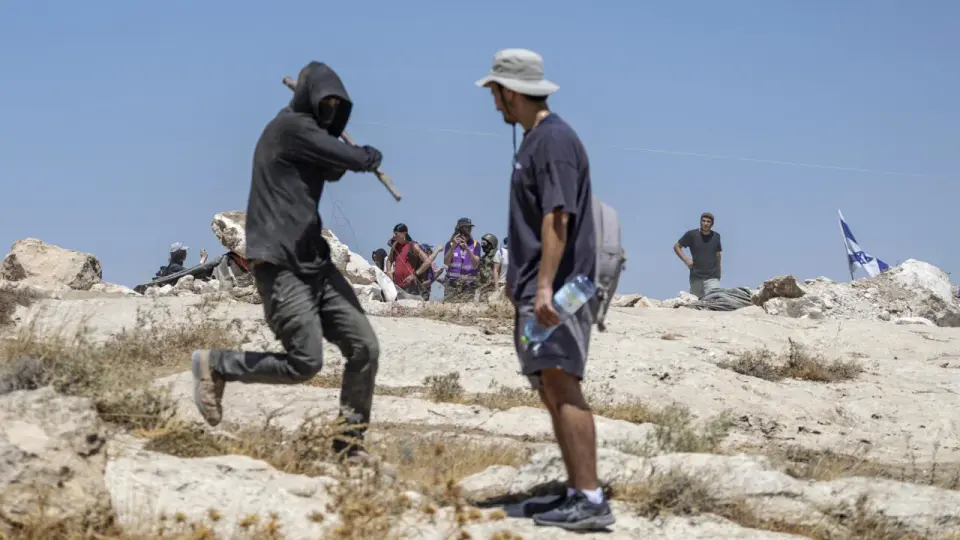
A small but growing movement of Israeli Jews, primarily religious, is actively intervening in the West Bank to protect Palestinian families from violent settler attacks. These activists, who cite Jewish ethical texts as their motivation, face physical retaliation from extremist settler groups. The movement highlights a deep internal conflict within Israeli society over the interpretation of religious duty and national security.
Key points
- The 'Bnei Avraham' (Children of Abraham) movement, founded four years ago by religious Jews, operates on the principle that Jewish faith mandates compassion and justice toward Palestinians.
- On Tuesday, activists were violently expelled from the village of Jannatah near Bethlehem by settlers using stones and pepper spray, resulting in injuries to five activists and an AFP journalist.
- The activists were attempting to clear road obstacles and build a protective fence for the Faraj family, whose land was occupied by the illegal 'Kochav Yehuda' outpost, which has been dismantled and rebuilt 64 times.
- Since the October 7, 2023 attack, settler violence has spiked, with the UN reporting an average of six attacks per day in the first half of 2026, and 1,100 Palestinians killed in encounters with settlers or security forces since 2023.
- An April poll indicated that nearly two-thirds of Israelis believe settler violence constitutes 'Jewish terrorism' that harms the country's international standing, yet the movement remains a minority effort.
Background
This development follows a series of escalating incidents in the West Bank, including a sledgehammer attack on a Palestinian memorial by a far-right Knesset member in August 2026 and a fatal clash involving ultra-Orthodox settlers in late August. The current situation is part of a broader trend where settler violence is spreading from rural areas into larger Palestinian cities, with rights groups warning of a shift in the nature of the conflict. The West Bank, occupied since 1967, is home to approximately three million Palestinians and over 500,000 Israeli settlers, with Prime Minister Benjamin Netanyahu's government advancing settlement construction ahead of October 27 elections.
How outlets are covering it
France 24 emphasizes the personal faith-driven motivation of activists like Ziva Sharp and Avishai Liss, highlighting the theological justification for their actions against violent settlers. The Christian Science Monitor frames the issue as a broader ethical dilemma, noting that while a majority of Israelis view settler violence as a serious problem, the 'protective presence' movement remains a small minority effort. It also highlights the political dimension, citing an open letter from 550 retired military officers urging President Trump to pressure Netanyahu. The Bergen Record focuses on the personal identity crisis of individuals like Rabbi Matt Gewirtz, who struggle with the contradiction between their religious heritage and the actions of extremist settlers. The sources generally agree on the intensity of the violence but differ in emphasis: France 24 focuses on the immediate physical confrontation, while the Monitor focuses on the political and ethical implications for Israel's international standing.
Why it matters
The rise of the Bnei Avraham movement signals a potential shift in Israeli public discourse, where religious identity is being used to challenge the dominant narrative of settler expansion. This internal conflict could influence the political landscape ahead of the October 27 elections, as the government faces pressure from both international observers and domestic critics over the escalating violence. The movement's success or failure may determine whether the 'protective presence' model gains broader traction or remains a marginalized effort in the face of increasing settler aggression.
What to watch
The activists are expected to continue their 'protective presence' operations in the West Bank, likely facing further violent retaliation from settler groups. The Israeli government will likely face increased pressure from international bodies and domestic critics to address the settler violence, potentially influencing the outcome of the October 27 elections. The movement's growth or decline will depend on its ability to sustain its operations and gain broader support within Israeli society.
- Driven by faith, Jewish activists stand up to settlers to protect West Bank Palestinians France 24
- AFP says West Bank settlers attacked its journalists The Times of Israel
- Israelis who rely on Judaism to protect West Bank Palestinians The Christian Science Monitor
- Why a Zionist NJ rabbi protected West Bank Palestinians | Opinion Bergen Record
- Driven by faith, activists stand up to fellow Jews to protect Palestinians Inbox.lv
Want the full story? Read the original reporting
Read on France 24