
Gaza’s Three-Year Toll: Personal Tragedies Amidst Ongoing Crisis
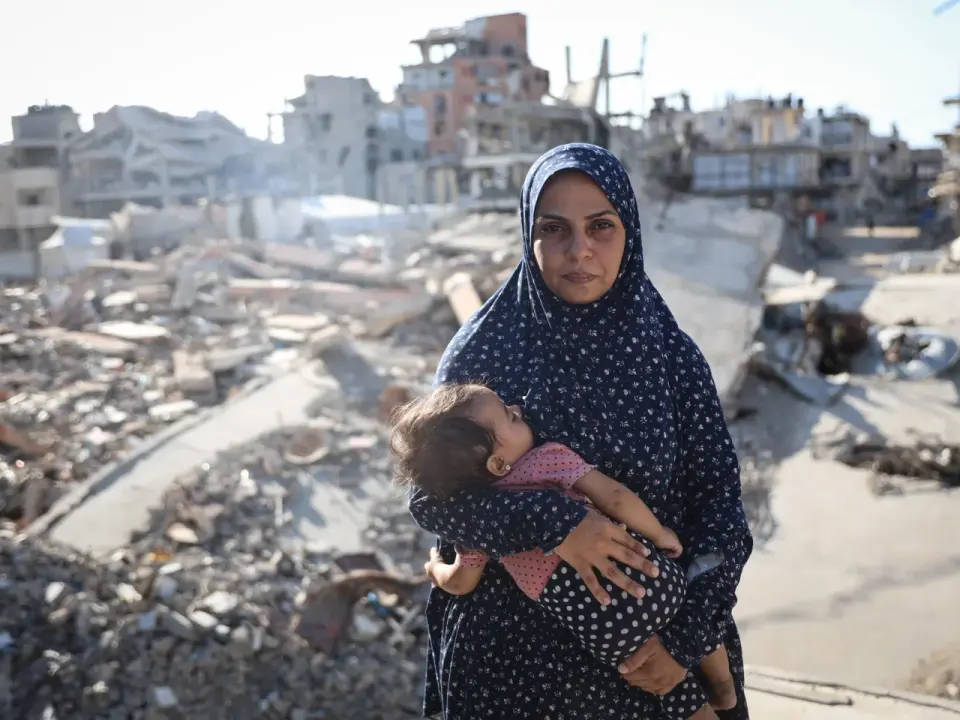
Three years after the October 7, 2023 attacks, Gaza faces a deepening humanitarian and social crisis. While a ceasefire has halted major combat, violence persists, with over 1,400 Palestinians killed since its implementation. Civilians report cumulative losses, including family members, homes, and basic infrastructure. Daily survival now revolves around securing water, food, and electricity, as the war has fundamentally altered social norms and personal identities. International legal proceedings continue, but on-the-ground conditions remain dire, with many residents describing a life of constant uncertainty and grief.
Key points
- Nisreen Touman, a resident of Nuseirat, was widowed twice during the conflict. She lost her first husband and two children in a June 2024 airstrike, then her second husband in July 2025 while pregnant. She now raises her daughter Sidra alone.
- A ceasefire took effect in October 2025, but violence continues. Palestinian officials report over 1,400 deaths and 4,131 injuries since the truce began, including journalists and medical staff.
- Basic necessities remain scarce. Residents report severe shortages of cooking gas, clean water, and electricity. Phone charging has become a paid service, with some families accruing significant debt for power.
- The UN reports over 21,000 Palestinian children have been killed since October 2023. More than 11,200 Palestinians remain missing or unaccounted for.
- International legal actions are ongoing, including an ICJ case brought by South Africa and ICC arrest warrants for Israeli leaders, though Israel rejects these allegations.
Background
This situation follows the escalation of the Israel-Palestine conflict beginning in October 2023. Previous coverage noted a U.S.-brokered ceasefire and ongoing diplomatic tensions, including disputes over international monitoring hubs. Recent developments include a U.S. plan for a $2.8 billion arms sale to Israel, which has faced domestic political delays, and a building collapse in Gaza City that killed 21 people in September 2026.
How outlets are covering it
Al Jazeera focuses on the personal narrative of Nisreen Touman, highlighting the repetitive nature of loss and the psychological impact of the war on individual families. CBS News contrasts the experiences of Israeli and Palestinian teenagers, noting that while Israeli youth are returning to some normalcy, Palestinian children face destroyed schools and ongoing instability. NDTV and Middle East Eye emphasize the systemic collapse of daily life, describing how the war has eroded social habits, professional identities, and basic survival mechanisms. All sources agree on the severity of the humanitarian crisis, but differ in emphasis: Al Jazeera centers on grief, CBS on generational trauma, and NDTV/MEE on the structural breakdown of society and infrastructure.
Why it matters
The ongoing crisis in Gaza illustrates the long-term human cost of the conflict, extending well beyond initial military engagements. The persistence of violence despite a ceasefire, combined with severe infrastructure deficits, suggests that the humanitarian emergency is not resolving. The cumulative loss of life, displacement, and social fabric indicates a generational impact that may outlast the current political negotiations. International legal proceedings and continued U.S. military support highlight the complex geopolitical dynamics that continue to influence the situation on the ground.
What to watch
Observers will likely monitor the stability of the ceasefire, as violence continues to claim lives. The resolution of international legal cases at the ICJ and ICC may influence diplomatic pressure. Humanitarian aid and the availability of basic resources like water and electricity will remain critical indicators of the situation's trajectory. The long-term social and psychological effects on the population, particularly children, will shape the region's future stability.
- Widowed twice: A Gaza mother’s story of loss and survival Al Jazeera
- How Israeli and Palestinian kids are coping 3 years after the Oct. 7 Hamas attacks ignited the Middle East CBS News
- "Feel Deeply Abandoned By World": Tales Of Loss And Separation From Gaza NDTV
- Queuing for water and phone charging: What survival looks like in Gaza Middle East Eye
- Genocide and the slow erosion of the family in Gaza Mondoweiss
Want the full story? Read the original reporting
Read on Al Jazeera