
Gulf States Brace for Renewed Iran War as US Midterms Loom
Gulf Arab nations are intensifying diplomatic efforts to prevent a renewed US-Iran conflict ahead of Tuesday's midterm elections. While Qatar mediates talks to reopen the Strait of Hormuz, tensions remain high after a Qatari LNG tanker was attacked. Israel denies pressuring Washington for strikes, but officials in the region fear a second round of fighting will be more destructive than the February conflict.
Key points
- Gulf officials fear a renewed US-Iran war will be more destructive than the February conflict, potentially targeting US bases and oil facilities in the region.
- Qatar is mediating indirect talks in Doha, with Iran proposing to reopen the Strait of Hormuz within two days if the US lifts its blockade and sanctions.
- A Qatari LNG carrier was struck by unidentified objects in the Persian Gulf on Friday, highlighting ongoing maritime risks despite diplomatic efforts.
- Israel's UN envoy denied reports that Prime Minister Netanyahu is pressuring President Trump to strike Iran immediately after the midterms, calling such claims 'delusional.'
- US Secretary of State Marco Rubio stated that Washington has not decided whether to launch further strikes and prefers a diplomatic resolution.
Background
The current tension follows a ceasefire reached in April after the US and Israel launched joint strikes on Iran in late February. That conflict resulted in Iranian missile and drone attacks on Gulf states, including the UAE and Bahrain, causing significant damage to infrastructure and energy facilities. The region has since spent billions on defense upgrades, but concerns remain about the lack of a coordinated Gulf Cooperation Council response.
How outlets are covering it
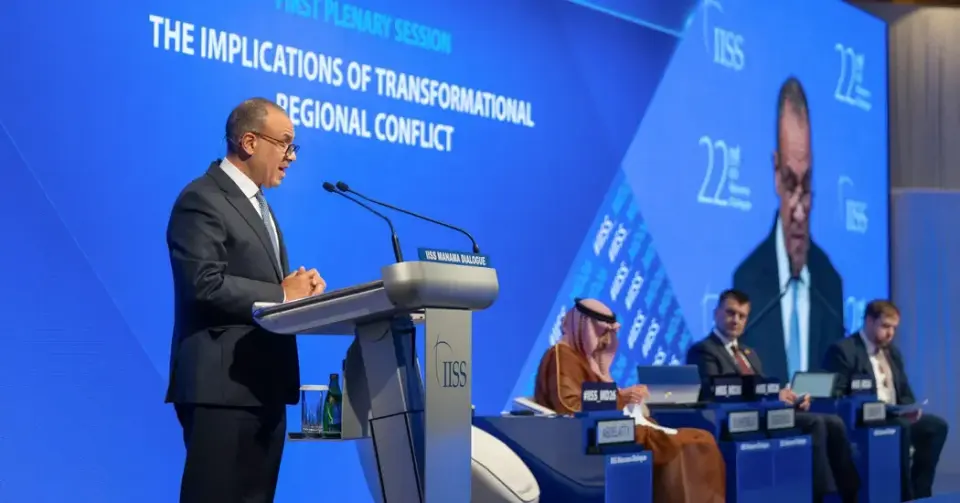
The New York Times emphasizes the anxiety among Gulf allies, noting that the Manama Dialogue security conference in Bahrain was overshadowed by fears of a renewed war. AP News highlights the UAE's hope for a diplomatic breakthrough, with presidential adviser Anwar Gargash warning that military solutions will only complicate the situation. The Guardian focuses on the stalled negotiations, noting that Iran has rejected nuclear talks and that a Qatari LNG tanker was attacked despite receiving safe-passage approval. Iran International reports that Israel denies pressuring the US for strikes, while US officials maintain that negotiations are 'going fine' but that military options remain on the table.
Why it matters
A renewed conflict could disrupt global energy supplies, particularly through the Strait of Hormuz, which is critical for Qatar's LNG exports. The outcome of the US midterms may influence Washington's willingness to engage in military action, with Gulf states fearing that a post-election strike could trigger a wider regional war.
What to watch
Diplomats will continue indirect talks in Doha, with Iran expecting a response from Washington on its conditions for reopening the Strait of Hormuz. The US midterm elections on Tuesday will likely influence the timeline for any potential military action, with officials in the region bracing for the worst-case scenario.
- As Trump’s Midterm Deadline Looms, Gulf Countries Brace for Possible Renewal of Iran War The New York Times
- Trump's Iran threat renews Gulf fears of a war it didn't choose Reuters
- Arab states warn Iran of individual, collective retaliation over attacks - WSJ Iran International
- United Arab Emirates says military solutions offer no quick off-ramps to crisis with Iran AP News
- Negotiators ‘braced for worst’ over US-Iran talks to reopen strait of Hormuz The Guardian
Want the full story? Read the original reporting
Read on The New York Times