Qatar is mediating a potential US-Iran deal to lift blockades in exchange for ending tanker attacks, but Tehran refuses to discuss its nuclear program. US officials are split on whether to accept a deal that spares the Iranian regime, while Iran insists on sanctions relief before talks.
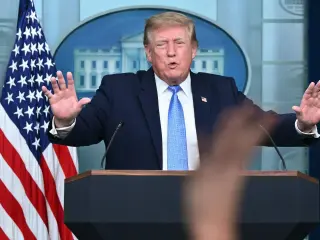
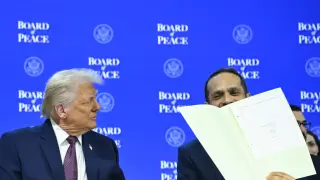
President Donald Trump declared the US-Israel war on Iran 'militarily effectively over' on November 9, 2026, following a meeting with Qatari Prime Minister Mohammed bin Abdulrahman Al Thani. While Trump signaled that further strikes are unlikely, he maintained the US naval blockade and Task Force Iron Gate to preserve regional security. Iranian officials dismissed the remarks as a distraction, though quiet negotiations continue over nuclear enrichment and the Strait of Hormuz. The announcement coincided with a House move to impeach Defense Secretary Pete Hegseth over the conflict.
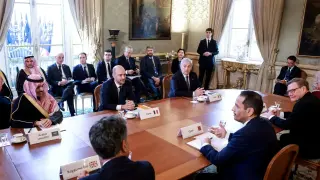
Qatari Prime Minister Sheikh Mohammed bin Abdulrahman Al Thani is meeting U.S. President Donald Trump and Vice President JD Vance in Washington to discuss a two-day proposal to end the eight-month-old conflict with Iran. The plan involves lifting the U.S. naval blockade and unfreezing $8 billion in Iranian assets in exchange for Iran reopening the Strait of Hormuz and halting attacks on tankers. While Trump has expressed openness to a deal, Secretary of State Marco Rubio and other officials have rejected the terms as unrealistic, and military strikes continue.
Qatari Prime Minister Sheikh Mohammed bin Abdulrahman Al Thani is meeting US President Donald Trump and Vice President JD Vance in Washington to finalize a two-day interim agreement with Iran. The proposal involves lifting the US naval blockade and unfreezing $8 billion in Iranian funds in exchange for reopening the Strait of Hormuz and allowing inspections of nuclear sites. While Vance pushes for a deal to end the conflict, senior officials like Secretary of State Marco Rubio and Defense Secretary Pete Hegseth oppose it, citing Iranian demands as unrealistic and intelligence suggesting Iran’s economy is collapsing.
President Trump stated there is no reason to escalate the war with Iran, citing diplomatic progress, while oil prices fell 2% on Monday. Secretary of State Marco Rubio warned that a breakthrough is unlikely due to Iran's 'unacceptable' demands. Tehran proposed shortening the peace deal implementation period to two days as a goodwill gesture, but core disputes over nuclear programs and naval blockades remain unresolved.
President Donald Trump is scheduled to meet with Qatari Prime Minister Sheikh Mohammed bin Abdulrahman Al Thani on Monday to discuss a potential ceasefire and nuclear negotiations with Iran. The Qatari leader, who has served as a key mediator for weeks, is seeking more time for diplomacy, though Trump’s patience remains uncertain. A draft proposal involves a two-day sequence: the US lifting its naval blockade and releasing frozen Iranian funds in exchange for Iran inviting International Atomic Energy Agency inspectors to bombed sites, followed by reopening the Strait of Hormuz and resuming talks on highly enriched uranium. Iranian Foreign Minister Abbas Araghchi stated that Tehran is waiting for a US response, warning that failure to meet demands could lead to renewed conflict. Secretary of State Marco Rubio criticized the talks as unproductive, calling Iranian demands 'outrageous' and 'ridiculous,' while noting the President prefers diplomatic solutions. Vice President JD Vance, who has been involved in indirect talks, is expected to meet with the Qatari prime minister separately before the presidential meeting.
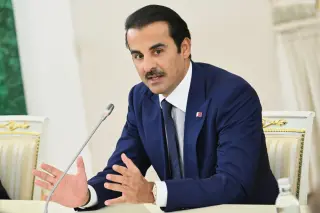
Qatar’s emir urged President Trump to maintain diplomatic channels to end the eight-month US-Iran war, even as Washington launched new limited strikes on Iran’s Qeshm Island. Simultaneously, airstrikes on a market in Yemen killed at least 30 people, while mediators reported that Tehran is reviewing proposals but remains unwilling to negotiate until core conditions are met.
Qatar’s emir Sheikh Tamim bin Hamad al-Thani called US President Donald Trump on Friday to urge continued diplomatic engagement to resolve the eight-month-old conflict with Iran. The Gulf state is leading mediation efforts to broker an interim deal, aiming to prevent a new wave of US strikes. While both sides are reviewing mediator proposals, significant gaps remain regarding Iran’s 440kg stockpile of highly enriched uranium and the lifting of US naval blockades. The diplomatic push follows the US midterm elections, where the war’s impact on fuel prices contributed to Republican losses, prompting Vice President JD Vance to blame the conflict for the party’s defeat.
Iran has sent a new nuclear proposal to the United States through Qatari mediators, conditioning any discussion on Washington first meeting seven specific demands. These demands likely include ending hostilities, lifting sanctions, releasing frozen assets, and reducing US military presence. President Trump has not ruled out resuming strikes after the midterm elections, while Iranian officials state the 'ball is in the US court.'
Iran has rejected the latest US response to its peace proposal, demanding that Washington 'fully and explicitly' address its seven conditions, including lifting the naval blockade and releasing frozen assets. Iranian officials state the Strait of Hormuz could reopen within two days of an agreement, but hardliners are preparing the public for renewed war. While Qatar continues mediating indirect talks, US President Trump has signaled he may resume strikes after the midterm elections if no deal is reached.
Gulf Arab nations are intensifying diplomatic efforts to prevent a renewed US-Iran conflict ahead of Tuesday's midterm elections. While Qatar mediates talks to reopen the Strait of Hormuz, tensions remain high after a Qatari LNG tanker was attacked. Israel denies pressuring Washington for strikes, but officials in the region fear a second round of fighting will be more destructive than the February conflict.
Iranian officials stated that the Strait of Hormuz could reopen within two days if the United States meets specific demands, according to the New York Times. This proposal emerged during intensified Qatari-mediated negotiations aimed at preventing a resumption of hostilities. While US Vice President JD Vance indicated progress in indirect talks, Iranian leaders emphasized that no agreement is possible while the US naval blockade remains in place. The situation remains tense as both sides prepare for potential conflict, with Iran warning of a 'war of surprises' if strikes resume.
Oil prices dropped sharply on Monday as a draft proposal to end the US-Iran conflict was circulated following mediation talks in Qatar. Brent crude fell 4.25% to $108.61, and WTI crude dropped 4.32% to $99.62. Iranian officials stated that the Strait of Hormuz could reopen within two days if US naval blockades end and Tehran’s demands are met. Market analysts remain cautious, noting that further military strikes could occur after the US midterm elections.
Iranian officials stated that the United States must make the next move to end the conflict, claiming Tehran’s demands are clear. President Trump indicated he will resolve the war soon, either through a deal or renewed military action, potentially after the midterm elections. Indirect negotiations mediated by Qatar continue, but are shadowed by threats of resumed hostilities and recent attacks on shipping in the Strait of Hormuz.
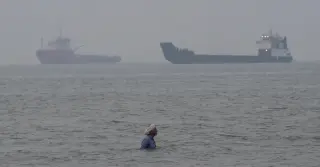
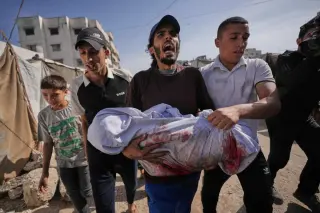
Diplomatic efforts to avert a renewed war between the US and Iran are facing significant hurdles, with Tehran demanding sanctions relief before addressing nuclear issues. Simultaneously, Israeli strikes in Gaza killed eight people, including a child, despite an ongoing ceasefire. In the Persian Gulf, a Qatari LNG vessel was struck, and Iran claimed two tankers hit mines in the Strait of Hormuz, heightening regional instability.