
UN Envoy Warns Gaza Ceasefire Collapse Is 'Point of No Return' Amid Netanyahu Rejection
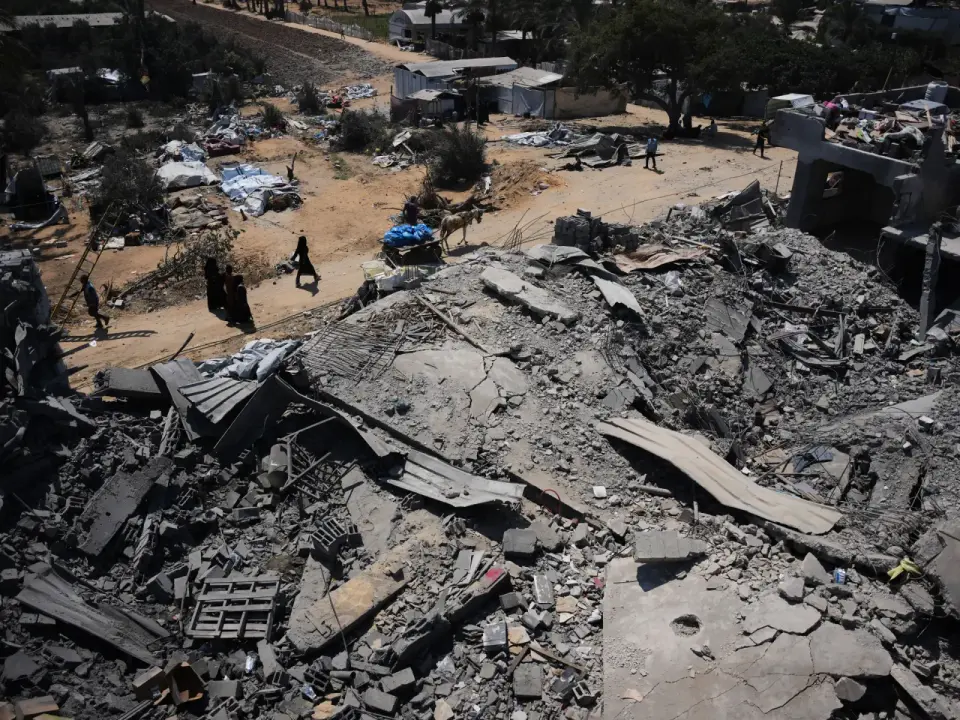
Nickolay Mladenov, the US Board of Peace high representative for Gaza, warned the UN Security Council that the failure of the current ceasefire process would be a 'point of no return' with no roadmap for reconstruction. This warning follows Israeli Prime Minister Benjamin Netanyahu's public rejection of the US-backed 15-point peace plan, which requires Hamas to disarm before Israeli forces withdraw. While Hamas has pledged to hand over weapons to a new Palestinian governing body, Mladenov criticized both sides for failing to uphold ceasefire terms, noting that ongoing tunnel construction and weapon retention by Hamas, as well as Israeli strikes, are undermining the process. The International Stabilization Force, led by US Major General Jasper Jeffers, is prepared to deploy if the situation stabilizes, but the conflict remains unresolved with significant casualties reported since the October 2025 ceasefire began.
Key points
- Nickolay Mladenov stated that a collapse of the Gaza ceasefire would leave no administration to deploy and nothing left to rebuild, marking a 'point of no return' for the region.
- Israeli Prime Minister Benjamin Netanyahu rejected the US 15-point peace plan, insisting that Israel will not withdraw forces until Hamas is fully disarmed.
- Hamas agreed on July 30 to the Board of Peace roadmap, pledging to hand over weapons and transfer civilian and security authority to a new Palestinian governing body.
- Mladenov criticized both Israel and Hamas for failing to uphold the ceasefire, citing ongoing tunnel work, weapon retention by Hamas, and Israeli strikes on munitions depots as obstacles to peace.
- At least 1,288 Palestinians have been killed and 4,290 wounded since the US-brokered ceasefire took effect in October 2025, according to Gaza's Ministry of Health.
- The International Stabilization Force, led by US Major General Jasper Jeffers, is prepared to deploy to Gaza to supervise the decommissioning of weapons if the situation calms.
Background
This development follows Israel's rejection of the US-backed 15-point peace plan in early August 2026, which demanded Hamas disarmament before any Israeli withdrawal. Previous coverage noted that while Hamas pledged adherence to the plan, Palestinians in Gaza expressed skepticism about the ceasefire's durability without a genuine shift in power. Israel's security cabinet had approved the entry of an International Stabilization Force into Gaza in late July 2026, but no deployment timeline was set. The current crisis highlights the ongoing tension between the US-led peace framework and Israel's insistence on security guarantees, as well as the broader impact of West Bank settlement expansion on regional stability.
How outlets are covering it
Al Jazeera emphasizes the catastrophic consequences of the ceasefire's failure, highlighting Mladenov's warning that a collapse would leave no roadmap for reconstruction and focusing on the humanitarian toll since the October 2025 ceasefire. The outlet also notes the Palestinian ambassador's criticism of Israeli settlement activities in the West Bank as undermining peace. The Jerusalem Post, in contrast, presents Mladenov's remarks as a censure of both Israel and Hamas, quoting his rhetorical question about whether strikes on munitions depots will stop Hamas from rearming. The Jerusalem Post highlights the internal Israeli debate, noting that Finance Minister Bezalel Smotrich supported the peace plan while National Security Minister Itamar Ben-Gvir opposed it. Both outlets agree on the core facts of Netanyahu's rejection and Hamas's pledge to disarm but differ in their framing of the blame for the ceasefire's fragility, with Al Jazeera focusing on the irreversible nature of the collapse and the Jerusalem Post emphasizing the mutual failure of both parties to uphold terms.
Why it matters
The failure of the Gaza ceasefire could trigger a resumption of full-scale war, with no clear path for reconstruction or governance. The rejection of the US 15-point plan by Israel and the ongoing violations by both sides threaten to unravel the Board of Peace framework, potentially leading to a 'point of no return' where no administrative or military structure can be deployed to stabilize the region. The humanitarian crisis, with over 1,288 deaths since the October 2025 ceasefire, underscores the urgent need for a durable peace, while the broader implications for West Bank settlement expansion and regional stability add complexity to the diplomatic efforts.
What to watch
The International Stabilization Force may deploy to Gaza if the situation calms, but this is contingent on the ceasefire holding and Hamas fulfilling its disarmament pledge. The US and its allies will likely continue diplomatic efforts to mediate between Israel and Hamas, but Netanyahu's rejection of the 15-point plan and the ongoing violations by both sides suggest that a resolution is not imminent. The Palestinian ambassador's accusations of Israeli settlement expansion in the West Bank may further complicate regional peace efforts, while the humanitarian situation in Gaza will likely deteriorate if the ceasefire collapses.
- Israel-Hamas truce failure ‘point of no return’, envoy warns Al Jazeera
- Trump’s Top Gaza Official Says Israel Is Jeopardizing the Cease-Fire The New York Times
- Official leading Trump's Gaza ceasefire effort criticizes Israel for its attacks NPR
- Board of Peace envoy knocks Israel’s ‘unacceptable’ Gaza policy as disarmament plan stalls The Times of Israel
- Mladenov says Israel, Hamas failing to uphold ceasefire, harming peace process The Jerusalem Post
Want the full story? Read the original reporting
Read on Al Jazeera