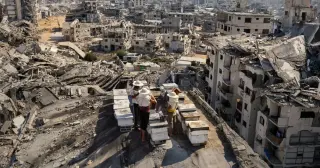
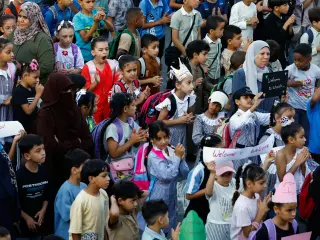
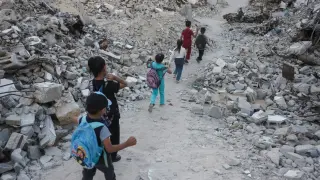
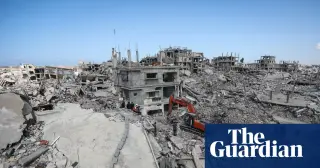
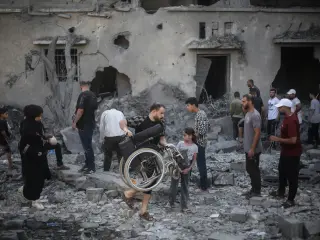
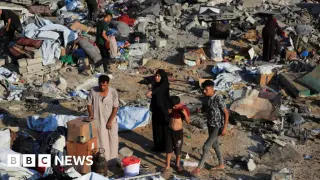
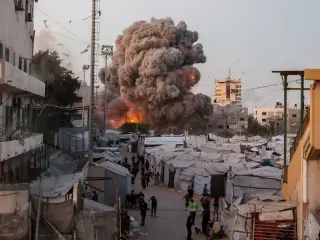
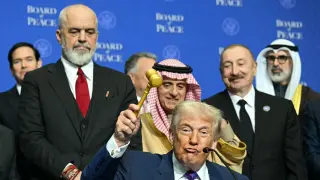
One year after the October 2025 ceasefire, Gaza remains in crisis. Over 1,400 people have died since the truce, aid is severely restricted, and Israeli forces occupy 60% of the territory. While the US-led Board of Peace pledged billions, reconstruction is stalled, and daily strikes continue.
Hamas has condemned the US-backed Board of Peace for refusing to collaborate with UNRWA, labeling the move a complete alignment with Israeli positions aimed at dismantling the agency. While the Board publicly stated UNRWA fails its 'litmus tests' for trusted partners, anonymous officials admitted to behind-the-scenes meetings, suggesting the agency's role is ending despite continued aid needs. Simultaneously, Israeli military operations in Gaza and the West Bank resulted in seven Palestinian deaths in 48 hours, including drone strikes and raids on universities and refugee camps.
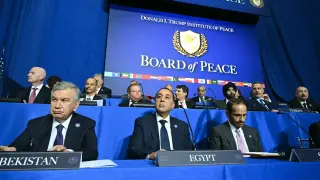
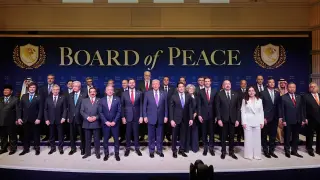
European nations are cautiously engaging with the Trump-backed Board of Peace for Gaza humanitarian projects, despite concerns over its opacity and alignment with Israeli restrictions. While the board claims progress on ceasefire negotiations and infrastructure, critics argue its plans remain largely theoretical and subordinate to Washington and Tel Aviv.
The US-led Board of Peace has unveiled a six-month, $2.45 billion plan to initiate reconstruction in Gaza, covering 66 projects across infrastructure, security, and governance. While the initiative aims to address immediate needs like housing and waste removal, it faces significant challenges, including a massive funding gap and political stalemates between Israel and Hamas. Full reconstruction is estimated to cost $71.4 billion over the next decade, but only $280 million of the $18 billion pledged has been received so far. Key figures, including Jared Kushner and Steve Witkoff, emphasized the commitment to the plan despite delays, while acknowledging the need for international cooperation and security measures to proceed.
The Board of Peace has unveiled a six-month, $2.45 billion recovery plan for Gaza, outlining 66 projects across infrastructure, security, and governance. While the plan aims to rebuild the territory and establish a Palestinian-led administration, implementation is stalled by Israeli domestic politics, Hamas disarmament conditions, and unresolved funding challenges.
Eight foreign ministries from the UAE, Qatar, Jordan, Indonesia, Pakistan, Türkiye, Saudi Arabia and Egypt condemned Israel’s rejection of the Gaza Board of Peace’s 15-point roadmap for Trump's peace plan, urging the US to enforce full Israeli compliance and warning of consequences if the plan isn’t fully implemented; Prime Minister Netanyahu had said Israel wouldn’t withdraw until Hamas is disarmed; the BoP plan ties Hamas disarmament to phased IDF withdrawal, and ministers say Hamas’s acceptance would be a vital milestone for ending the Gaza war and securing Gazans’ safety.
Jared Kushner met with Benjamin Netanyahu to push forward the US-backed Gaza peace plan after Israel rejected the 15-point proposal, with mediators in Egypt seeking to turn Hamas’s disarmament, an Israeli withdrawal and Gaza reconstruction into verifiable steps, as the Board of Peace—an international body chaired by Trump—faces limited participation from Western states and political headwinds ahead of Israel’s elections.
US allies fear Netanyahu’s rejection of the White House–backed Gaza peace plan undermines Trump’s leverage in the Middle East, weakening the Board of Peace and casting doubt on Washington’s ability to influence the region, as Netanyahu demands Hamas disarmament before any withdrawal and domestic politics complicate the peace roadmap; the White House says the plan isn’t derailed, but diplomats warn the administration’s credibility and strategy are at risk.
Trump's Board of Peace has awarded, but not finalized, its first Gaza contract—to Arkel International—for a 150-person outpost to house Moroccan troops as part of an international stabilisation force; the tiny base would sit near the Israeli border in Gaza’s sector controlled by Israel, with the ISF framework still unresolved and the broader reconstruction plan reduced from its original scope.
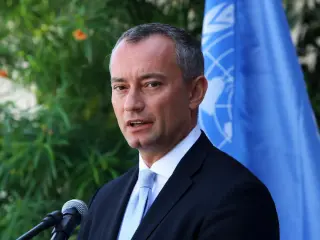
The US-led Board of Peace said any Israeli withdrawal from Gaza will occur only after Hamas fully decommissions weapons and tunnels, tying pullout to the disarmament deal mediated by Egypt, Qatar, and Türkiye. In West Jerusalem, Netanyahu met with Board director Nickolay Mladenov amid Israeli opposition from hardliners, while Hamas insisted the plan won’t take effect until Israel’s commitments are met. Mediators condemned recent Israeli strikes, underscoring a fragile path toward a Gaza ceasefire ahead of elections.
Hamas says it has agreed to a phased disarmament deal tied to an Israeli withdrawal from Gaza, brokered by the US Board of Peace and backed by a plan for a technocratic Palestinian government and an international stabilization force; however, timing and verification are uncertain, with Israel’s far-right minister Itamar Ben Gvir opposing the terms and critics warning the pact may not hold.
A US-led Board of Peace and mediators say Hamas would disarm in phased steps, with a 14-day weapons inventory, international verification, and the transfer of weapons to a Palestinian National Committee overseen by an International Stabilization Force, as Israeli forces gradually withdraw. A technocratic Palestinian administration would run Gaza under the Board, while a new Gaza police force would be trained. Israel has yet to publicly accept the plan, and skeptics warn that verification, potential spoilers, and broader adherence by other armed groups are major open questions. The process could take several months (roughly 200–300 days for demilitarization) once formal acceptance is secured.
US President Trump says the Board of Peace has secured a plan for Hamas and other armed groups in Gaza to disarm completely as part of a US-brokered ceasefire, with Israeli withdrawal to follow and an international stabilization force backing a new Palestinian police; Hamas confirms the agreement, while Israel’s response remains cautious; the scheme involves inventorying and verifying Hamas’s weapons before full disarmament and reconstruction progress in Gaza.
Hamas and other Palestinian factions reportedly approved a phased Gaza disarmament roadmap, with police weapons handed over first and heavy arms decommissioned under international verification by a National Committee; the plan links disarmament to Israeli withdrawal, reconstruction progress, and the formation of a new Palestinian government under the Board of Peace, with mediation by Egypt, Qatar and Türkiye. The deal has been framed by Trump as a monumental step toward peace, though some groups voiced reservations while fighting and other tensions persist.
A leaked four-page draft of the UN‑sanctioned Gaza Board of Peace proposes total legal immunity for all members and authority to occupy Gaza public property without compensation, with Trump as chair able to waive immunities. Legal experts warn this could create a lawless, self‑policing regime with little external oversight, while the BoP disputes the report and pledges to uphold applicable law.