
Tehran debates if Hormuz blockade is backfiring as US sanctions bite
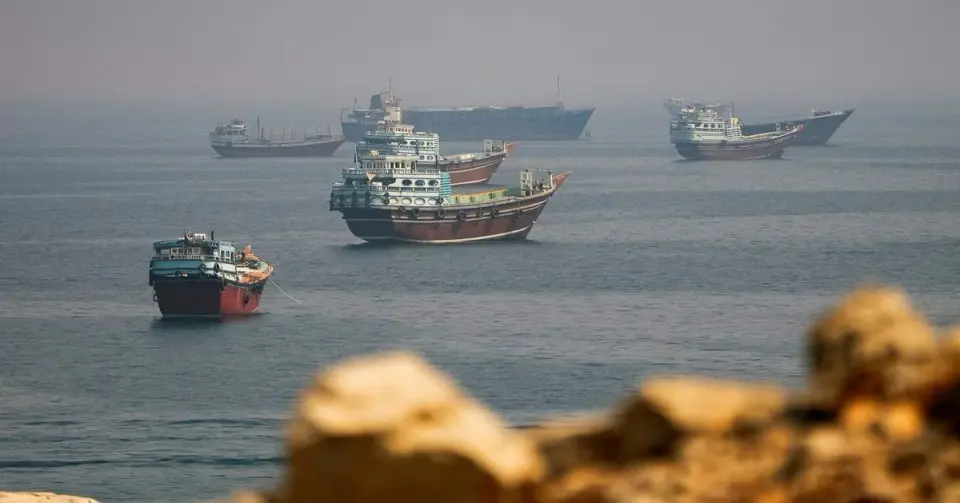
Iranian officials are split on whether restricting the Strait of Hormuz is a losing strategy, with critics arguing the move harms Tehran’s economy more than Washington’s, while hardliners reject the idea that leverage is fading. Meanwhile, the US is pursuing a gradual 'economic D-Day' through targeted sanctions on Iranian financial networks, though experts doubt the long-term impact given Iran’s decades of sanctions evasion. The debate highlights a core dilemma: Iran’s primary weapon may be self-destructive if prolonged, and alternative leverage, like cutting undersea cables, carries its own severe risks.
Key points
- Iranian commentators, including those close to parliament speaker Mohammad Bagher Ghalibaf, warn that prolonged Hormuz restrictions could erode Tehran’s leverage, as the strait’s value lies in the threat of disruption, not sustained closure.
- Hardliners, including Kayhan editor Hossein Shariatmadari, reject the notion that Hormuz is losing value, arguing that such claims weaken Iran’s negotiating position and morale.
- Shariatmadari has proposed disrupting undersea fiber-optic cables in the Persian Gulf as an alternative to Hormuz, a move critics warn would severely damage Iran’s own trade and digital economy.
- The US 'Operation Economic Outcast' has targeted Iranian banks and financial lifelines in a gradual manner, with Treasury Secretary Scott Bessent insisting the pressure is unprecedented, while experts and diplomats question its long-term effectiveness.
- Iran’s economy is under severe strain, with the rial exceeding 2.2 million to the dollar, gas shortages, and a collapse in trade, fueling internal debate over whether to pursue compromise or continued confrontation.
Background
This debate emerges after six months of war, intermittent diplomacy, and failed mediation efforts. Iran and Oman have been negotiating a temporary shipping corridor through Hormuz, but the US opposes parts of the deal. The conflict has also seen renewed military strikes on southern Iran, including Larak Island, and a sharp economic squeeze from US and allied sanctions. The rial’s collapse and gas shortages have intensified internal pressure on the government to find a diplomatic exit, while hardliners argue that compromise under pressure would only invite further concessions.
How outlets are covering it
Iran International highlights a deepening internal split in Tehran, with moderates and reformists arguing that Hormuz is a self-destructive weapon if used long-term, while hardliners dismiss these concerns as morale-sapping. CNN focuses on the US side, noting that 'Operation Economic Outcast' has come in 'drips' rather than a sweeping assault, and that experts doubt the US will take meaningful action against key Iranian partners like China. AP News frames the US approach as a dual economic and military squeeze, but the article is largely obscured by technical code, offering limited substantive analysis. The outlets differ in emphasis: Iran International centers on the internal Iranian debate, while CNN and AP focus on the US strategy and its perceived limitations.
Why it matters
The debate over Hormuz is not just about a waterway; it is a test of Iran’s strategic coherence and economic resilience. If the strait’s leverage is indeed fading, Tehran may be forced to seek alternative, potentially more damaging, tools or accept a compromise that hardliners view as capitulation. The US’s gradual sanctions approach, meanwhile, reflects a cautious strategy that may fail to break Iran’s resolve but could deepen its economic isolation. The outcome will shape the broader regional security architecture and the future of US-Iran relations.
What to watch
Watch for any formal announcement from the UK Treasury on the status of Bank Melli’s London branch, which faces closure on October 22. Monitor for any escalation in US sanctions, particularly against Chinese or other major partners, which could signal a shift from 'drips' to a more aggressive campaign. In Tehran, watch for any official response to the fiber-optic cable proposal or a shift in rhetoric from hardliners, which could indicate a change in strategy. Diplomatic efforts, including the temporary Hormuz corridor, will also be key to see if a face-saving compromise can be reached.
- Debate grows over whether Iran is burning its strongest card in Hormuz Iran International
- Time Is No Longer on Iran’s Side in the Battle of the Blockades WSJ
- Trump promised ‘economic D-Day’ for Iran. The result isn’t what was expected CNN
- A More Confident Iran Emerges After Six Months of War With the U.S. The New York Times
- Trump turns to a dual economic and military approach in latest attempt to squeeze Iran AP News
Want the full story? Read the original reporting
Read on Iran International