
Ceuta death toll reaches 72 as EU scrambles to manage fallout from massive border breach
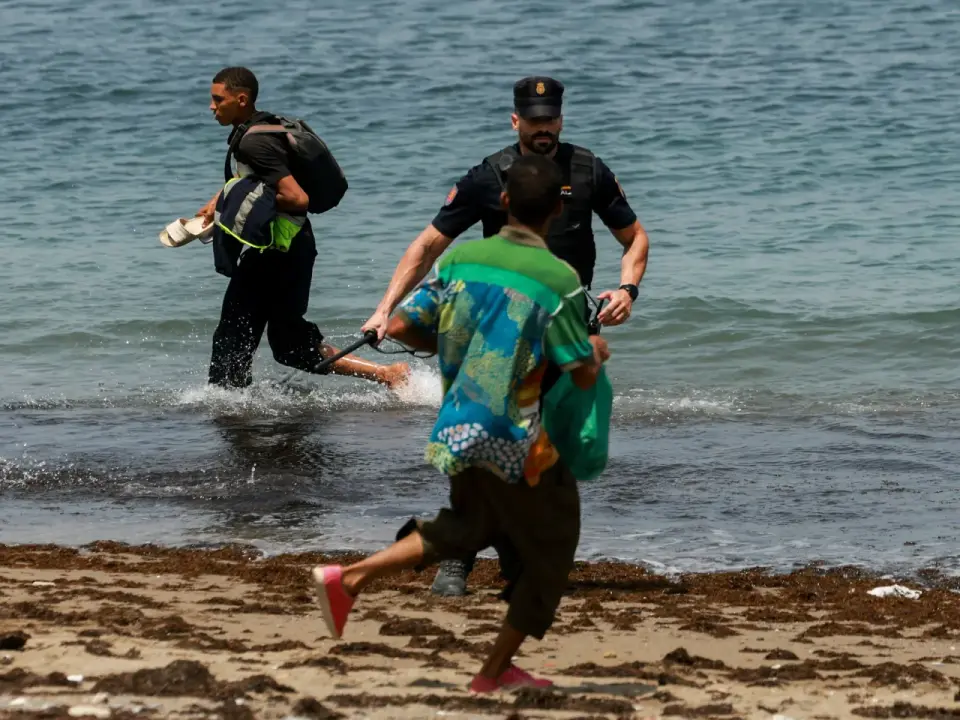
At least 72 people have died after approximately 60,000 migrants crossed from Morocco into Spain’s Ceuta enclave. Most have returned to Morocco, but the crisis has triggered a floating barrier, EU emergency coordination, and intense domestic political conflict.
Key points
- Death toll confirmed at 72 by Spanish authorities, with bodies found by drowning or crush injuries at the breakwater.
- Over 48,000 of the 60,000 migrants have returned to Morocco within 48 hours.
- Spain installed a 500-meter floating barrier off Ceuta’s coast and reinforced patrols.
- Italy suspended passport-free Schengen travel with Spain in response to the surge.
- Morocco’s Interior Ministry blamed misinformation and human trafficking networks for the mass crossing.
Background
This surge follows weeks of escalating tensions at Ceuta, where earlier crossings in late July resulted in at least 34 deaths. Spanish authorities had received intelligence warnings of a potential large-scale crossing, possibly linked to Moroccan political leverage or a recent court ruling on sea interceptions. The enclave, along with Melilla, represents the EU’s only land border with Africa and has historically experienced periodic migration surges.
How outlets are covering it
Al Jazeera emphasizes the humanitarian toll and the EU’s coordinated response, noting that 22 member states called for action. CNN highlights the domestic political fallout in Ceuta, where far-right figures like Santiago Abascal and Alvise Pérez faced violent counterprotests from residents. While Al Jazeera reports Spain’s stance that the residency program did not encourage the surge, CNN notes local residents blaming authorities for an effectively open border. Both sources agree that misinformation and trafficking networks played a role, but differ on the degree of Spanish governmental responsibility.
Why it matters
The crisis exposes vulnerabilities in EU border management and highlights the human cost of migration routes between North Africa and Europe. It has intensified debates over Schengen cooperation, with Italy’s suspension of passport-free travel signaling potential fragmentation of the zone. The incident also underscores the political polarization in Spain regarding migration policy and the limits of local resources in handling mass crossings.
What to watch
Spanish Civil Guard is expected to complete identification of the 72 bodies by next week. The EU is likely to continue coordinating border responses, while Spain faces ongoing pressure to manage the political and humanitarian aftermath. Further returns to Morocco are expected, but the long-term impact on EU-Spain relations and migration policy remains uncertain.
- Migrant deaths in Ceuta rise to 72 after border surge from Morocco aljazeera.com
- Ceuta grapples with aftermath of border surge after most migrants leave the Spanish territory CNN
- ‘Do You Think if I Had a Job I Would Have Gone?’ The New York Times
- Spain Says Most Immigrants Who Overran Its African Enclave Have Left WSJ
- Spain installs sea barrier on Ceuta's border with Morocco after frontier rush that killed 67 PBS
Want the full story? Read the original reporting
Read on aljazeera.com