
Ukrainian Troops Push TechEx Drones Beyond Design Limits with Heavy Payloads
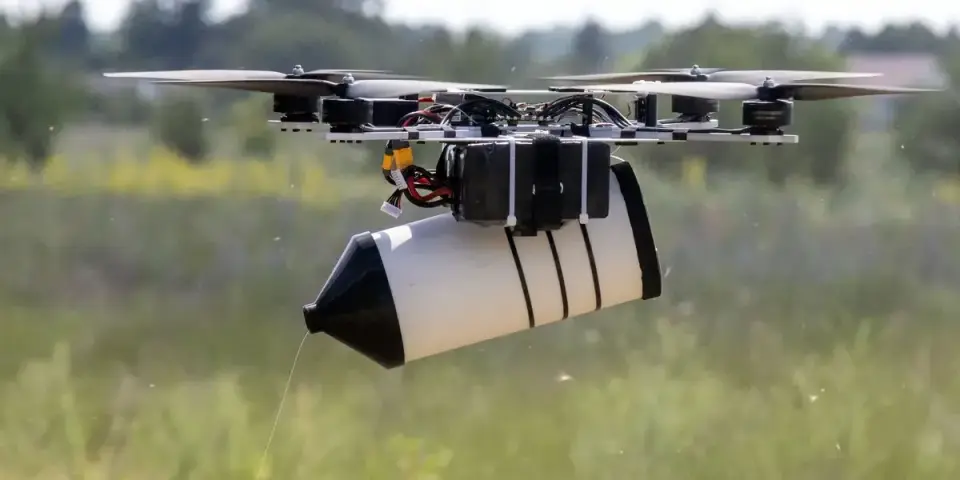
Ukrainian soldiers have surprised drone manufacturer TechEx by loading its fiber-optic FPV drones with explosive payloads weighing five to seven kilograms, far exceeding the company's advertised two-kilogram maximum. This improvisation highlights how front-line troops adapt equipment to survive, forcing manufacturers to rapidly iterate designs based on direct battlefield feedback.
Key points
- TechEx executives were shocked when a Ukrainian unit successfully flew a drone carrying 5-7 kg of explosives, despite the company's official payload limit of 2 kg for models like the Stalker XO-10 and XO-15.
- The drone successfully destroyed a building in a single strike, demonstrating that soldiers often push equipment beyond advertised specifications to achieve tactical goals.
- Weight is a critical constraint for fiber-optic drones, which must carry cable spools for jamming resistance; TechEx has developed lightweight spool technology to balance range and payload capacity.
- The company receives constant feedback from soldiers, leading to weekly product updates, as the industry moves too fast for a product to remain relevant for more than three months without modification.
- TechEx designs drones with interchangeable parts, allowing soldiers to repair or reconfigure equipment in the field, a practice that informs future manufacturing decisions.
Background
This development follows recent tensions in the European defense sector, including an arson attack on Estonian drone maker Milrem Robotics attributed to Russian security services in late 2026. While that incident highlighted external threats to defense infrastructure, the current story focuses on internal adaptation within Ukraine's military-industrial complex, where rapid iteration and soldier-driven innovation are essential for survival on the front lines.
Why it matters
The ability of soldiers to exceed manufacturer specifications underscores the dynamic nature of modern warfare, where battlefield improvisation drives industrial innovation. This feedback loop ensures that defense technologies remain effective against evolving threats, but it also reveals the fragility of standard equipment limits when faced with the urgency of combat operations.
What to watch
TechEx is likely to continue integrating soldier feedback into its design process, potentially adjusting payload capacities or spool weights in future iterations. The company may also develop new modular components to accommodate the diverse configurations soldiers are creating in the field, ensuring that its products remain viable in a rapidly changing tactical environment.
Want the full story? Read the original reporting
Read on Business Insider