
HMS Queen Elizabeth departs Portsmouth for NATO command role and readiness training
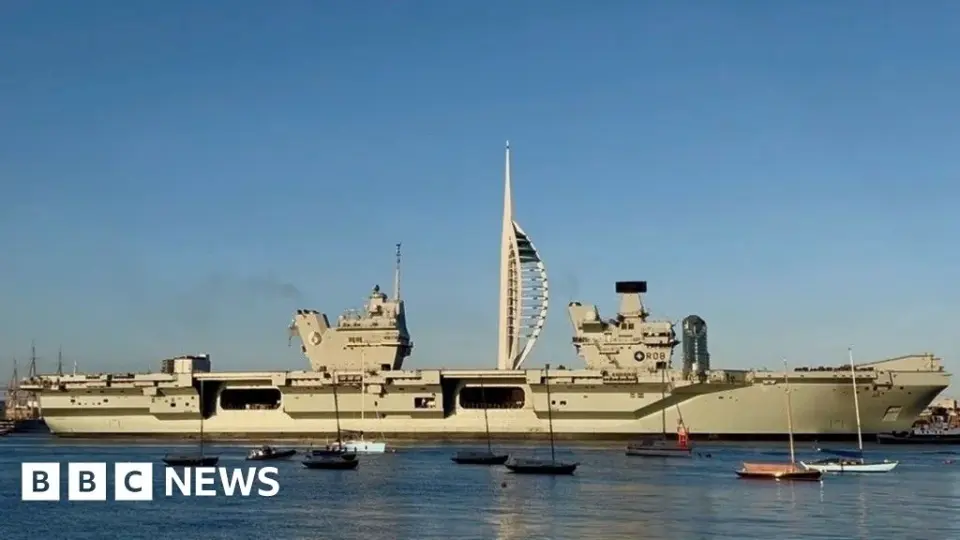
HMS Queen Elizabeth has departed Portsmouth for a three-month training deployment in UK and northern European waters. The 65,000-tonne carrier, which recently completed a major refit, is now serving as NATO's Afloat Command Platform for the Allied Response Force. The mission aims to restore the ship's high-readiness status before it replaces HMS Prince of Wales as the UK's flagship in late 2027.
Key points
- HMS Queen Elizabeth left Portsmouth Naval Base on Saturday evening, carrying over 800 sailors for a three-month deployment.
- The carrier is currently designated as NATO's Afloat Command Platform for the Allied Response Force, a role it assumed in July 2026.
- The vessel recently completed its first major refit since 2017, including an eight-month dry-dock period at Rosyth and upgrades to propulsion systems.
- The training program includes integration exercises with allied naval forces to enhance collective security and deterrence.
- HMS Queen Elizabeth is scheduled to replace HMS Prince of Wales as the UK's high-readiness strike carrier in late 2027.
Background
HMS Queen Elizabeth was commissioned in 2017 and underwent a significant unscheduled repair in 2024 due to a propeller shaft coupling issue, which delayed its participation in NATO's Steadfast Defender exercise. Its sister ship, HMS Prince of Wales, had previously suffered a similar propulsion failure in 2022. The current deployment follows a planned overhaul cycle, with the carrier now preparing to assume the UK's primary flagship role from its sister ship.
How outlets are covering it
BBC and SWNS emphasize the carrier's return to high-readiness status and its new NATO command role, highlighting the importance of the deployment for collective security. Navy Lookout provides technical details on the recent refit, including propulsion upgrades and dry-dock work, and notes potential participation in Exercise Atlantic Thunder 2026. TurDef contextualizes the current deployment within the broader history of propulsion issues affecting the Queen Elizabeth class, noting that while the 2024 repair was due to wear and tear, it followed a similar failure on HMS Prince of Wales in 2022. All sources agree on the strategic significance of the carrier's upcoming role as the UK's flagship in 2027.
Why it matters
The deployment signals the Royal Navy's commitment to restoring its carrier strike capability and fulfilling its NATO obligations. It also highlights the ongoing efforts to address propulsion reliability issues in the Queen Elizabeth class, which have previously disrupted major deployments. The successful completion of the refit and training will be crucial for the UK's ability to project power and support allied operations in the coming years.
What to watch
HMS Queen Elizabeth will continue its training program into 2027, including participation in major NATO exercises. It is expected to replace HMS Prince of Wales as the UK's flagship and high-readiness strike carrier in late 2027. Meanwhile, HMS Prince of Wales is set to deploy on the second phase of FIRECREST in the North Atlantic Area this autumn.
- Royal Navy aircraft carrier departs for training BBC
- HMS Queen Elizabeth returns to operations on completion of her first major refit Navy Lookout
- HMS Queen Elizabeth sets sail from Portsmouth ahead of NATO deployment Discover SWNS
- HMS Queen Elizabeth Returns Ahead of UK Flagship Role TURDEF
- HMS Queen Elizabeth Deploys for Major NATO Training ADS Advance
Want the full story? Read the original reporting
Read on BBC