
Ukraine’s Magura Naval Drones Pivot to Land Attacks, Targeting Russian Air Defense
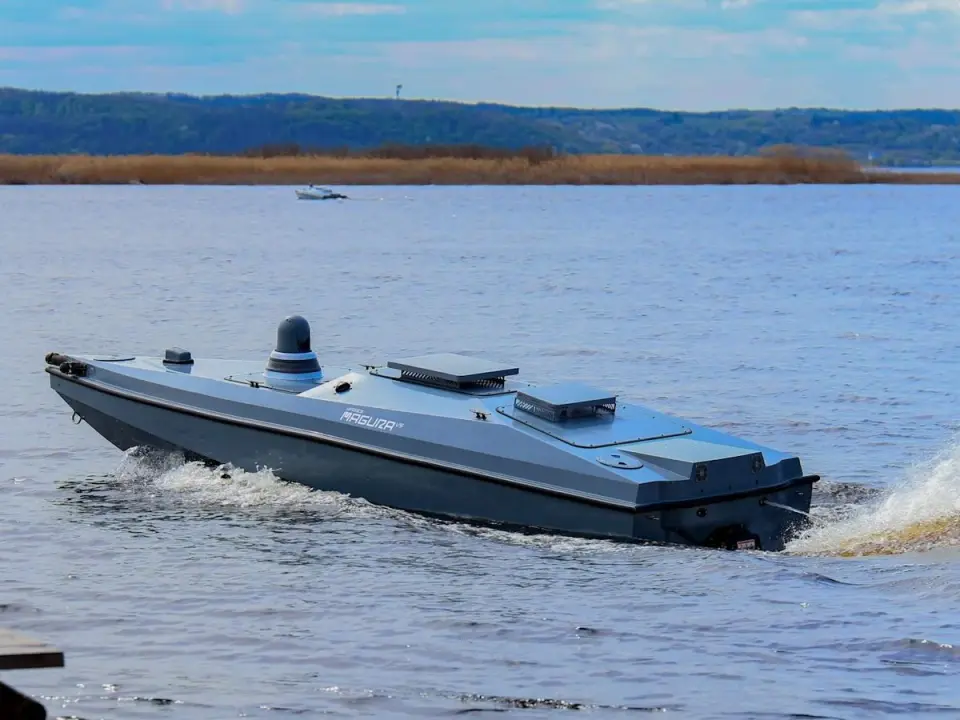
Ukraine’s naval drones, primarily the Magura model developed by UFORCE, are transitioning from attacking Russian warships to striking land-based targets. The Main Intelligence Directorate (GUR) confirmed in August that these vessels now serve as carriers for FPV drones, successfully destroying Russian air defense systems like Pantsir-S1 and S-400 launchers. This shift marks a fundamental change in the conflict, as naval drones now threaten ground forces. UFORCE recently raised $700 million in funding, valuing the company at $6 billion, to scale production of these autonomous platforms.
Key points
- Ukraine’s GUR confirmed that Magura naval drones are now used to launch FPV drones against land targets, including Russian air defense systems.
- In August, these drones destroyed a Pantsir-S1 system, two S-400 launchers, and an Orion drone control antenna.
- UFORCE, the developer of the Magura, raised $700 million in a Series A round, reaching a $6 billion valuation.
- The drones are being adapted to carry heavy Nemesis drones and amphibious ground robots for beach assaults.
- President Zelenskyy highlighted this evolution in March, noting that naval boats now strike land targets from the sea.
Background
This development follows recent Ukrainian drone strikes in the Baltic Sea, including the November 11 attack on the Russian missile ship Naro-Fominsk and the Ust-Luga oil terminal. It also aligns with broader international efforts to integrate autonomous sea drones into naval defense, such as the UK’s new 10-nation maritime pact and French concepts for hybrid fleets. The shift reflects a broader trend in naval warfare toward unmanned, AI-controlled assets.
Why it matters
The repurposing of naval drones for land attacks demonstrates Ukraine’s ability to innovate with limited resources, challenging Russia’s air defense capabilities. This expansion of naval drone roles could influence global naval strategies, as other nations seek to integrate autonomous platforms into their fleets. The significant funding round for UFORCE indicates strong international confidence in this technology, potentially accelerating the adoption of unmanned naval assets worldwide.
What to watch
UFORCE plans to scale manufacturing in Ukraine and partner countries to meet growing demand. The company expects more creative uses of Magura drones, including hybrid operations with crewed assets. International partners, including the UK and US firms, are likely to increase collaboration as the technology proves effective in diverse combat scenarios.
Want the full story? Read the original reporting
Read on Yahoo