
Ukraine’s Operation Veles Targets Russian Forces in Underground Gas Pipelines
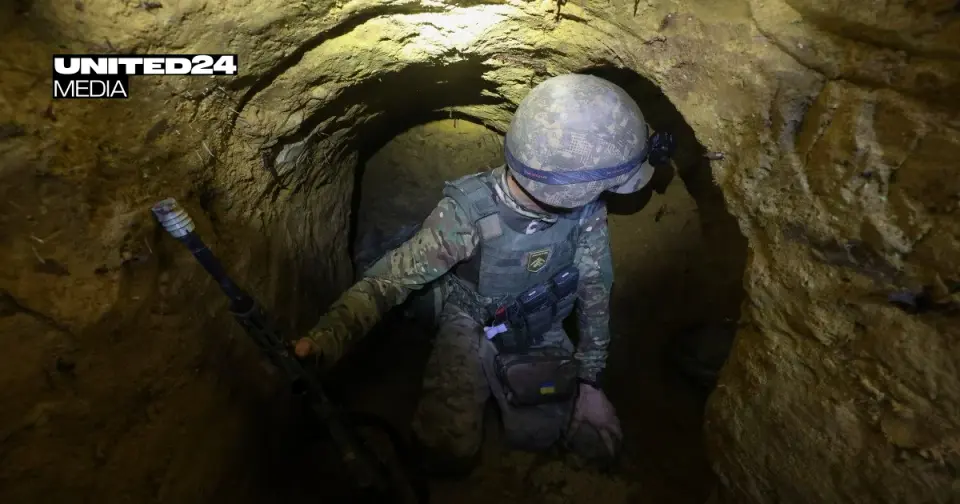
Ukrainian forces have launched Operation Veles, a campaign to seize control of Soviet-era gas pipelines near Kupiansk, countering Russian underground infiltration. President Zelensky declared the operation a success, reporting the elimination of approximately 100 Russian soldiers and the capture of over 30 prisoners. Ukrainian troops advanced 15 kilometers through narrow tunnels, neutralizing a key Russian logistics route. This marks a significant shift in Ukrainian tactics, moving from passive defense to active underground engagement to counter drone saturation and secure local deadlocks.
Key points
- Ukraine’s 13th Khartiia Brigade led Operation Veles, advancing 15 km through a 1.2-meter diameter gas pipeline near Kupiansk to secure tunnel entrances.
- President Zelensky reported that Ukrainian forces eliminated around 100 Russian soldiers and captured more than 30 prisoners during the underground campaign.
- The operation disrupted Russian logistics across the Oskil River, forcing Moscow to redeploy resources and halting their advance in the region.
- Ukrainian forces are using these tunnels to counter the saturation of reconnaissance and attack drones, which make above-ground movement highly dangerous.
- The 13th Khartiia Brigade is credited with transforming a tactic previously used by Russia into a sophisticated Ukrainian offensive strategy.
Background
This development follows earlier reports in October 2026 where Operation Veles was first identified as a major tactical success for Kyiv, marking the third significant territorial gain of the year. It also aligns with a broader trend in the conflict where Ukraine is increasingly relying on robotic and underground tactics to compensate for manpower shortages and drone threats, as seen in recent UGV operations and the 'Griffin' tactic.
How outlets are covering it
France 24 emphasizes the strategic shift, noting that Ukraine has adopted tactics previously pioneered by Russia, such as the use of pipelines in Avdiivka and Kursk. The Institute for the Study of War highlights the physical constraints of the operation, describing soldiers sleeping in bunkers cut into the sides of steel tunnels. Mezha.net provides a broader engineering context, mentioning a separate 6 km tunnel in the Donetsk region that facilitates logistics and medical evacuation, illustrating the versatility of underground infrastructure in the war. UNITED24 Media focuses on the specific combat robots and the immediate tactical success of the Kupiansk operation.
Why it matters
The success of Operation Veles demonstrates Ukraine’s ability to adapt to the changing nature of the battlefield, where drones have made surface movement lethal. By securing underground networks, Kyiv can disrupt enemy logistics and break local deadlocks without exposing troops to aerial surveillance. This tactical evolution could influence the broader war effort by providing a new dimension for offensive operations in areas with existing Soviet-era infrastructure.
What to watch
Ukrainian forces are expected to continue expanding their use of underground networks in regions with extensive pipeline infrastructure, such as Kharkiv, Luhansk, and Donetsk. Military analysts suggest that while these tactics cannot replace large-scale offensives, they will remain a critical support measure for breaking stalemates and protecting troops from drone attacks. Further developments may include the integration of more advanced technology and robotics into these underground operations.
- Ukraine Builds Combat Robots to Hunt Russian Troops Inside Underground Gas Pipelines UNITED24 Media
- Ukraine and Russia are taking the war underground as drones saturate the battlefield France 24
- A nearly 6 km underground tunnel has been built in Donetsk region Mezha.net
- Wall Street Journal: The Subterranean Battle Playing Out Deep in Ukraine’s Soviet-Era Pipelines Institute for the Study of War
- Ukraine war situation update | 17 – 23 October 2026 ACLED
Want the full story? Read the original reporting
Read on UNITED24 Media