
Hungary seizes $19.5m in cash buried in forests during probe of ex-minister Seszták
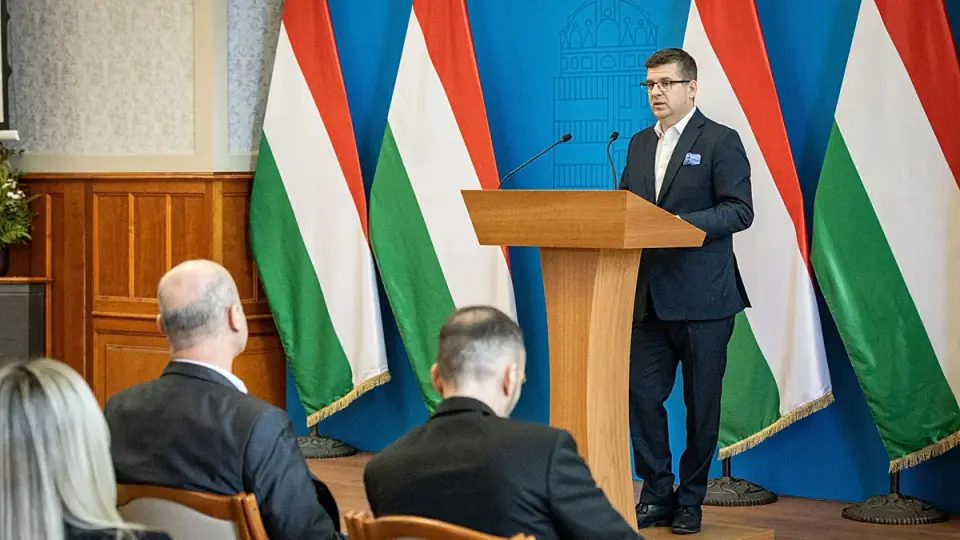
Hungarian authorities seized approximately $19.5 million in cash hidden in forests, warehouses, and safes during a two-day search linked to former minister Miklós Seszták. The funds, comprising forints, euros, and dollars, were deposited into the state treasury. Prime Minister Péter Magyar declared the seizure a turning point against his predecessor’s regime, while Seszták denies wrongdoing.
Key points
- Investigators recovered 5,071,632,000 forints, €2,658,350, and $1,257,100 during searches on November 12 and 13.
- The cash was found buried in forests, hidden in agricultural and residential buildings, and stored in high-value safes.
- The probe targets Miklós Seszták, former minister of national development, who is accused of accepting bribes related to state bus contracts.
- Prime Minister Péter Magyar described the seizure as the end of the 'Fidesz-KDNP mafia,' while Seszták denies any wrongdoing.
- The National Asset Recovery and Protection Office (NVVH) deposited the funds into the Hungarian State Treasury after an eight-hour counting process.
Background
This seizure follows a broader anti-corruption drive launched by Prime Minister Péter Magyar after his landslide election victory in April 2026, which ended Viktor Orbán’s 16-year rule. Magyar established the NVVH to investigate alleged graft during the previous administration. Seszták was detained in September 2026, and his detention was extended until January 30, 2026, due to flight risk concerns. Other former officials, including central bank chief György Matolcsy, have also been arrested in separate investigations.
How outlets are covering it
All four sources confirm the seizure of $19.5 million in cash hidden in forests and buildings during a two-day search. Euronews and The Guardian emphasize the specific locations, including forests and agricultural buildings, and the deposit into the state treasury. BBC and Al Jazeera highlight the political context, noting that Prime Minister Péter Magyar framed the seizure as the end of the 'Fidesz-KDNP mafia,' while former Prime Minister Viktor Orbán dismissed the probes as political persecution. Al Jazeera notes that Seszták is suspected of receiving over $37.2 million in bribes, a figure not explicitly detailed in the other sources. All sources agree that Seszták denies wrongdoing, and BBC and The Guardian note that Orbán has not reacted to the latest development.
Why it matters
The seizure of $19.5 million in cash underscores the scale of alleged corruption during the previous administration and signals a significant shift in Hungary’s political landscape under Prime Minister Péter Magyar. The recovery of funds hidden in forests and safes highlights the extent of the alleged illicit activities and the resources dedicated to the anti-corruption drive. This development may influence public trust in the new government and its ability to address systemic issues, as a recent survey indicated that 70 percent of respondents considered investigating suspected corruption under Orbán very important.
What to watch
The Hungarian State Treasury will manage the seized funds, and the criminal investigation into Miklós Seszták will continue. The NVVH may conduct further searches or announce additional findings related to the case. The political fallout may intensify, with potential reactions from Viktor Orbán and other former officials. The outcome of the investigation could set a precedent for future anti-corruption efforts in Hungary and influence public opinion on the new government’s accountability drive.
- Hungary seizes millions in cash amid corruption investigation Euronews.com
- Hungarian authorities uncover $20m during probe of Orbán-era minister BBC
- Hungary seizes $19.5m in cash found buried in forests amid graft inquiry The Guardian
- Nearly $20m found in Hungary’s forests, buildings amid corruption probe Al Jazeera
- Hungary recovers $20 million cash in probe of Orban minister Reuters
Want the full story? Read the original reporting
Read on Euronews.com