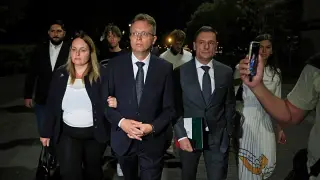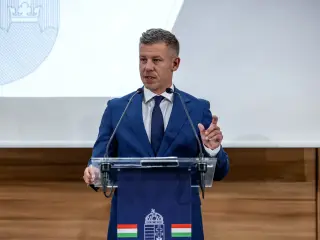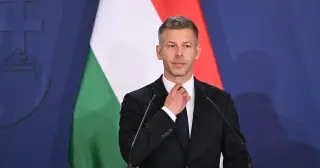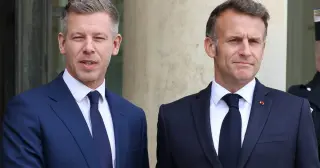
Hungary’s prime minister Magyar kicks off his first foreign trip to ally Poland, signaling a push to deepen bilateral cooperation between the two nations on regional affairs, diplomacy, and shared strategic interests.
Magyar’s decisive win signals a shift away from Orbán’s regime, enabling Brussels to lift sanctions and release Ukrainian funding while pressing Hungary to deliver judicial reform and anti-corruption measures; with a two-thirds majority, constitutional changes are possible, but allies tied to the old system may shield ill-gotten gains, making it crucial to protect liberal voices and sustain momentum for rule-of-law reforms.
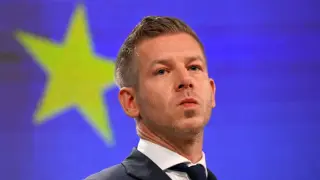
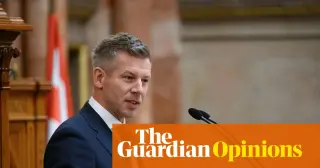
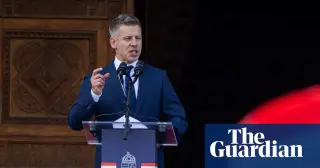
Péter Magyar, sworn in as Hungary’s prime minister, apologized to civilians, journalists and others harmed under Viktor Orbán, pledging a more free, humane future and a unifying approach as analysts weigh how his leadership will differ from the ruling party's long rule.
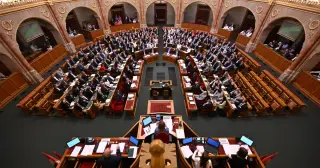
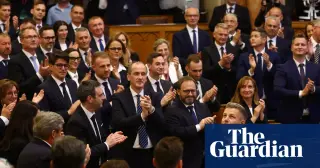
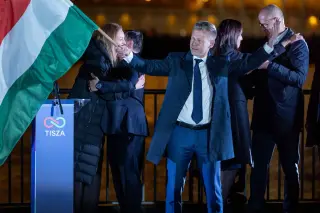
Pro‑European reformist Péter Magyar was sworn in as Hungary’s prime minister, marking the end of Viktor Orbán’s 16‑year rule after a landslide victory for Magyar’s Tisza party. He vows to roll back Orbán‑era systems, suspend state media broadcasts, and rebuild Hungary’s ties with the EU to unlock billions in frozen funds, while overseeing a parliament with a historic share of women and new leadership that signals a shift in Hungary’s political landscape.
A post-election ECFR poll finds Hungarian voters—especially supporters of Peter Magyar’s Tisza party—largely oppose providing military aid (57% oppose) and financially aid to Ukraine (net opposition of 14%), with national support at 12% for military aid and 24% for financial aid. On Kyiv’s EU bid, 41% of Tisza voters back unblocking Ukraine’s accession talks (43% oppose); nationally 27% support resuming formal talks, while 54% oppose. Viktor Orban’s obstruction of EU talks could ease under Magyar, who says he won’t fast-track Ukraine’s accession and will hold a referendum after the full process, though he’s seen as more constructive toward Kyiv. The poll also shows 93% of Tisza voters expect Ukraine-Hungary relations to improve under Magyar. Energy policy remains divided: 38% want to stop Russian energy imports, 39% oppose, with Magyar pledging to end dependence on Russian oil and gas by 2035 and to review the Paks II project.
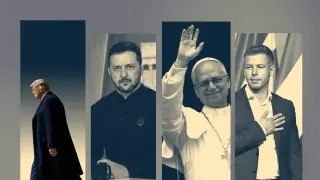
The Bulwark argues that under a Trump presidency the U.S. is no longer the lone leader of the Free World, pointing to a weak approval rating and an ‘America First’ stance, while three unexpected champions—Ukraine’s Zelensky, Pope Leo XIV, and Hungary’s Péter Magyar—have emerged to defend liberal democracy, suggesting the Old World could help revive freedom in the New World rather than merely watch Washington falter.
Hungary's outgoing prime minister Viktor Orbán says he will not take his seat in parliament after Fidesz’s crushing loss in the 12 April election; he remains an MP on the party list and vows to help reorganize the patriotic movement, as a rival two-thirds majority won by Péter Magyar’s Tisza party sets the stage for a major domestic and global policy reset, with Gulyás Gergely to lead the Fidesz bloc.
At Ayia Napa, EU leaders sealed a €90 billion loan to Ukraine but kicked off a broader, tougher agenda: deciding when and how Kyiv should join the EU, boosting defense cooperation (including Article 42.7) amid Middle East tensions, and shaping a massive seven-year budget. Disagreements linger over Ukraine’s membership timeline, with some leaders pushing for faster integration and others warning it may take years, while Orbán’s exit has unsettled the unity on Ukraine policy. The summit also touched on Iran-related risks and energy prices, signaling the EU’s challenges extend far beyond Kyiv.
The Court of Justice of the European Union ruled that Hungary’s 2021 law restricting or banning the promotion of homosexuality and gender transition in media accessible to children breaches EU law and must be repealed, backing the European Commission’s infringement case and signaling potential penalties if Hungary does not comply.
POLITICO Magazine traces a shift from covert Cold War meddling to openly coordinated campaigns, arguing that foreign election interference now often plays out in public—from Trump endorsing foreign leaders to White House and Kremlin-backed efforts in Hungary and beyond—suggesting this public approach may become the norm as publics grow more accepting of external influence.
Trump tried to sway Hungary’s vote by courting Viktor Orbán’s allies and conservative networks, but the effort backfired as Orbán’s camp prevailed; JD Vance’s cringe‑worthy intervention failed to stop the outcome, signaling a ripple effect for US political strategies abroad and the future of the Project 2025 lineup.
New Hungarian PM Péter Magyar, after a landslide win over Viktor Orbán, vows to defund CPAC and investigate the mixing of government funds with party financing, targeting CPAC Hungary and allied think tanks; CPAC says it has never received government money, while observers note CPAC’s deep links to Orbán’s political machinery and EU funds being blocked for Hungary.
US Vice-President JD Vance defended his two-day trip backing Viktor Orbán, saying the former prime minister is a “great guy” and that the US can work with Hungary’s incoming government after Péter Magyar and his party won a landslide, with Magyar set to become prime minister as Orbán stays on in a caretaker role; the transition raises EU rule-of-law and funding issues and will hinge on Hungary’s handling of media access and ongoing EU negotiations.
Vice President JD Vance said he wasn’t surprised by Viktor Orbán’s defeat in Hungary, noting he went to Budapest to stand with a loyal ally rather than expect a victory and that Orbán’s 16-year rule ended; the White House framed the loss as a setback for MAGA-style populism and for the broader nationalist project.
US Vice President JD Vance said he was sad but not surprised by Viktor Orban’s defeat in Hungary, explaining his Budapest rally was to stand with a longtime ally rather than secure an election victory; the White House acknowledged the loss as a setback for the MAGA-style populist project, while European leaders celebrated Orban’s ouster and pundits warned it challenges the populist-nationalist playbook.