
Spain Halts for 24-Hour Strike Over Housing as Election Looms
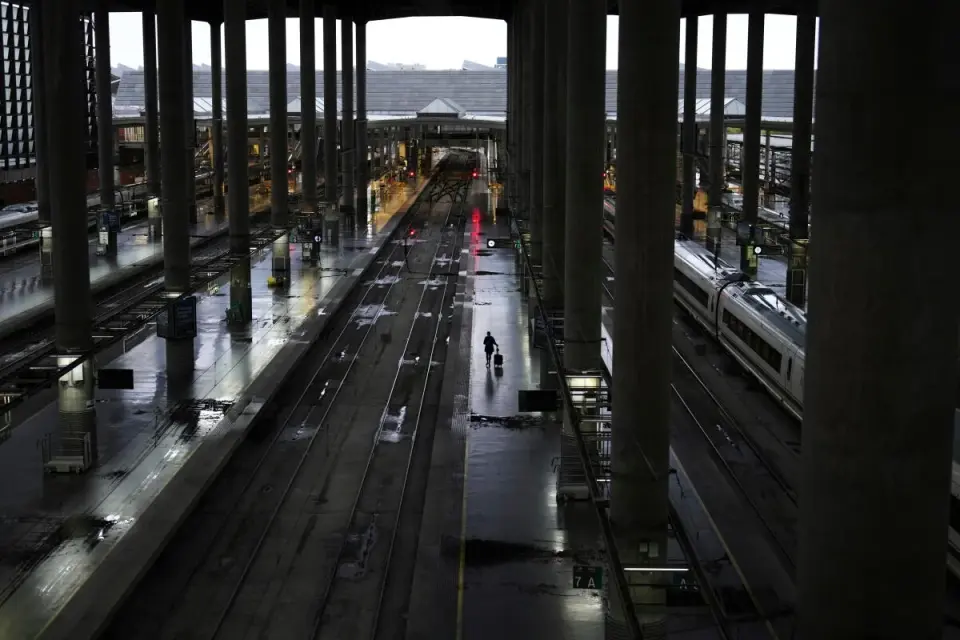
Millions of workers in Spain participated in a 24-hour general strike on November 11, 2026, demanding government action on soaring housing costs. The walkout, the first in 14 years, occurred 18 days before a snap election and caused significant disruptions to transport and industry. While unions reported high participation rates in key sectors, the strike also sparked minor violent incidents. The event serves as a critical test for Prime Minister Pedro Sánchez’s left-wing coalition, which faces a strong right-wing challenge in the upcoming vote.
Key points
- The strike was called by the two largest union federations, UGT and CCOO, alongside housing activists, with the slogan 'Salaries. Housing. Prices.'
- Participation was reported at 90% in automotive and port sectors, 85% in meat processing, 82% in waste collection, and 75% in energy.
- Public transport in Madrid and Barcelona faced severe delays or standstills, while many schools and universities closed or operated at minimal capacity.
- The strike follows the rejection of emergency housing decrees by the lower chamber of Parliament in October, which prompted Prime Minister Pedro Sánchez to call a snap election for November 29.
- Minor incidents included roadblocks with burning tires in Barcelona and scuffles between picketers and police near Madrid’s wholesale market.
Background
The current strike follows a series of escalating housing crises in Spain. In October 2026, the forced eviction and subsequent death of 87-year-old Maricarmen Abascal in Madrid triggered mass protests and exposed deep structural flaws in the housing market, including an estimated shortage of 750,000 homes. In response, the government attempted to pass emergency measures to limit evictions, but these were rejected by right-wing parties in Parliament. This political deadlock led Sánchez to call a snap election for November 29, 2026. Additionally, Spain’s second deadly high-speed rail disaster this year, which killed 69 people, has dominated the news cycle, potentially complicating the government’s campaign momentum.
How outlets are covering it
AP News and NPR emphasize the strike as a pivotal moment for the left-wing coalition, noting that Prime Minister Pedro Sánchez and his allies hope the protest will refocus the election campaign on housing and social issues. They highlight the risk that violence could benefit the right. Bloomberg focuses on the economic disruption and the support from Labor Minister Yolanda Díaz, noting the strike was triggered by the rejection of housing bills. Euronews provides a broader European context, comparing Spain’s strike to similar actions in France, Italy, and Belgium, and estimates the economic cost at approximately €930 million, though it notes that such losses are often recovered within months. While AP and NPR focus on the political implications for the upcoming election, Euronews highlights the broader trend of rising strike activity across the EU in 2025 and 2026.
Why it matters
The strike highlights the deepening divide in Spanish society over housing affordability, with average rents nearly doubling in the last decade. It serves as a direct challenge to the right-wing parties, including the Popular Party and Vox, who oppose government intervention in the housing market. The outcome of the strike, particularly regarding violence and participation, could influence voter sentiment ahead of the November 29 election, where the far-right is poised to potentially gain power. The strike also underscores the fragility of Spain’s social contract and the potential for further economic disruption if the housing crisis remains unresolved.
What to watch
The government plans to attempt to ratify the rejected housing decrees through a reduced interim Parliament on November 12. The snap election is scheduled for November 29, 2026. Analysts suggest that the success or failure of the strike, particularly in terms of violence and public support, will be a key factor in determining the outcome of the election. The right-wing parties are expected to continue their campaign against government intervention in the housing market, while the left will focus on social protections and workers' rights.
- Spain’s first general strike in 14 years brings clashing social and political desires to the fore AP News
- Spain's first general strike in 14 years demands solutions to housing crisis NPR
- Spain’s Main Unions Hold Nationwide Strike Over Housing Costs Bloomberg.com
- Which European country loses the most money when workers strike? Euronews.com
- Workers launch general strike across Spain over severe housing crisis NBC News
Want the full story? Read the original reporting
Read on AP News