
AfD's First State Parliament President Elected Amid Migrant Anxiety and Political Firewalls
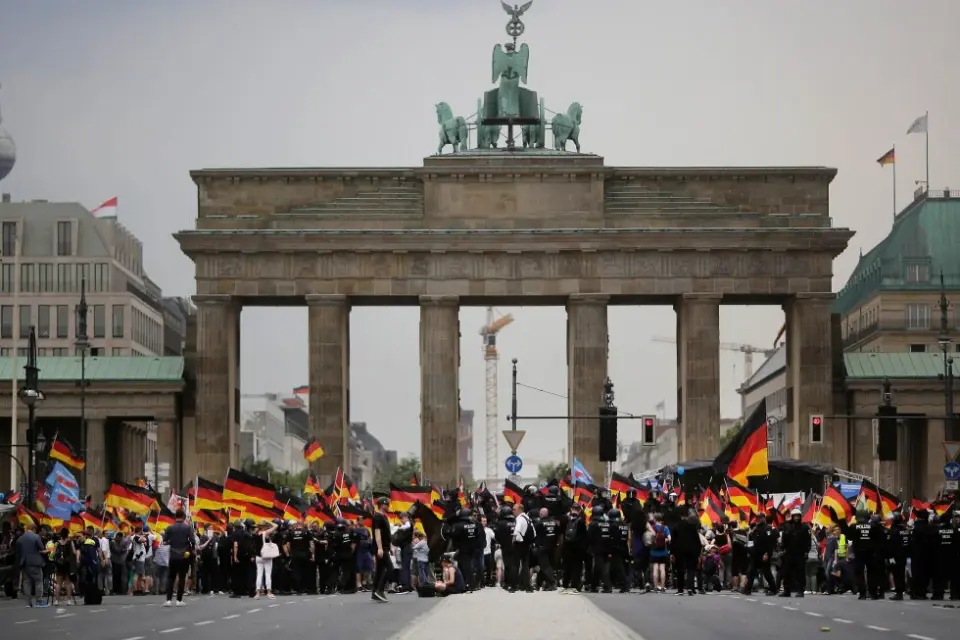
The far-right Alternative for Germany (AfD) has secured its first-ever presidency of a regional parliament in Germany since 1945, with Tobias Rausch elected speaker of the Saxony-Anhalt Landtag. This follows the party's landslide victory in September, where it won nearly 44% of the vote. The election, which relied on secret support from other parties, has intensified fears among migrants in eastern Germany and sparked a national debate over the traditional 'firewall' against extremist parties.
Key points
- Tobias Rausch, a 35-year-old AfD member, was elected president of the Saxony-Anhalt regional parliament with 48 votes, despite the AfD holding only 39 seats.
- The AfD won 43.8% of the vote in the September 6 regional election, marking its best result since the Nazi era, and now holds the largest parliamentary group.
- Rausch's election required support from the hard-left Bündnis Sahra Wagenknecht (BSW) and four unknown members from other parties, breaking the traditional 'firewall' against the AfD.
- The AfD's platform in Saxony-Anhalt proposes restricting recruitment of 'culturally foreign' workers, raising concerns about labor shortages in a region with an aging population.
- Migrants in eastern Germany, such as pharmacist Mohamad Aldabagh, express fear and uncertainty about their future, though some remain determined to stay if treated with respect.
Background
The AfD's surge in Saxony-Anhalt follows a series of regional elections in eastern Germany where the party has gained significant ground. Previous coverage noted widespread protests against the AfD's gains and warnings from security officials about potential extremist ties and Russia-backed disinformation. The party's success in Saxony-Anhalt is seen as a potential stepping stone for broader national influence, with polls showing strong support in other eastern states like Mecklenburg-Vorpommern.
How outlets are covering it
AP News emphasizes the human impact on migrants in eastern Germany, highlighting fears and the potential for skilled workers to leave if not respected. The Financial Times focuses on the political mechanics, detailing the secret votes from established parties that enabled Rausch's election and the resulting strain on Chancellor Merz's coalition. Euronews underscores the historical significance of the AfD holding a parliamentary presidency for the first time since 1945 and the procedural powers of the role. Yahoo News provides a factual overview of the vote count and the party's platform, noting the AfD's classification as a right-wing extremist organization by domestic intelligence.
Why it matters
The AfD's rise to a key parliamentary role in Saxony-Anhalt signals a potential shift in German politics, challenging the long-standing 'firewall' against extremist parties. It raises concerns about the party's influence on migration and labor policies, particularly in regions with significant migrant populations and labor shortages. The event could have broader implications for national politics and the stability of governing coalitions in Germany.
What to watch
The AfD's candidate Ulrich Siegmund is expected to seek the position of minister-president in December, aiming to form a government in Saxony-Anhalt. The outcome of this vote will determine whether the AfD can secure real power over education, policing, and migration policy in the region. The political fallout from Rausch's election may also influence upcoming regional elections in Berlin and Mecklenburg-Vorpommern.
- Far-right election win leaves migrants questioning their future in eastern Germany AP News
- German far right set to secure first-ever regional parliament president Financial Times
- Germany news: Saxony-Anhalt parliament sits after AfD win dw.com
- Germany's far-right AfD bids to take helm of state parliament in Saxony-Anhalt Euronews.com
- Germany's AfD poised to preside over state assembly for first time Yahoo
Want the full story? Read the original reporting
Read on AP News