
ANC suffers historic local election defeat as DA and MK surge in key metros
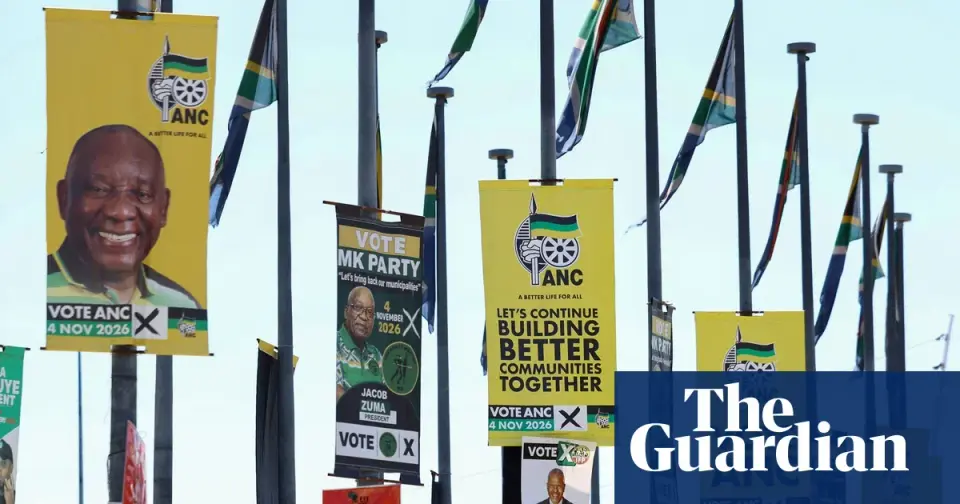
The African National Congress (ANC) is projected to suffer its worst local election performance ever, falling to approximately 31.8% of the national vote. The party risks losing control of major metropolitan areas, including Johannesburg and Durban, to the Democratic Alliance (DA) and the uMkhonto weSizwe (MK) party. Voter dissatisfaction with poor service delivery, high unemployment, and corruption has driven a fragmented result, with turnout rising to 54.5%. Coalition negotiations are now underway in key provinces, with the ANC potentially forced into junior roles in cities where it previously dominated.
Key points
- The ANC’s national vote share has dropped to 31.8%, a decline of nearly 14 percentage points from the 2021 local elections, marking its lowest result in this category.
- The Democratic Alliance (DA) secured 24.1% of the national vote, while the MK party, led by former President Jacob Zuma, achieved 9.3%.
- In Johannesburg, the DA is leading with 40% of the vote, significantly outpacing the ANC at 17.5% and ActionSA at 15.5%, according to partial counts.
- The MK party is projected to displace the ANC as the largest party in KwaZulu-Natal, with 41% of the vote in the eThekwini municipality containing Durban.
- Voter turnout increased to 54.5%, up from 46% in 2021, despite widespread apathy in township areas due to poor service delivery.
- Coalition negotiations are underway in Gauteng and KwaZulu-Natal, with the ANC potentially facing a reversal of power dynamics in Johannesburg if it partners with the DA.
Background
The ANC has led South African national governments since 1994 but lost its parliamentary majority in 2024. Previous local elections in 2021 saw the party secure 46% of the vote. Recent audits have highlighted financial mismanagement in major municipalities, with Johannesburg labeled 'effectively bankrupt' by the auditor-general. The current elections follow a period of intense campaigning focused on infrastructure failures, including water shortages and potholes, which have eroded support in traditional ANC strongholds.
How outlets are covering it
The Guardian emphasizes the ANC’s decline as a historic event, noting the party’s loss of status as the largest force in the two most populous provinces. The BBC highlights the contrast between wealthy suburbs and impoverished townships, citing resident interviews that link voter apathy to deteriorating service delivery. The Financial Times frames the result as a potential 'looting option' for the ANC, suggesting the party may struggle to form stable coalitions and could face leadership challenges. While all sources agree on the ANC’s poor performance, the FT focuses on the political implications for President Ramaphosa’s authority, whereas the BBC focuses on the grassroots impact of infrastructure neglect.
Why it matters
The outcome signals a significant shift in South African politics, with the ANC losing control of major economic hubs. The rise of the DA and MK parties indicates a fragmented electorate and potential instability in municipal governance. The results may influence the ANC’s leadership succession in 2026 and its strategy for the 2029 general election, as the party faces pressure to reverse its decline or risk further marginalization.
What to watch
Final results are expected by Sunday, with coalition negotiations continuing in key municipalities. The ANC must decide whether to partner with the DA in Johannesburg or seek alliances with smaller parties like the MK or Economic Freedom Fighters. The outcome will determine the stability of municipal governments and the ANC’s influence over its next leadership selection in December.
- ANC faces bruising defeat in South African local elections with 80% of ballots counted The Guardian
- South Africa's ANC set for major vote loss, city coalition battles loom Reuters
- ANC under pressure to reverse South Africa decline BBC
- 2026 election results: 50% of all votes counted, with the ANC getting hammered BusinessTech
- South Africa’s incredible shrinking ANC Financial Times
Want the full story? Read the original reporting
Read on The Guardian