
Bosnia's 2026 Election: Dodik's Shadow, Tech Glitches, and Youth Exodus
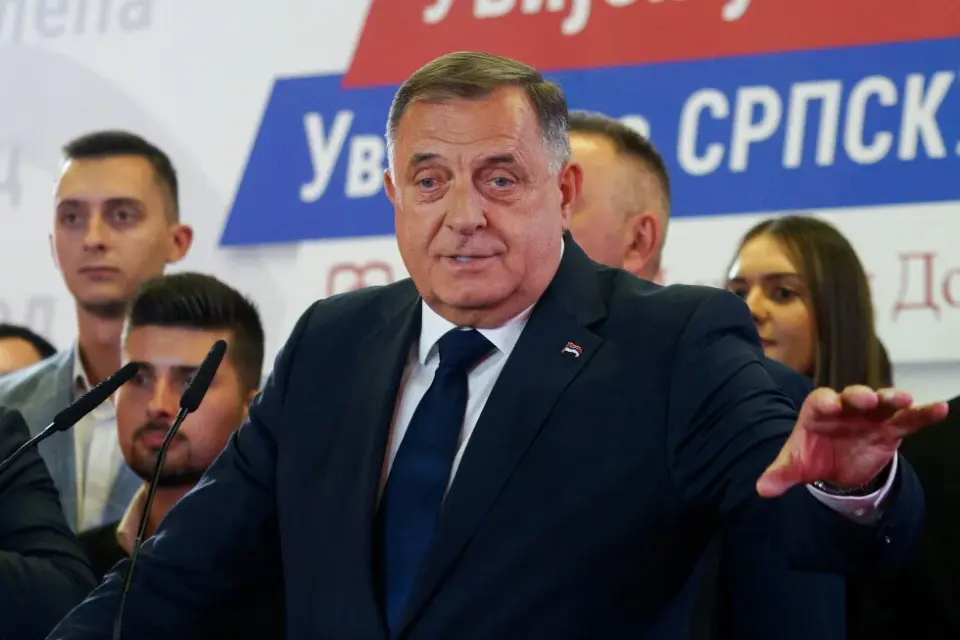
Bosnia and Herzegovina held its general election on October 4, 2026, with preliminary results pending. The vote featured new biometric identification and ballot scanning to combat fraud, though technical issues delayed voting at some stations. Milorad Dodik, banned from office, dominated the campaign despite not being a candidate. Voter turnout was lower than in 2022, and many young citizens remain disillusioned by ethnic nationalism and economic stagnation.
Key points
- Milorad Dodik, banned from public office, declared Bosnia 'dead' at a rally attended by the Russian ambassador, claiming his party would win in Republika Srpska.
- The election introduced electronic voter ID and ballot scanners for the first time, causing delays at 201 polling stations in Republika Srpska and prompting extended voting hours.
- Voter turnout was lower than in 2022, with only 27% of eligible voters casting ballots by 3 p.m., reflecting widespread disillusionment among young people.
- The country's complex governance system, established by the 1995 Dayton agreement, continues to perpetuate ethnic divisions among Bosniaks, Serbs, and Croats.
- More than 600,000 people have left Bosnia in the decade since the 2013 census, driven by economic stagnation and political instability.
Background
Bosnia and Herzegovina has struggled with ethnic divisions since the 1992-1995 war, which killed over 100,000 people. The 1995 Dayton agreement created a complex governance system with two entities, the Federation of Bosnia and Herzegovina and Republika Srpska, to manage divisions among Bosniaks, Serbs, and Croats. This system has perpetuated ethnic divisions and hindered progress toward EU membership. Recent events, including the death of war criminal Ratko Mladić in August 2026, have revived wartime tensions and highlighted ongoing ethnic divisions.
How outlets are covering it
AP News and Euronews focus on the technical challenges of the election and the continued influence of Milorad Dodik, despite his ban from public office. The Guardian emphasizes the youth exodus and the failure of ethnic nationalism to address economic and social issues. All sources agree on the low voter turnout and the persistence of ethnic divisions, but they differ in their emphasis: AP and Euronews highlight the technical and political aspects, while The Guardian focuses on the social and economic consequences for young people.
Why it matters
The 2026 election in Bosnia and Herzegovina highlights the ongoing challenges of ethnic division and political instability in the country. The continued influence of Milorad Dodik, despite his ban from public office, underscores the difficulty of addressing separatist movements. The low voter turnout and youth exodus reflect widespread disillusionment with the political system and economic stagnation. These issues have implications for Bosnia's progress toward EU membership and its stability in the region.
What to watch
The final results of the 2026 election are expected in the coming hours. The outcome will determine the composition of the multi-ethnic presidency and the leadership of the two entities. The continued influence of Milorad Dodik and the low voter turnout may indicate a lack of confidence in the political system. The youth exodus and economic stagnation are likely to continue, posing challenges for the country's future stability and development.
- Bosnia votes as pro-Russian politician looms large and ethnic tensions simmer AP News
- Bosnia votes Sunday in election that could affect EU bid Reuters
- Bosnia votes as ethnic divisions and stalled EU bid dominate polls Euronews.com
- Bosnia-Herzegovina votes amid divisive campaigns, EU bid DW.com
- Can anything politicians say at Sunday’s election stop young people from leaving Bosnia? The Guardian
Want the full story? Read the original reporting
Read on AP News