
Brazilian frontrunners skip final TV debate amid court rulings and tight polls
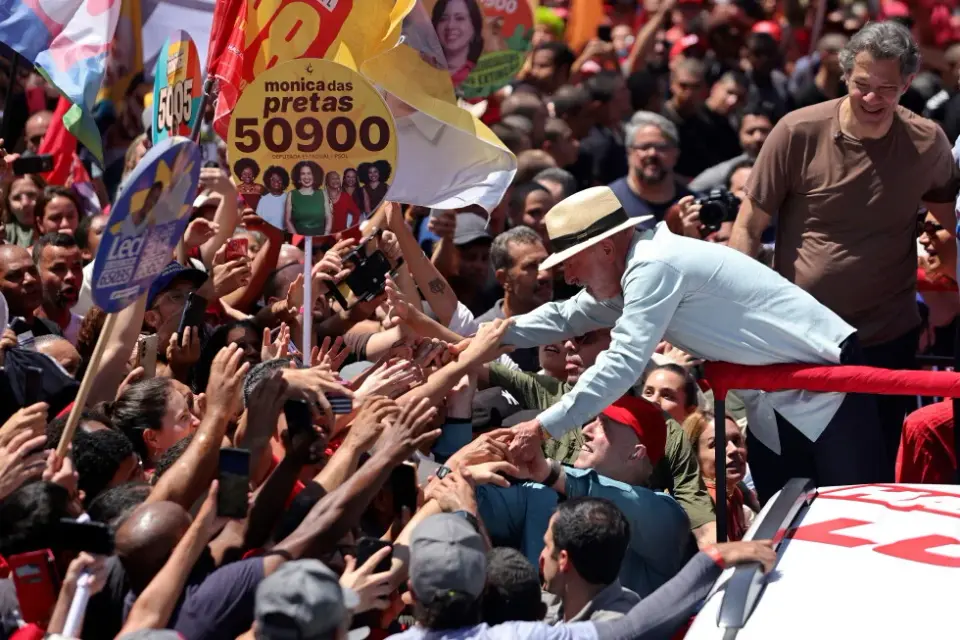
The final televised presidential debate in Brazil was canceled on October 2, 2026, just three days before the first-round vote. Incumbent President Luiz Inácio Lula da Silva and Senator Flávio Bolsonaro both withdrew, citing legal uncertainties and strategic caution. Lula appeared on a podcast instead, while Bolsonaro accused the electoral court of censorship. Polls show a tight race, with a runoff likely on October 25.
Key points
- TV Globo canceled its final presidential debate on October 2 due to conflicting rulings from Brazil’s Superior Electoral Court (TSE) and Supreme Federal Court (STF).
- Lula da Silva, 80, declined to participate, arguing that debating a candidate with a small poll share is unfair; he instead appeared on a popular YouTube podcast.
- Flávio Bolsonaro withdrew after the TSE barred Globo from displaying Lula’s empty podium, accusing the court of censorship and judicial interference.
- Polls from Datafolha and Real Time Big Data show Lula leading slightly (43-45%) over Bolsonaro (39-40%), but neither has enough support to win outright, making an October 25 runoff likely.
- The cancellation occurred alongside a bomb scare outside Brazil’s Supreme Court, which police ruled out after finding only personal belongings in a suspect’s backpack.
Background
This election is marked by intense polarization and judicial interference. Previous coverage noted that Flávio Bolsonaro’s campaign is hampered by the Banco Master financial scandal, while Lula faces criticism for perceived stagnation. The Supreme Court’s recent conviction of former President Jair Bolsonaro over a coup plot has fueled right-wing calls for impeachment, adding to the contentious atmosphere. Additionally, false claims about Bolsonaro’s stance on Brazil’s patron saint, Our Lady of Aparecida, have sparked legal disputes over disinformation and free expression.
How outlets are covering it
AP News and Al Jazeera emphasize the strategic calculations behind the candidates’ withdrawals, noting that Lula avoided a debate to prevent giving ground, while Bolsonaro framed his absence as a protest against judicial censorship. UPI highlights the legal uncertainty caused by conflicting court rulings, specifically the TSE’s ban on showing an empty podium and the STF’s order to include a minor candidate. AS/COA’s Brian Winter argues that the lack of a debate matters because it denied voters a final chance to see the frontrunners engage, reflecting a defensive approach in a tight race where both candidates are saving ammunition for the runoff. All sources agree that the judiciary’s prominent role has intensified public debate and polarized the campaign.
Why it matters
The cancellation of the final debate underscores the deepening influence of the judiciary in Brazilian politics and the strategic caution of candidates in a highly contested election. With a runoff likely, the absence of a direct exchange may leave voters without a clear comparison of policy positions, potentially impacting turnout and the outcome of the October 25 second round.
What to watch
The first round of Brazil’s presidential election is scheduled for October 4, 2026. If no candidate secures a majority, a runoff will take place on October 25 between Lula and Flávio Bolsonaro. Campaigns will likely focus on final appeals to undecided voters and efforts to counter disinformation, while the Supreme Court’s role in the election remains a central point of contention.
- Brazil’s leading presidential candidates snub TV debate ahead of Sunday’s election AP News
- Brazil election's final TV debate scrapped as Lula, Flavio Bolsonaro skip Reuters
- Election debate cancelled in Brazil, bomb scare outside Supreme Court Al Jazeera
- Brazil final presidential debate canceled after court rulings upi.com
- One Big Question: Does It Matter that Lula and Flávio Refused to Debate? as-coa.org
Want the full story? Read the original reporting
Read on AP News