
Delhi Lockdown and Mass Detentions as Youth Protests Voter Roll Purge
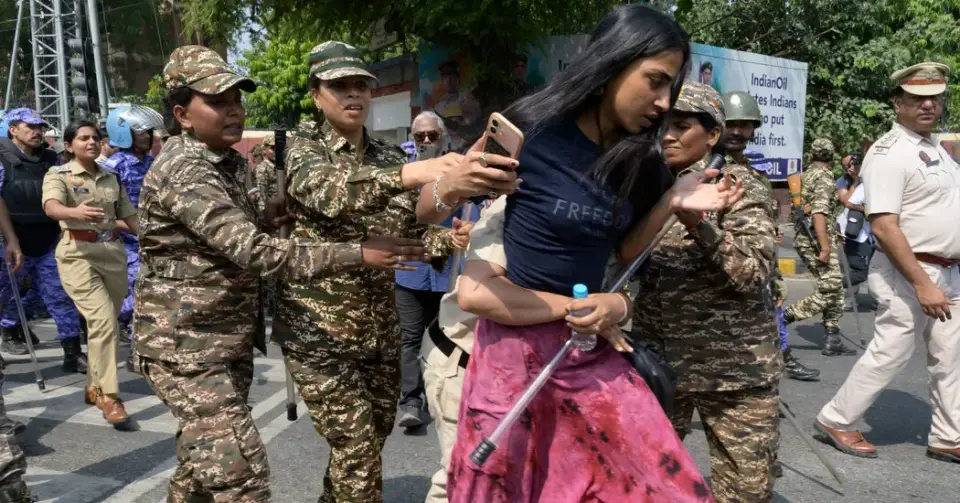
On October 9, 2026, Indian authorities imposed a severe lockdown on New Delhi to suppress a massive youth-led protest against the removal of 130 million names from the national voter roll. Police detained thousands of demonstrators, including leaders of the Cockroach Janta Party, while opposition figures condemned the crackdown as authoritarian. The unrest, driven by fears that the voter revision entrenches Prime Minister Narendra Modi’s power, has escalated into a nationwide crisis with heavy security deployments and mass arrests.
Key points
- New Delhi was placed under a strict lockdown on October 9, with 45 metro stations closed and trains cancelled to prevent protesters from reaching the Jantar Mantar site.
- More than 2,000 people were detained by early evening, according to legal aid groups, while The Guardian reported tens of thousands were arrested across India.
- Abhijeet Dipke, founder of the Cockroach Janta Party, was detained by police upon landing at Delhi airport from Mumbai.
- The protests demand the resignation of Chief Election Commissioner Gyanesh Kumar, who oversaw the 'special intensive revision' that removed 130 million names from the electoral roll.
- Opposition leader Rahul Gandhi supported the protesters, while BJP leader Ravi Shankar Prasad condemned the demonstrations as anarchic.
Background
This escalation follows earlier tensions in September 2026, where a protester nicknamed 'cockroach' challenged his detention in court, signaling growing unrest. The current crisis stems from a voter roll revision that began last year, which critics argue disproportionately targets minorities and opposition voters to secure the ruling Bharatiya Janata Party’s power. The Supreme Court has ordered the government to respond to allegations of irregularities in the process.
How outlets are covering it
The New York Times and The Guardian emphasize the scale of the state’s repression, describing Delhi as a 'fortress' and highlighting the detention of thousands, including senior leaders and lawyers. The BBC focuses on the defiance of protesters, noting that despite the crackdown, many vowed to continue protesting. While the government and BJP leaders like Ravi Shankar Prasad frame the protests as illegal and anarchic, opposition figures like Rahul Gandhi and activists like Sonam Wangchuk characterize the state’s actions as a dictatorship that threatens India’s democratic foundations. There is a discrepancy in reported detention numbers, with The New York Times citing over 2,000 in Delhi, while The Guardian suggests tens of thousands nationwide.
Why it matters
The crackdown signals a significant shift in India’s democratic norms, with the government using unprecedented force to suppress dissent over electoral integrity. The removal of 130 million voters raises serious concerns about the fairness of upcoming elections and the entrenchment of authoritarian power. The widespread detention of youth and civil society leaders could have long-term implications for political participation and civil liberties in the world’s largest democracy.
What to watch
Protest leaders have vowed to continue demonstrations despite detentions, with some activists threatening further hunger strikes or marches if detainees are not released within 24 hours. The Supreme Court is expected to rule on the legality of the voter roll revision, which could either legitimize the government’s actions or trigger further unrest. The political fallout may intensify as opposition parties and civil society groups mobilize to challenge the election commission’s decisions.
- Live Updates: Leaders of Protest Paralyzing New Delhi Say They’ve Been Detained by Police The New York Times
- India 'cockroach' party says its leaders detained ahead of march BBC
- India detains protesters, locks down Delhi ahead of rally against election chief Reuters
- ‘Cockroach’ party rally: young Indians return to streets as Delhi braces for large protest The Guardian
- India’s young return to streets as anger against election chief and Modi grows AP News
Want the full story? Read the original reporting
Read on The New York Times