
Eisenkot given 28 days to form Israeli government amid deep coalition fractures
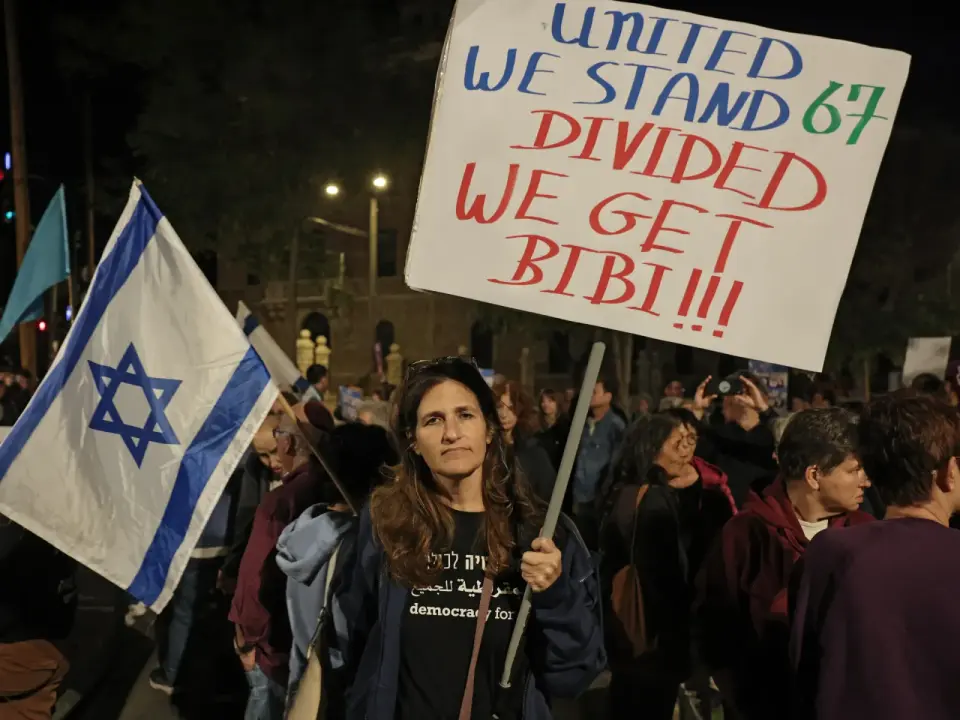
Israeli President Isaac Herzog has tasked opposition leader Gadi Eisenkot with forming a new government after the October 27 election left Prime Minister Benjamin Netanyahu without a parliamentary majority. Eisenkot has 28 days, potentially extendable by 14, to assemble a coalition. While he secured 67 recommendations, including 19 from Arab-led parties, his core Jewish opposition bloc holds only 48 seats. Key obstacles include Avigdor Lieberman’s refusal to support a government reliant on Arab backing and conflicting demands regarding ultra-Orthodox military conscription. If Eisenkot fails, the mandate may pass to Netanyahu, or new elections could be called.
Key points
- President Isaac Herzog selected Gadi Eisenkot, leader of the Yashar party, to form a government after consultations with Knesset members.
- Eisenkot’s core coalition of four parties holds 48 seats, short of the 61 needed for a majority in the 120-seat Knesset.
- Arab-led parties Ra’am and the Joint List hold 19 seats and have endorsed Eisenkot, but he has ruled out including them in the cabinet.
- Avigdor Lieberman, leader of Yisrael Beiteinu, opposes a minority government dependent on Arab support, fearing it will strengthen Netanyahu.
- Ultra-Orthodox parties Shas and United Torah Judaism hold 13 seats; Shas supports Netanyahu, while United Torah Judaism declined to endorse either candidate.
- Eisenkot faces a deadline to resolve disputes over military conscription exemptions for ultra-Orthodox students and the status of Arab parties.
Background
The October 27, 2026, election resulted in a political stalemate, with no bloc securing an outright majority. Prior to the current mandate, opposition leaders had united behind Eisenkot, while Netanyahu called for a broad national government excluding Arab parties. The deadlock has intensified debates over the role of Arab-led parties and ultra-Orthodox conscription exemptions, issues that have divided Israeli politics for years. Earlier coverage noted that Yair Golan urged a coalition with Arab parties, while Netanyahu’s camp emphasized a 'Zionist' government.
How outlets are covering it
Al Jazeera emphasizes the difficulty of uniting a divided opposition, noting that Eisenkot’s partners hold sharply conflicting views on security and occupation. CNN highlights the specific conditions Eisenkot set for coalition partners, including recognizing Israel as a Jewish state and universal service, which effectively rule out Arab cabinet participation. The New York Times provides a factual breakdown of the seat distribution, noting that no bloc won the required 61 seats. The Jerusalem Post focuses on the internal contradictions within the opposition, particularly the conflict between Lieberman’s stance and the haredi parties’ demands, suggesting that Eisenkot may struggle to form a government through either a majority or minority route. All sources agree that the outcome will determine key policies on military conscription, the occupied Palestinian territory, and the judicial system.
Why it matters
The outcome of these negotiations will determine whether Netanyahu, who has served for most of the past 20 years, is ousted or retains power. A new government could reverse parts of Netanyahu’s judicial overhaul and establish an independent inquiry into the October 7, 2023, attacks. However, experts like Neve Gordon suggest that changes for Palestinians in Gaza and the West Bank may be minimal, as Eisenkot’s coalition remains opposed to Palestinian statehood and supports settlement expansion. The stability of the government will also impact Israel’s international standing and domestic policies on security and equality.
What to watch
Eisenkot will receive the official mandate on Sunday and begin negotiations. The first test is the swearing-in of the new Knesset on Tuesday, where the opposition aims to replace the current speaker. If Eisenkot fails to form a government within 28 days, he may seek a 14-day extension. If he still fails, the mandate may pass to Netanyahu, or if both fail, new elections could be called after 100 days. The opposition is also pushing to repeal laws passed by Netanyahu’s coalition and establish a state commission of inquiry.
- Will Eisenkot be able to form Israel’s next gov’t amid divided opposition? Al Jazeera
- In setback to Netanyahu, rival Eisenkot to be tasked with forming next Israeli government. But the path remains complicated CNN
- Who Is Gadi Eisenkot, the Israeli Tasked With Forming a Government? The New York Times
- Israel Election: Gadi Eisenkot faces coalition hurdles in forming next government The Jerusalem Post
- Israel's President taps Netanyahu rival Gadi Eisenkot to form the new government NPR
Want the full story? Read the original reporting
Read on Al Jazeera