
Eisenkot launches legislative counter-offensive as Netanyahu warns of Iranian nuclear threat
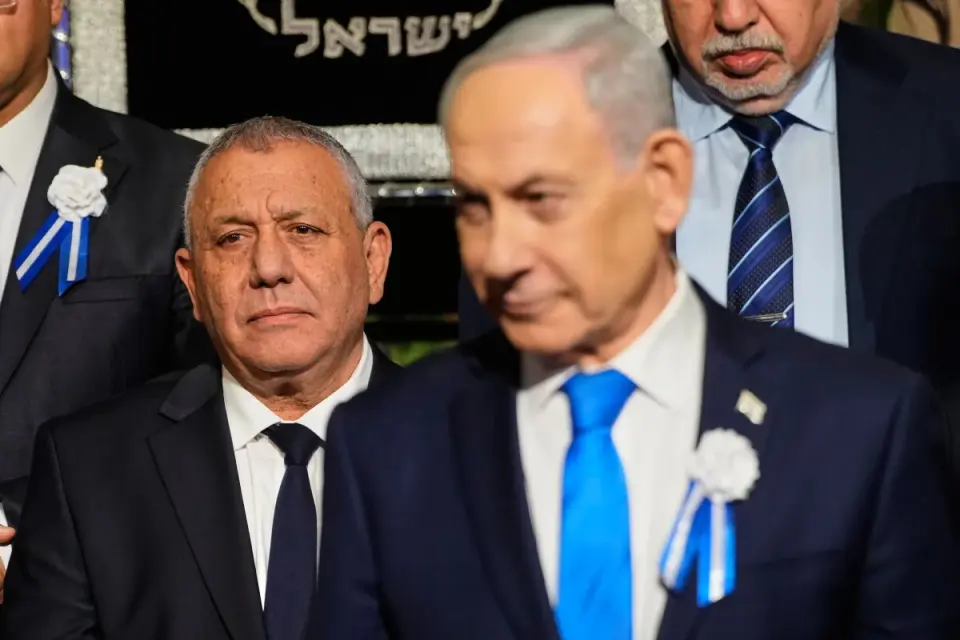
Israel’s new parliament has begun work with opposition leader Gadi Eisenkot launching a legislative agenda to reverse previous government policies, including judicial reforms and term limits. While Eisenkot races to form a coalition, incumbent Prime Minister Benjamin Netanyahu remains caretaker, warning of an imminent Iranian nuclear threat and urging a unity government. The two leaders clashed sharply over the legitimacy of Arab-led parties and the need for political change.
Key points
- Eisenkot’s bloc introduced bills to overturn judicial changes, impose term limits on the prime minister, and launch an inquiry into the Oct. 7, 2023, attacks.
- Netanyahu, serving as caretaker, retains full authority over national security and the military but faces court-imposed limits on other powers.
- Eisenkot has six weeks to form a government; if he fails, President Isaac Herzog is expected to task Netanyahu with the next attempt.
- The opposition is moving to replace Knesset speaker Amir Ohana with Matan Kahana to control the legislative agenda.
- Netanyahu’s speech accusing Arab parties of stealing the election was condemned by Eisenkot as 'divisive' and 'hate-filled.'
Background
Following the October 27, 2026, election, no single bloc secured a majority, leading to a political deadlock. Arab-led parties won a record 19 seats, which both Netanyahu and Eisenkot have struggled to accommodate due to internal party opposition and 'loyalty tests' faced by Palestinian citizens. Eisenkot was tasked with forming a government on November 8, 2026, after securing 67 endorsements, though his core bloc holds only 48 seats. The new Knesset includes 46 new members and a record 33 women, marking a significant shift in the parliamentary landscape.
How outlets are covering it
AP News emphasizes Eisenkot’s legislative agenda to reverse Netanyahu’s policies and the immediate power struggle over the Knesset speaker position. The Forward highlights the procedural details of the new parliament, noting that while the government remains in caretaker mode, the Knesset can still pass private legislation and control the budget through the Finance Committee. The Jerusalem Post focuses on Netanyahu’s security warnings, specifically his claim that Iran could achieve nuclear weapons within one to two years and his call for a unity government to counter this threat. The outlets differ in their framing of the coalition talks: AP and The Forward note Eisenkot’s openness to Arab parties under specific conditions, while The Jerusalem Post highlights the tension between Netanyahu’s unity call and Eisenkot’s rejection of his leadership.
Why it matters
The outcome of this 28-day window will determine whether Israel moves toward a new government or returns to caretaker rule under Netanyahu, who faces ongoing corruption trials and security failure inquiries. The legislative actions taken by the new Knesset, particularly regarding the judiciary and term limits, could fundamentally alter the political landscape regardless of coalition success. Additionally, the clash over Arab party inclusion reflects deeper societal divisions that may impact national security and social cohesion.
What to watch
Eisenkot must finalize a coalition within six weeks, potentially involving Arab-led parties or ultra-Orthodox groups, to avoid a second election. The Knesset is expected to vote on the replacement of the speaker this week. If Eisenkot fails, Netanyahu will likely be tasked with forming a government, potentially prolonging his rule despite his loss of majority. The legislative agenda, including the inquiry into Oct. 7, will advance in the Knesset regardless of the coalition outcome.
- Eisenkot unveils agenda to reverse Netanyahu’s policies as Israel's new parliament is sworn in AP News
- Israel’s parliament sworn in as leaders scramble to form a government The Forward
- Israeli Opposition Pushes for Oct. 7 Inquiry at First Session of New Parliament The New York Times
- Live updates from Knesset • Outgoing Likud Knesset Speaker schedules vote on his replacement Haaretz
- Benjamin Netanyahu: Israel will be pressured to accept Iran nukes, must form unity gov't The Jerusalem Post
Want the full story? Read the original reporting
Read on AP News