
Eisenkot-Likud unity talks collapse over Netanyahu’s premiership and Ben-Gvir inclusion
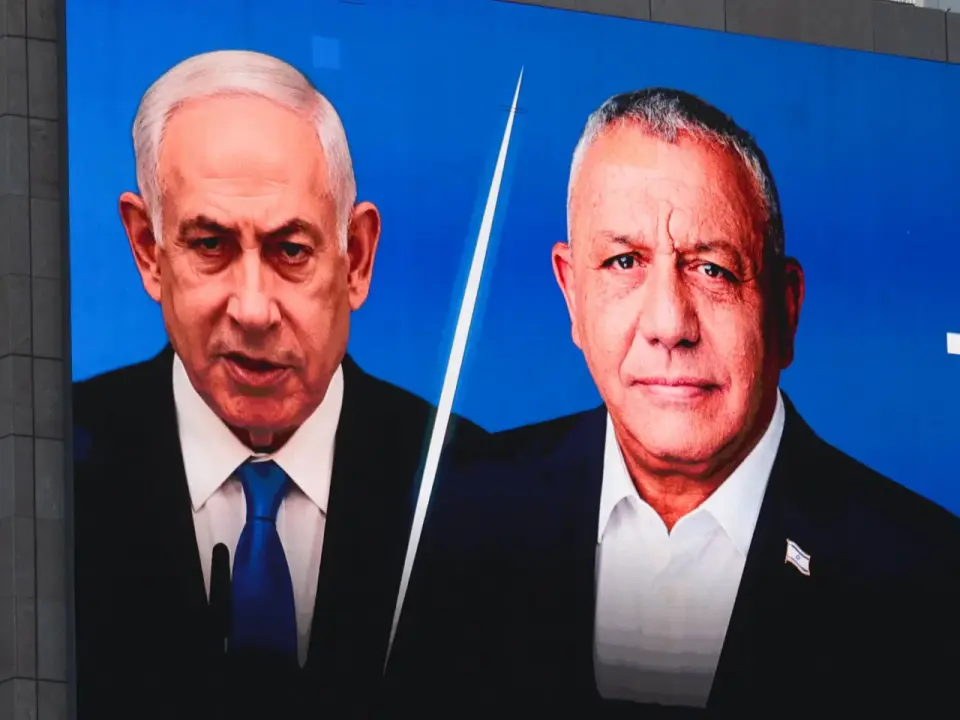
Negotiations between Gadi Eisenkot’s Yashar party and Benjamin Netanyahu’s Likud ended without a deal on November 22. The parties remain divided on who will serve as prime minister and whether far-right National Security Minister Itamar Ben-Gvir will join the government. Eisenkot faces a December 6 deadline to form a coalition, with a possible 14-day extension. If unity talks fail, he plans to pursue a minority government relying on Arab party support, though this option faces strong opposition within his own bloc.
Key points
- Four-hour talks in Herzliya ended without agreement on core issues, including the premiership and Ben-Gvir’s inclusion.
- Likud demanded Netanyahu serve as prime minister first, while Eisenkot opposed a rotation arrangement.
- Yashar insisted on excluding Ben-Gvir, while Likud remained non-committal on his exclusion.
- Eisenkot has until December 6 to form a government, with a potential 14-day extension.
- If unity talks fail, Eisenkot plans to seek a confidence vote for a minority government backed by Arab parties.
Background
Following the October 27, 2026 election, no bloc secured a majority of 61 seats. Eisenkot’s bloc won 48 seats, while Netanyahu’s bloc won 53. President Isaac Herzog gave Eisenkot the mandate to form a government on November 8. Previous coalition attempts have stalled due to disagreements over ultra-Orthodox military service exemptions, Arab party support, and Netanyahu’s refusal to step aside.
How outlets are covering it
Al Jazeera and The Times of Israel report that talks ended without a deal, with both parties agreeing to meet again but without specifying a date. The Times of Israel notes that Likud was represented by Ofir Katz and Michael Rabello, while Yashar was represented by Chili Tropper and Yoav Horowitz. The Jewish Telegraphic Agency highlights Eisenkot’s three potential paths: a government with ultra-Orthodox support, a unity government with Likud, or a minority government backed by Arab parties. The Telegraph emphasizes Likud’s demands, including an end to personal attacks against Netanyahu and a formal rejection of a Palestinian state. The Times of Israel also reports progress in talks with United Torah Judaism on Haredi military service, while The Jewish Telegraphic Agency notes that Avigdor Lieberman supports a government with ultra-Orthodox parties, whereas Naftali Bennett opposes relying on Arab parties.
Why it matters
The failure of unity talks could lead to a minority government or a new election, depending on whether Eisenkot can secure enough support by December 6. The outcome will determine whether Netanyahu remains in power and how Israel addresses issues such as Haredi military service and relations with Arab parties.
What to watch
Eisenkot must decide whether to pursue a minority government or continue negotiations with Likud. If he fails to form a government by December 6, he can request a 14-day extension. If that fails, Netanyahu may receive 28 days to attempt to form a government. The outcome will depend on whether Eisenkot can secure support from ultra-Orthodox or Arab parties, or if a unity government can be reached.
- Netanyahu’s Likud, Eisenkot’s Yashar end coalition talks without deal Al Jazeera
- No breakthrough in latest Yashar-Likud unity talks; progress reported with UTJ The Times of Israel
- Citing urgency, Eisenkot outlines 3 paths to government, signaling openness to Arab-party backing Jewish Telegraphic Agency
- Netanyahu’s main rival invites PM’s party to ‘marathon’ coalition talks The Telegraph
- Naftali Bennett warns gov't supported by Arab parties could incite protests The Jerusalem Post
Want the full story? Read the original reporting
Read on Al Jazeera